

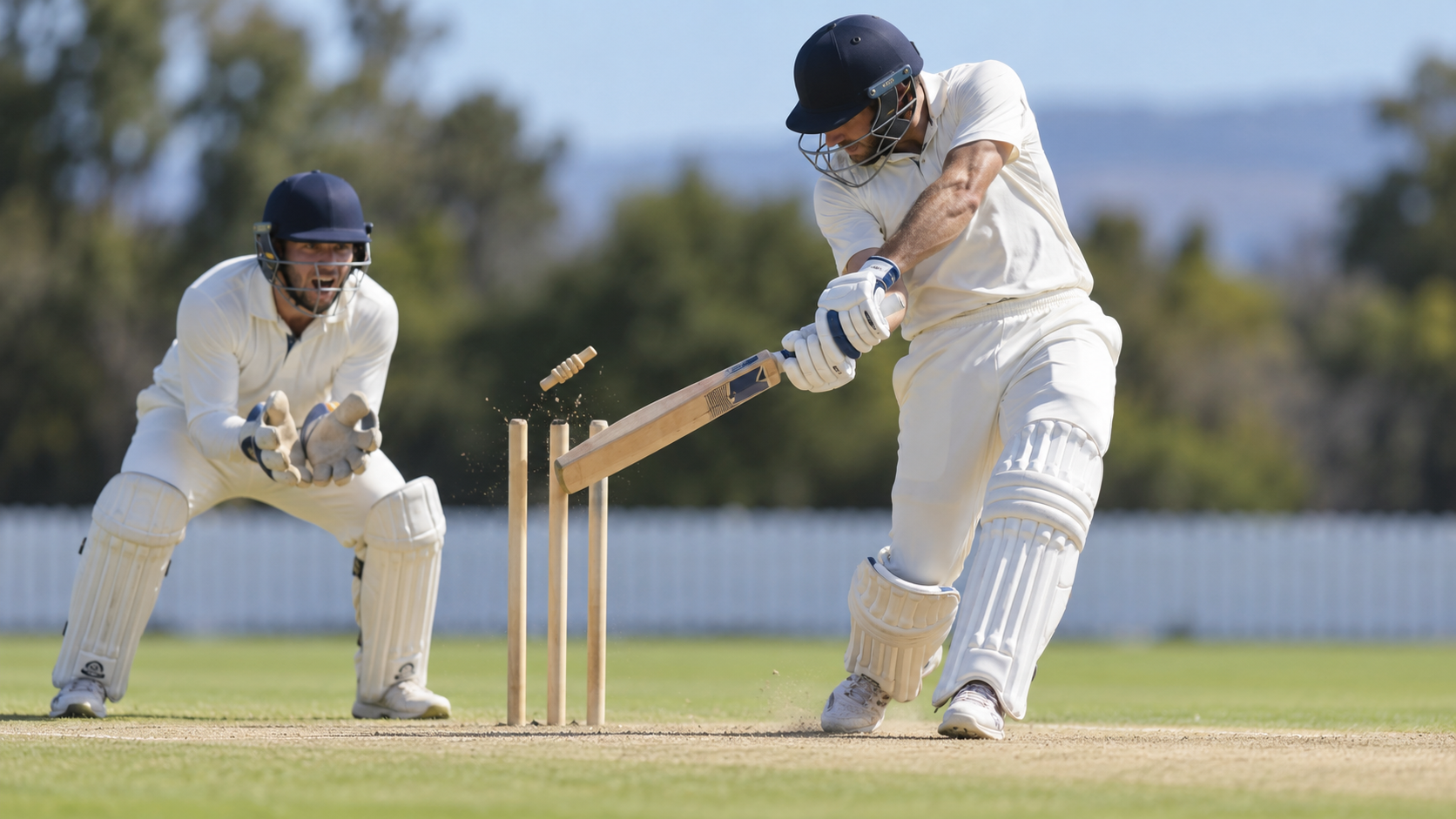
How Hit Wicket Works in Cricket Explainer
A striker can be out hit wicket after the bowler enters the delivery stride and while the ball remains in play if the striker's bat or body fairly breaks the wicket. The classic example is a back foot or swinging bat dislodging a bail during the stroke.
The dismissal can also occur while the striker is setting off for the first run immediately after playing or attempting to play the ball. The timing connects the broken wicket to the delivery. Simply disturbing the stumps long after the action has ended does not create the same dismissal.
There are important exceptions. A batter is not out hit wicket when avoiding a thrown ball, trying to prevent injury, or responding to a fielder's lawful intervention in circumstances covered by the Laws. A no-ball also protects the striker from being dismissed hit wicket.
The fielding side must appeal, and the umpire decides whether the wicket was broken fairly and within the permitted sequence. A powerful shot can still end in dismissal if the batter knocks off a bail during the follow-through. The fate of the ball does not erase the broken wicket.
Yes, if the wicket is broken in the hit-wicket sequence before the ball becomes dead.
No.
Yes. As with most dismissals, the umpire acts on an appeal.
Explore more "Explainers"
Discover additional explainers across politics, science, business, technology, and other fields. Each explainer breaks down a complex idea into clear, everyday language—helping you better understand how major concepts, systems, and debates shape the world around us.