

How Baseball Substitutions Work Explainer
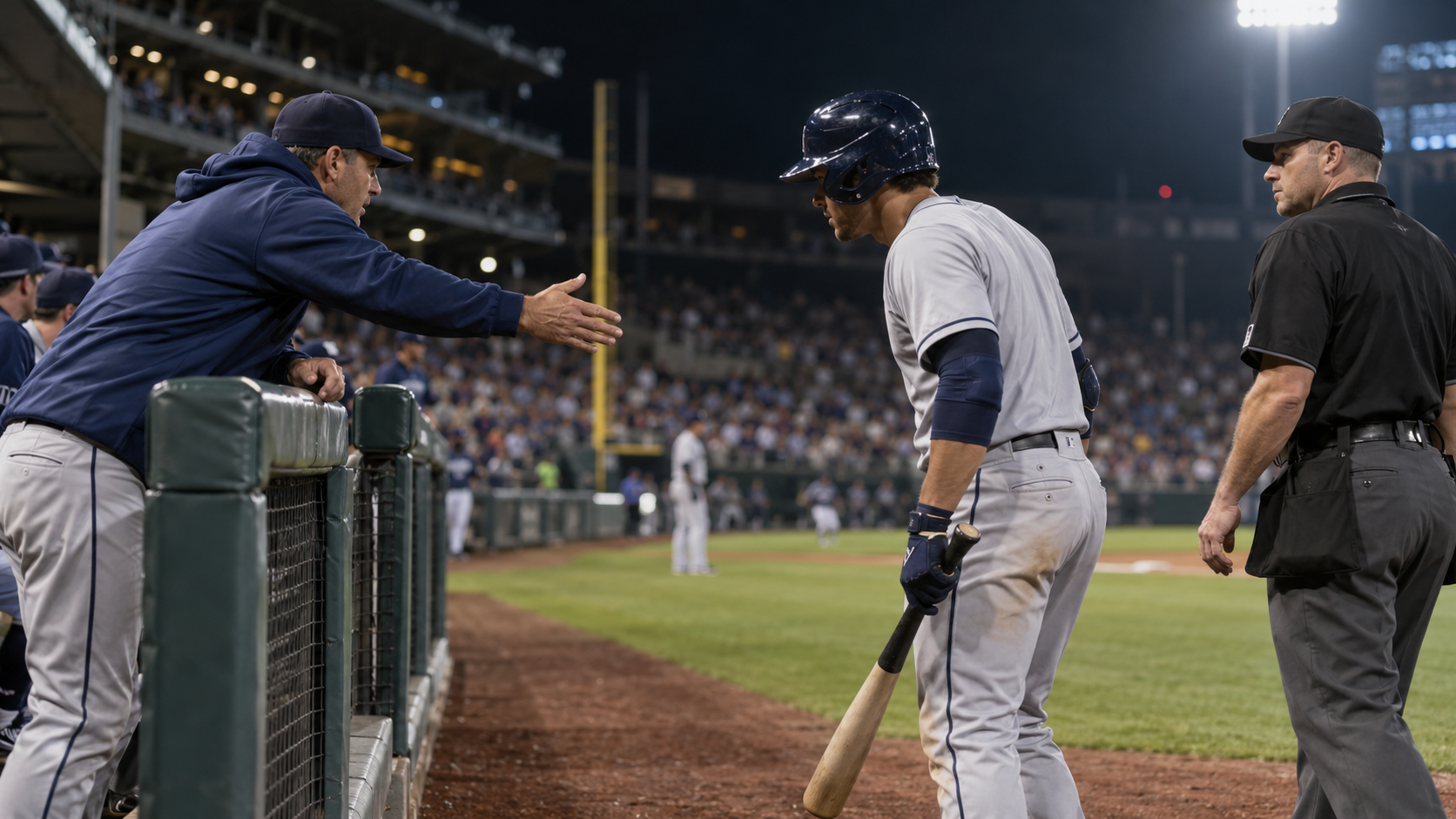
Major League teams may substitute when the ball is dead. The manager reports the change to the umpire, and the substitute takes the replaced player's position in the batting order. Common examples include pinch hitters, pinch runners, defensive replacements, and pitching changes.
Once a player is removed, that player may not return to the game in any capacity. This differs from some youth and amateur rules that allow re-entry. A pinch hitter therefore replaces the original batter rather than borrowing the plate appearance temporarily.
Multiple defensive substitutions require the manager to identify each new player's lineup position. If a substitute appears without being announced, the rules can still treat that player as having entered when the player's actions make the change evident. Umpires and the official scorer record the switch.
Pitching changes add special limits, including the requirement that a pitcher normally face at least three batters or finish the half-inning, subject to exceptions such as injury. Strategy therefore involves both the bench and the batting order: every move changes who remains available later.
When the ball is dead.
No.
In the lineup position of the player who was replaced.
Explore more "Explainers"
Discover additional explainers across politics, science, business, technology, and other fields. Each explainer breaks down a complex idea into clear, everyday language—helping you better understand how major concepts, systems, and debates shape the world around us.