

How Double-Dribble Violations Work Explainer
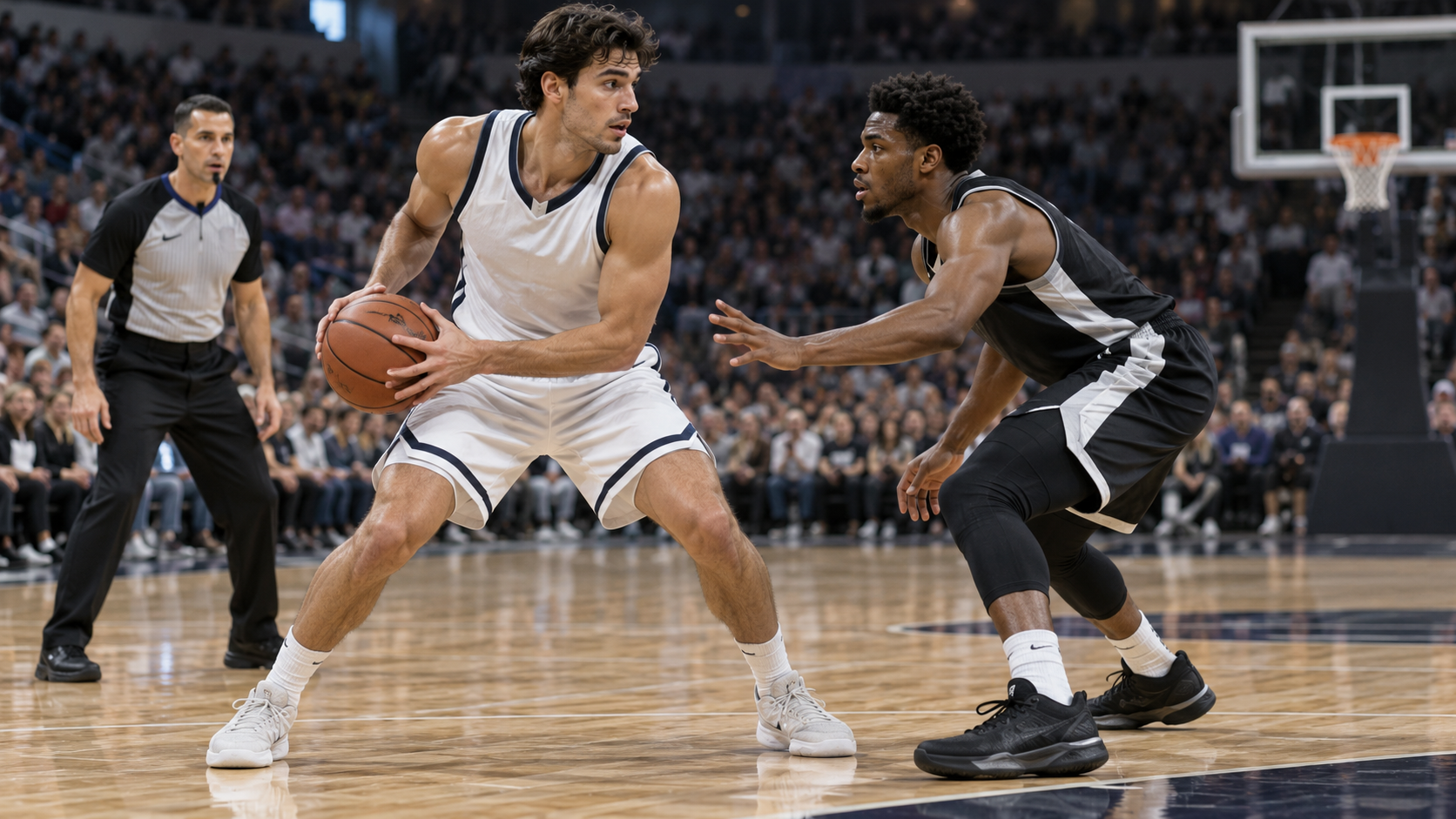
A double dribble occurs when a player voluntarily ends a dribble and then begins another one. The first dribble ends when the player gathers the ball with both hands, lets it come to rest in one or both hands, or otherwise establishes control that stops the continuous bouncing action.
After the gather, the player may pass, shoot, or pivot within the footwork rules, but may not put the ball back on the floor and resume dribbling. Doing so gives the offense an extra mobility advantage after the defender has reacted to the stopped dribble.
The rule allows a new dribble after genuine loss of control caused by an opponent touching the ball, a field-goal attempt that reaches the backboard or rim, or certain passes or fumbles that touch another player, the player's backboard, or the basket ring. Those events interrupt the original control.
The penalty is loss of possession, with the opponent receiving a throw-in from the designated sideline spot. Officials distinguish an illegal restart from a loose ball that the player recovers. The key question is whether the first dribble ended voluntarily under control or was broken by a permitted event.
When the player gathers or allows the ball to come to rest in one or both hands.
Yes, if it causes the player to lose control.
The opponent receives possession for a throw-in.
Explore more "Explainers"
Discover additional explainers across politics, science, business, technology, and other fields. Each explainer breaks down a complex idea into clear, everyday language—helping you better understand how major concepts, systems, and debates shape the world around us.