

How Tennis Continuous-Play Timing Works Explainer
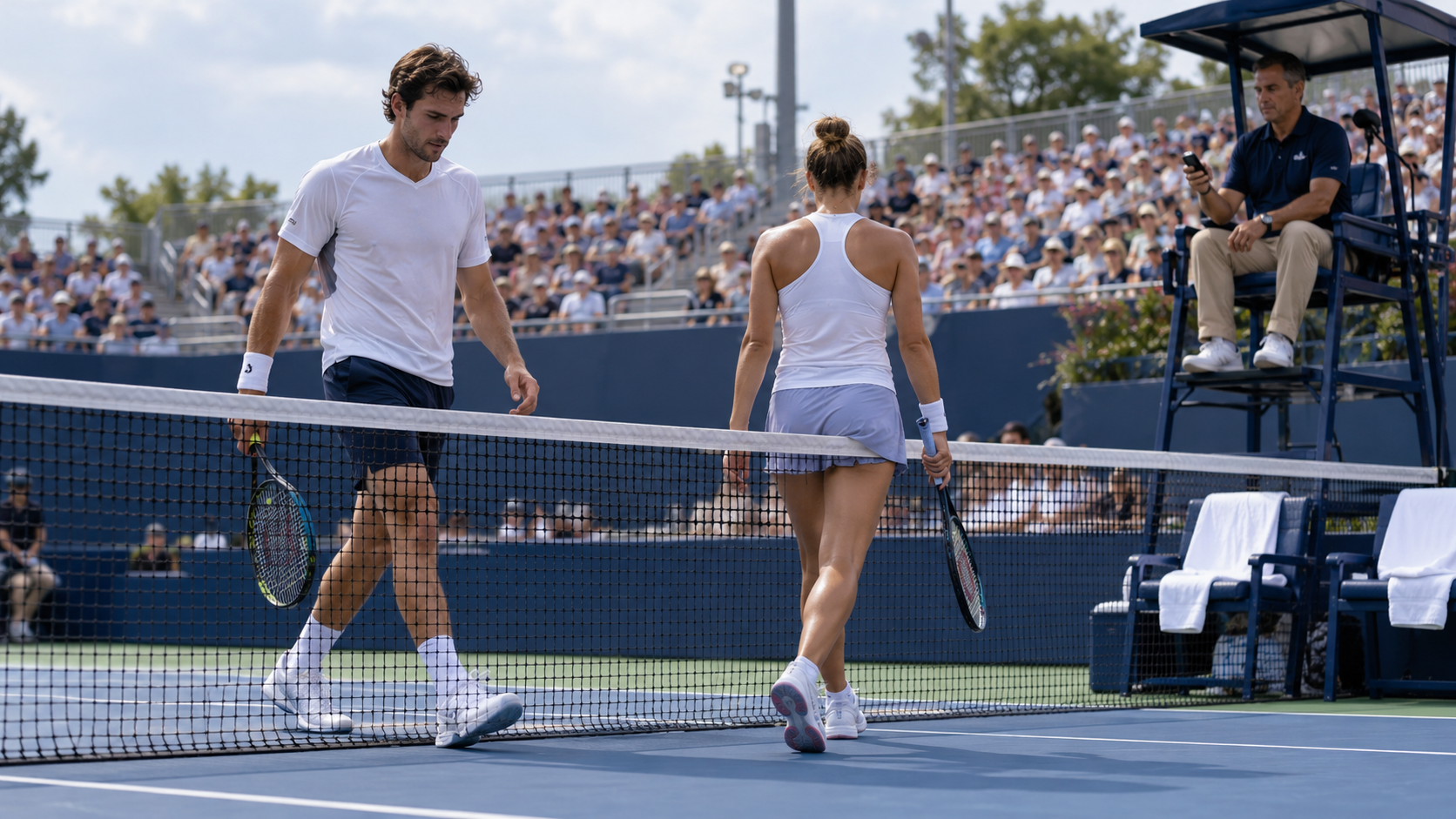
Tennis is organized around the principle that play should be continuous from the first serve until the match ends. The standard limits are 25 seconds between points, 90 seconds when players change ends after most games, and 120 seconds at the conclusion of a set.
There is no rest after the first game of a set, and players change ends without a rest during a tiebreak. The timing begins when the previous point or game ends and runs until the next first serve is struck, not merely until the server starts the service motion.
Necessary equipment other than a racket may justify reasonable extra time if it breaks for reasons outside the player's control. A treatable medical condition uses a separate medical-time-out procedure, commonly allowing treatment time after evaluation. Ordinary recovery from fatigue does not create an unlimited break.
Tournament codes determine the penalty sequence, and chair umpires manage the clock with judgment when weather, crowd movement, ball retrieval, or safety interrupts normal play. The structure balances predictable pacing with enough flexibility to handle genuine problems without turning every pause into misconduct.
No. Players change ends and continue.
Up to 120 seconds.
Necessary equipment other than the racket may justify reasonable extra time.
Explore more "Explainers"
Discover additional explainers across politics, science, business, technology, and other fields. Each explainer breaks down a complex idea into clear, everyday language—helping you better understand how major concepts, systems, and debates shape the world around us.