

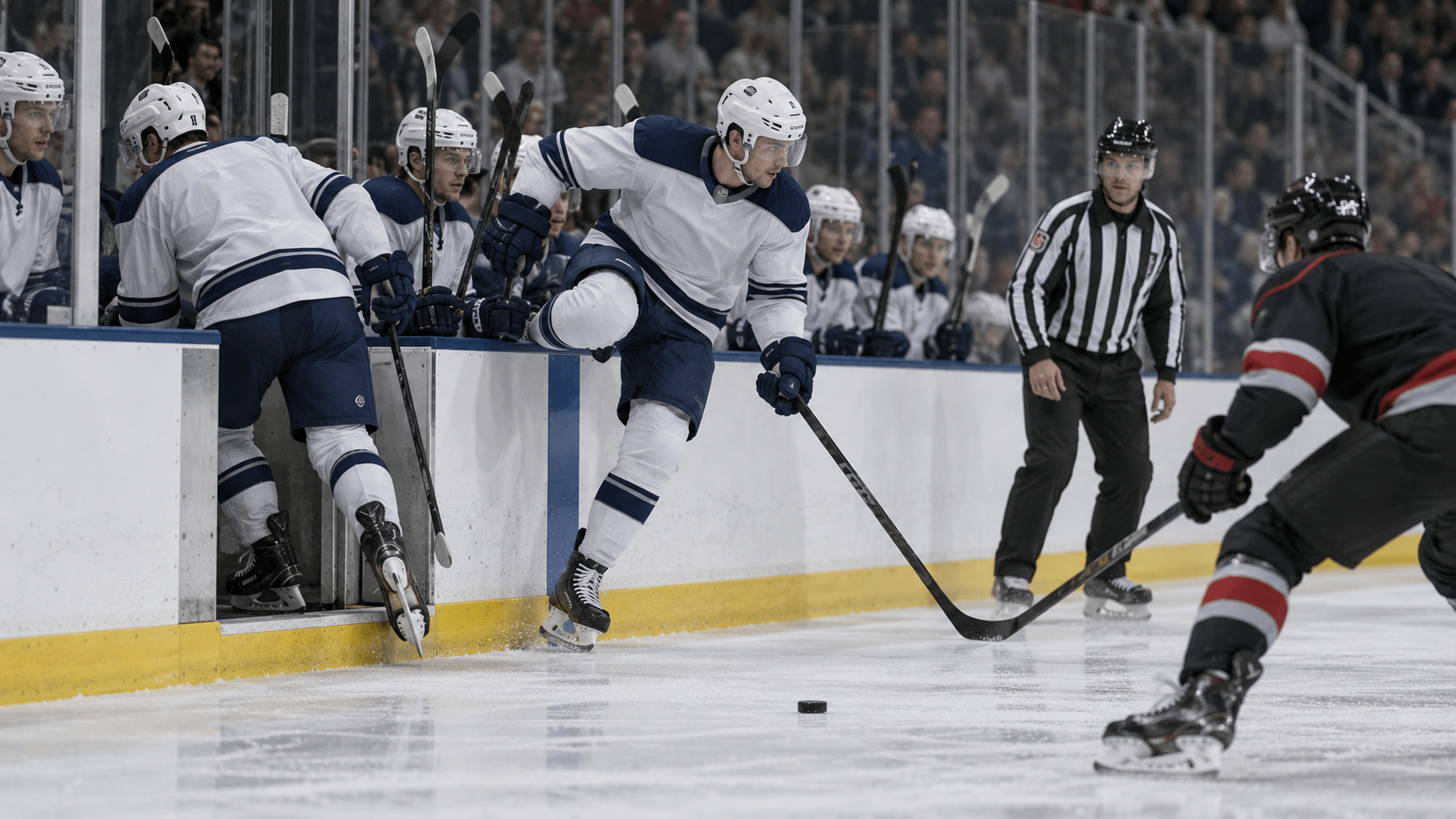
How Hockey Too-Many-Men Penalties Work Explainer
Hockey allows substitutions while play continues, so there can briefly be more than five skaters near a team's bench. The change becomes illegal when the entering player joins the play before the retiring player is within the permitted bench area and no longer involved. That produces a too-many-men bench minor.
NHL rules use a five-foot allowance at the bench. A player retiring within that distance and clearly out of the play may be replaced, even before stepping through the door. If either player plays the puck, checks an opponent, or gains a tactical advantage during the overlap, officials can call the penalty.
The infraction is charged to the team rather than a particular offender. The coach designates a skater who was on the ice at the time to serve the two-minute minor. A delayed penalty can allow the non-offending team to keep possession until the offending team touches the puck.
The difficult cases happen during fast changes when the puck suddenly comes toward the bench. Players must decide whether to continue retiring or rejoin the action. The rule permits fluid substitutions but requires the outgoing and incoming skaters to behave as one participant, not two.
Yes, during a legal change when the retiring player is near the bench and out of the play.
The replacement joins play too soon or either player gains an advantage during the substitution.
A skater designated by the coach who was on the ice when the infraction occurred.
Explore more "Explainers"
Discover additional explainers across politics, science, business, technology, and other fields. Each explainer breaks down a complex idea into clear, everyday language—helping you better understand how major concepts, systems, and debates shape the world around us.