

How Soccer Kickoffs Work Explainer
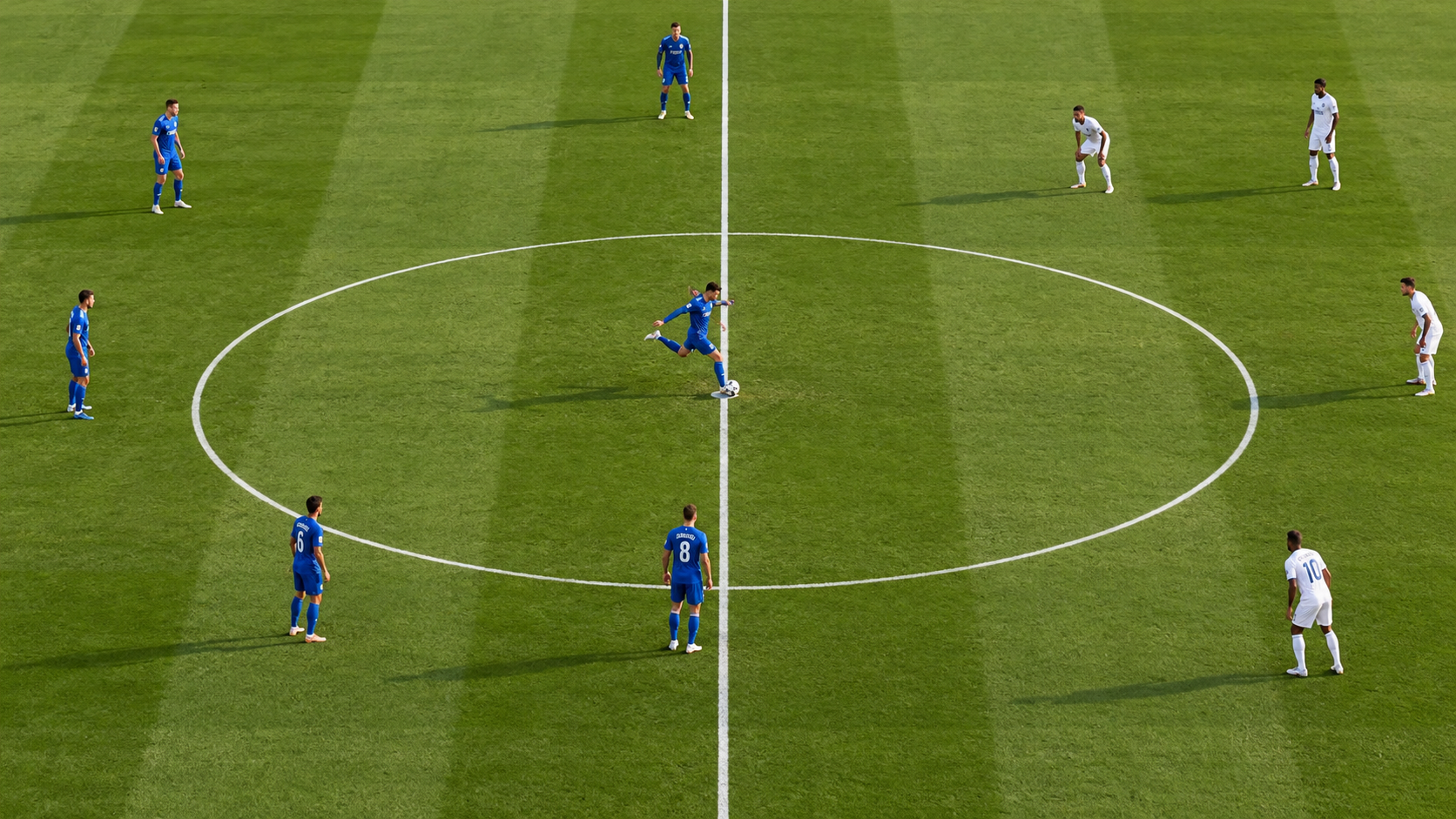
A kickoff starts each half of a soccer match, begins each period of extra time, and restarts play after a goal. A coin toss determines the initial choices. At every kickoff, the ball rests on the center mark and all players must be on their own half of the field.
Opponents of the team taking the kickoff must remain at least 9.15 metres, or 10 yards, from the ball until it is in play. The referee gives a signal, and the ball becomes live when it is kicked and clearly moves. It may be played in any direction, including backward.
The kicker cannot touch the ball again before another player does. A second touch normally gives the opponents an indirect free kick; deliberate handball is handled under the handball provisions. A goal may be scored directly against the opponents, but a direct own goal from kickoff produces a corner kick instead.
After a goal, the team that conceded takes the restart. At the beginning of the second half, the team that did not start the first half kicks off. These simple position and touch requirements make the center restart neutral while allowing teams to use rehearsed passes, long attacks, or immediate pressure.
Yes. The ball may move in any direction once it is kicked and clearly moves.
They must stay outside the center circle, at least 9.15 metres from the ball, until it is in play.
Yes, into the opponents' goal. A direct own goal instead gives the opponents a corner kick.
Explore more "Explainers"
Discover additional explainers across politics, science, business, technology, and other fields. Each explainer breaks down a complex idea into clear, everyday language—helping you better understand how major concepts, systems, and debates shape the world around us.