

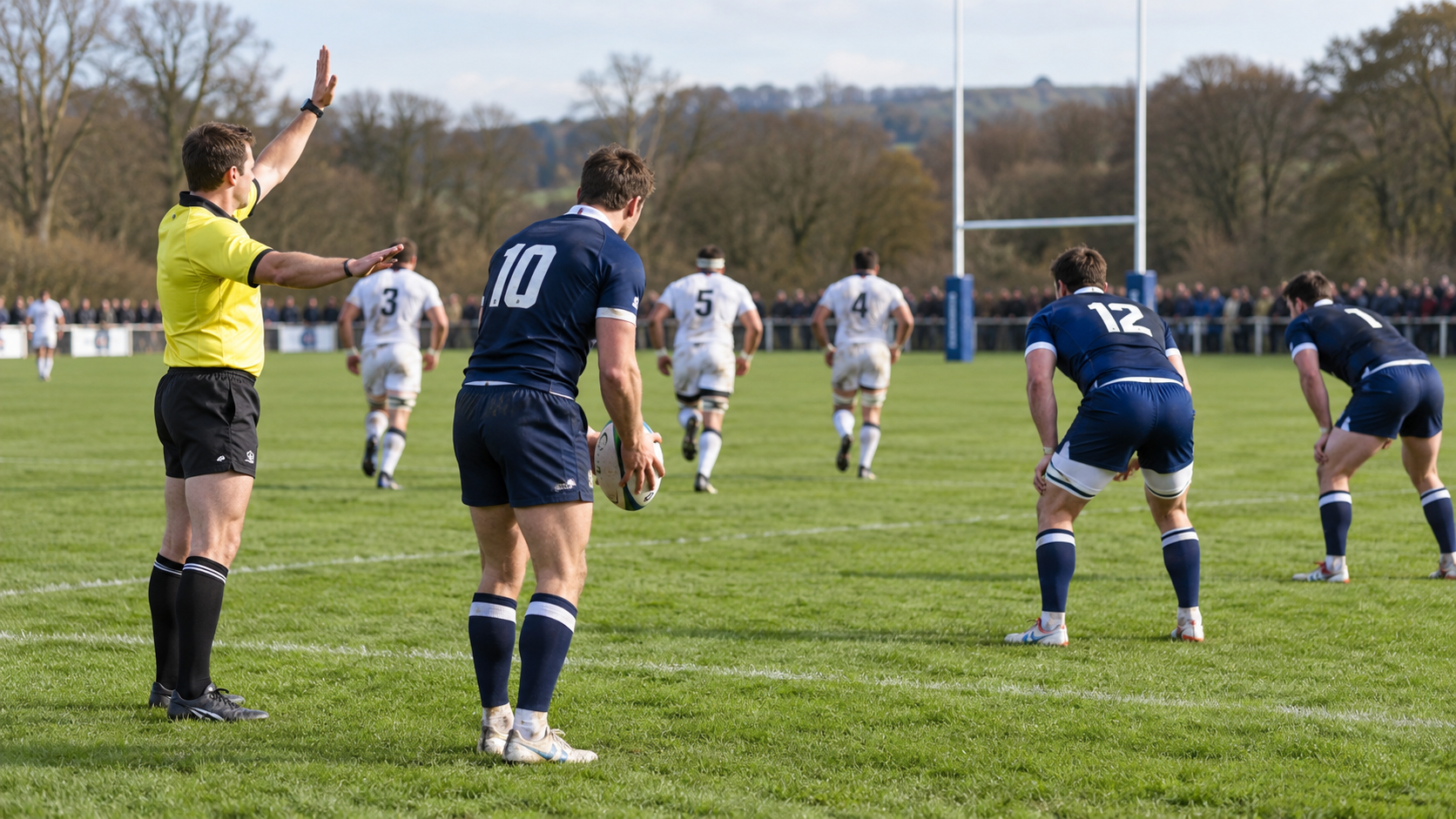
How Rugby Penalty and Free Kicks Differ Explainer
Rugby awards a penalty for offences with a material impact, such as dangerous play, offside, or serious breakdown infringements. A free kick addresses less significant technical breaches. Both give the non-offending team possession at a mark and require opponents to retreat 10 metres.
From a penalty, the team may kick at goal for three points, kick to touch and usually retain the throw-in, tap the ball to restart quickly, or choose a scrum. The kicker must use the ball available and teammates must remain behind it until it is kicked.
A free kick also permits a tap, a kick to touch, or a scrum option, but points cannot be scored directly from it. If a team wants to attempt a drop goal after taking a free kick, the ball must first become dead, be touched by an opponent, or meet another legal condition.
Opponents who intentionally delay the kick or fail to retreat can move the mark forward 10 metres. The practical difference therefore goes beyond the referee's arm signal: a penalty creates a direct scoring and territorial opportunity, while a free kick offers possession without the same immediate goal option.
Yes. A successful penalty goal is worth three points.
No. A free kick cannot produce a direct goal.
They must move 10 metres from the mark or to their goal line if it is nearer.
Explore more "Explainers"
Discover additional explainers across politics, science, business, technology, and other fields. Each explainer breaks down a complex idea into clear, everyday language—helping you better understand how major concepts, systems, and debates shape the world around us.