

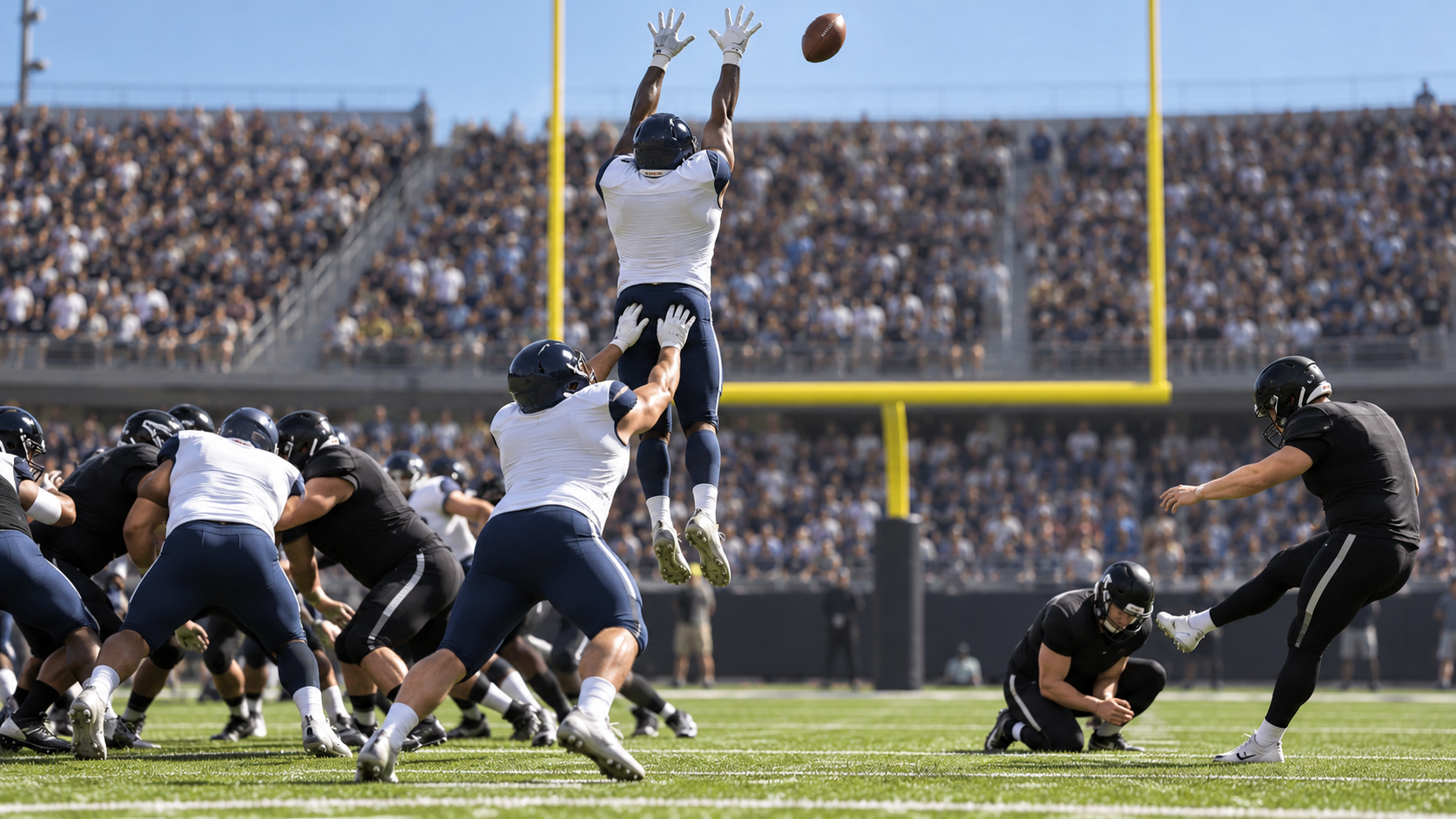
How NFL Leverage Penalties Work Explainer
The NFL's leverage rule prevents a player from using another player or the line as a platform to gain height while trying to block a kick. A defender cannot step, jump, stand on, or place a hand on a teammate or opponent in order to elevate over the formation.
The rule also restricts pushing or pulling a teammate into the offensive line when that teammate is attempting to leap through or over a gap. These actions concentrate unusual force on players whose bodies are engaged and exposed during field goals, tries, and certain scrimmage kicks.
A defender may jump from the ground without using another player for support, provided the action does not violate the separate leaping rule or make illegal contact. Officials watch the launch point, hand placement, teammate assistance, landing, and whether the player crosses the line safely.
Leverage is an unsportsmanlike-conduct foul carrying 15 yards. On a field-goal attempt, the accepted penalty can give the kicking team a first down or a closer retry depending on the result and enforcement. The safety-based restriction applies even when the defender touches or blocks the kick.
Yes, if the defender launches legally without using another player as support and avoids other prohibited leaping conduct.
Using a teammate or opponent to elevate, or pushing or pulling a teammate into the line for that purpose.
Leverage carries a 15-yard unsportsmanlike-conduct penalty.
Explore more "Explainers"
Discover additional explainers across politics, science, business, technology, and other fields. Each explainer breaks down a complex idea into clear, everyday language—helping you better understand how major concepts, systems, and debates shape the world around us.