

How Judo Golden Score Works Explainer
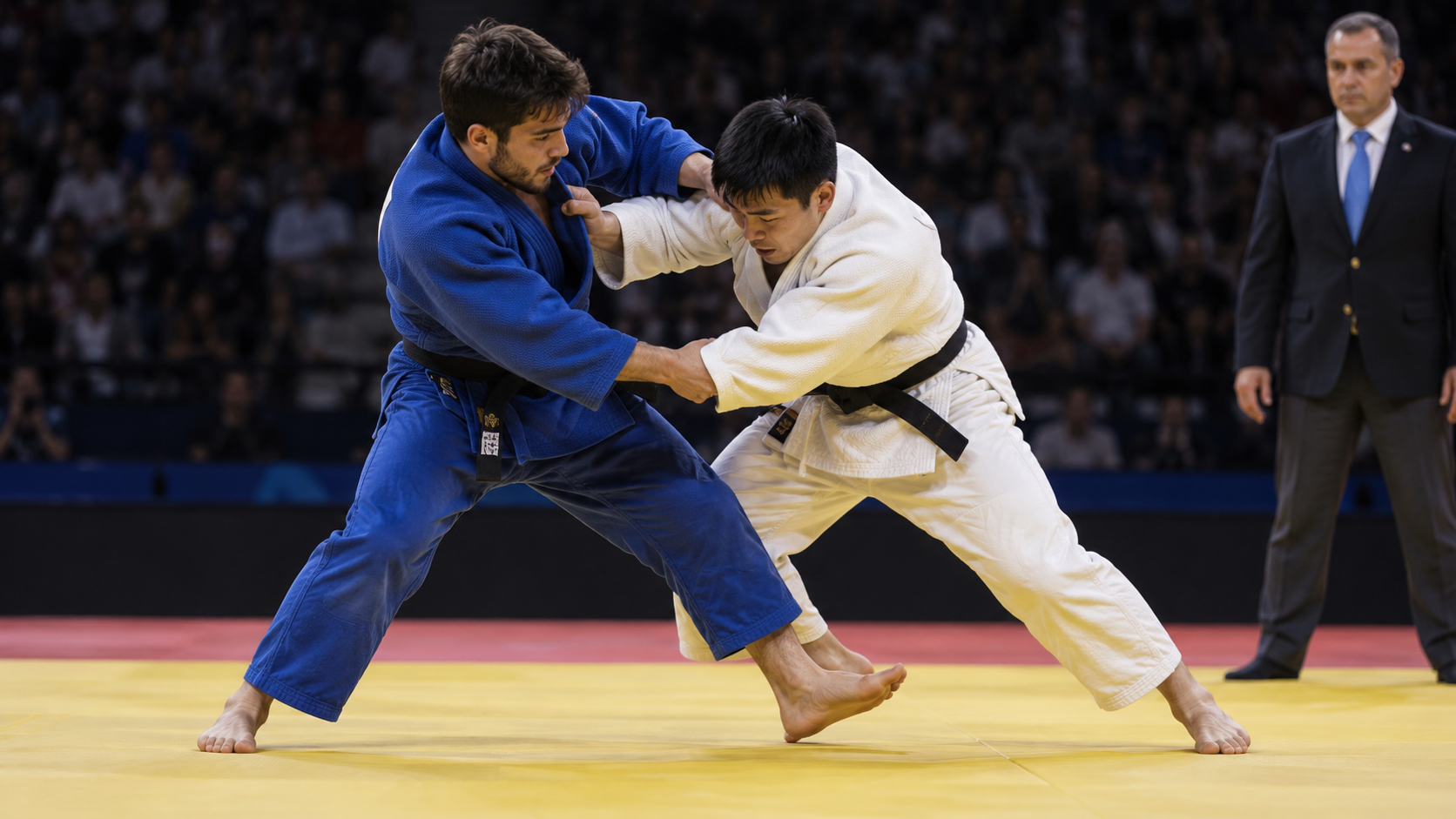
When a judo contest is tied after regulation time, it continues into golden score rather than ending in a draw. The athletes remain on the mat after a brief procedural pause, and the scoreboard clock runs forward with no fixed overtime limit under standard IJF competition rules.
The first valid technical score ends the contest. An ippon wins immediately, and a waza-ari in golden score also decides the match because it breaks the tie. A scoring action that begins before the referee calls matte can still be evaluated even if it finishes near the boundary.
Penalties carry over from regulation. If an athlete receives a third shido, that disqualification ends the contest in favor of the opponent. One or two existing shidos do not themselves decide the match, but they leave less room for passivity, false attacks, or other infringements.
Golden score rewards decisive judo without resetting the contest's disciplinary history. Referees keep applying the same standards for activity, gripping, attacks, and safety. Because there is no scheduled endpoint, conditioning and risk management become important as each exchange can produce the winning score or penalty.
It has no fixed time limit; the contest continues until a decisive score or penalty.
No. Penalties from regulation carry into golden score.
Yes. The first valid score, including waza-ari, decides the contest.
Explore more "Explainers"
Discover additional explainers across politics, science, business, technology, and other fields. Each explainer breaks down a complex idea into clear, everyday language—helping you better understand how major concepts, systems, and debates shape the world around us.