

How Alpine Skiing Gate Faults Work Explainer
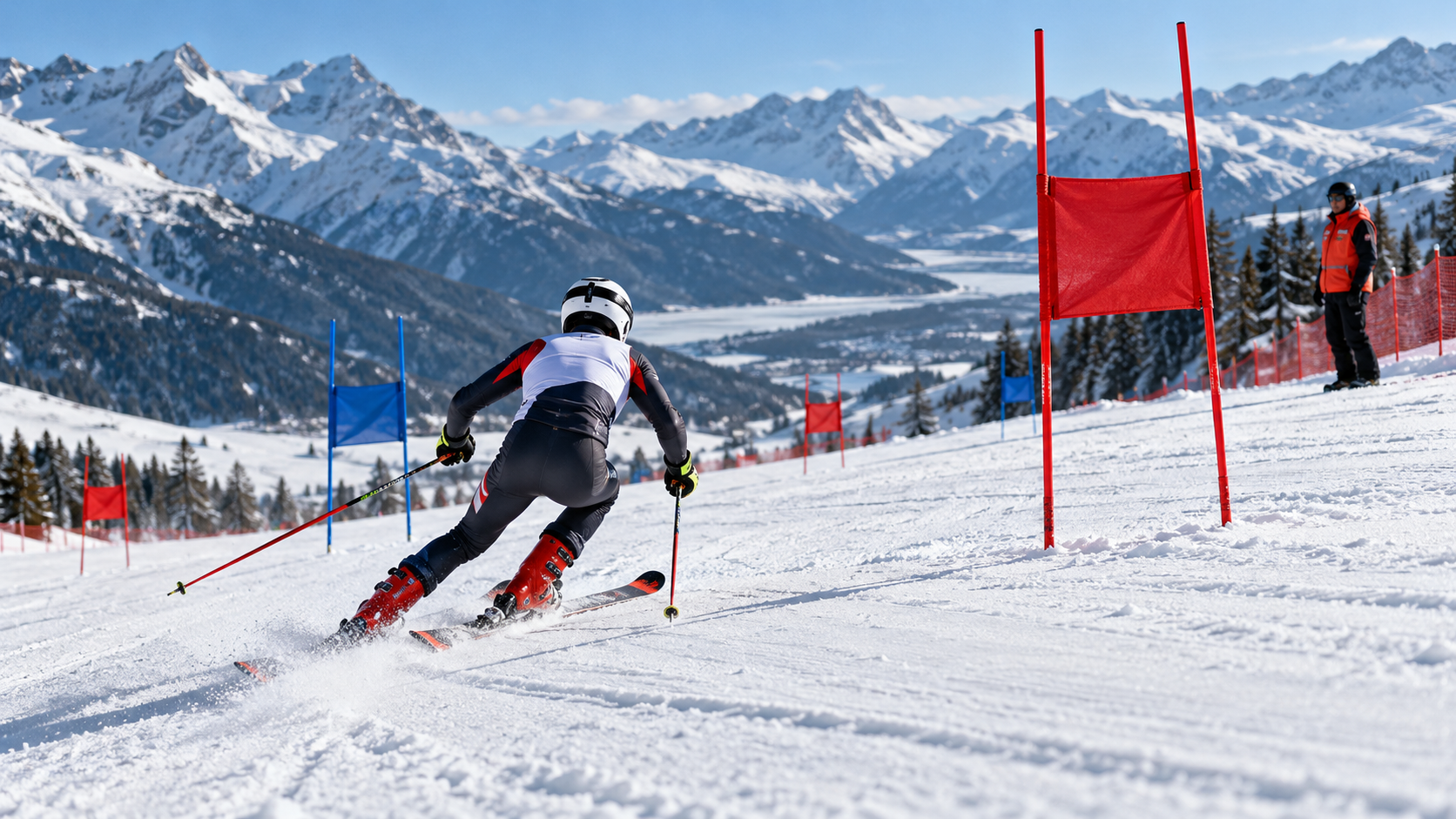
An alpine skier passes a gate correctly when both ski tips and both feet cross the gate line in the required direction. In slalom, that line is defined by the turning poles and course layout. Straddling a pole with one ski on each side is a gate fault.
A slalom racer who misses the line may climb back and correct the passage, provided the skier has not been passed by the next competitor or interfered with that competitor. Both feet and the necessary ski tip must then cross the correct line before continuing.
The rules are stricter in events with fixed start intervals such as downhill, super-G, giant slalom, and parallel. After coming to a complete stop, a competitor may not continue through earlier or later gates. Slalom has the limited correction exception because its course and start spacing differ.
If a ski is lost without the athlete first committing a fault, the remaining ski tip and both feet must satisfy the gate line. Judges and video control track poles, feet, ski tips, and the order of passage. A fast time cannot stand if the required course was not completed.
Both feet and both ski tips, subject to the limited rule for a ski lost without a prior fault.
Yes, if doing so does not interfere with or follow being passed by the next racer.
No. Passing with skis on opposite sides of the turning pole is a gate fault.
Explore more "Explainers"
Discover additional explainers across politics, science, business, technology, and other fields. Each explainer breaks down a complex idea into clear, everyday language—helping you better understand how major concepts, systems, and debates shape the world around us.