

How Corner Throws Work in Water Polo Explainer
A water polo corner throw is awarded when the ball crosses the goal line outside the goal after last being touched by the defending goalkeeper, or after a defending field player deliberately sends it over that line. An ordinary accidental touch by a field defender can instead produce a goal throw.
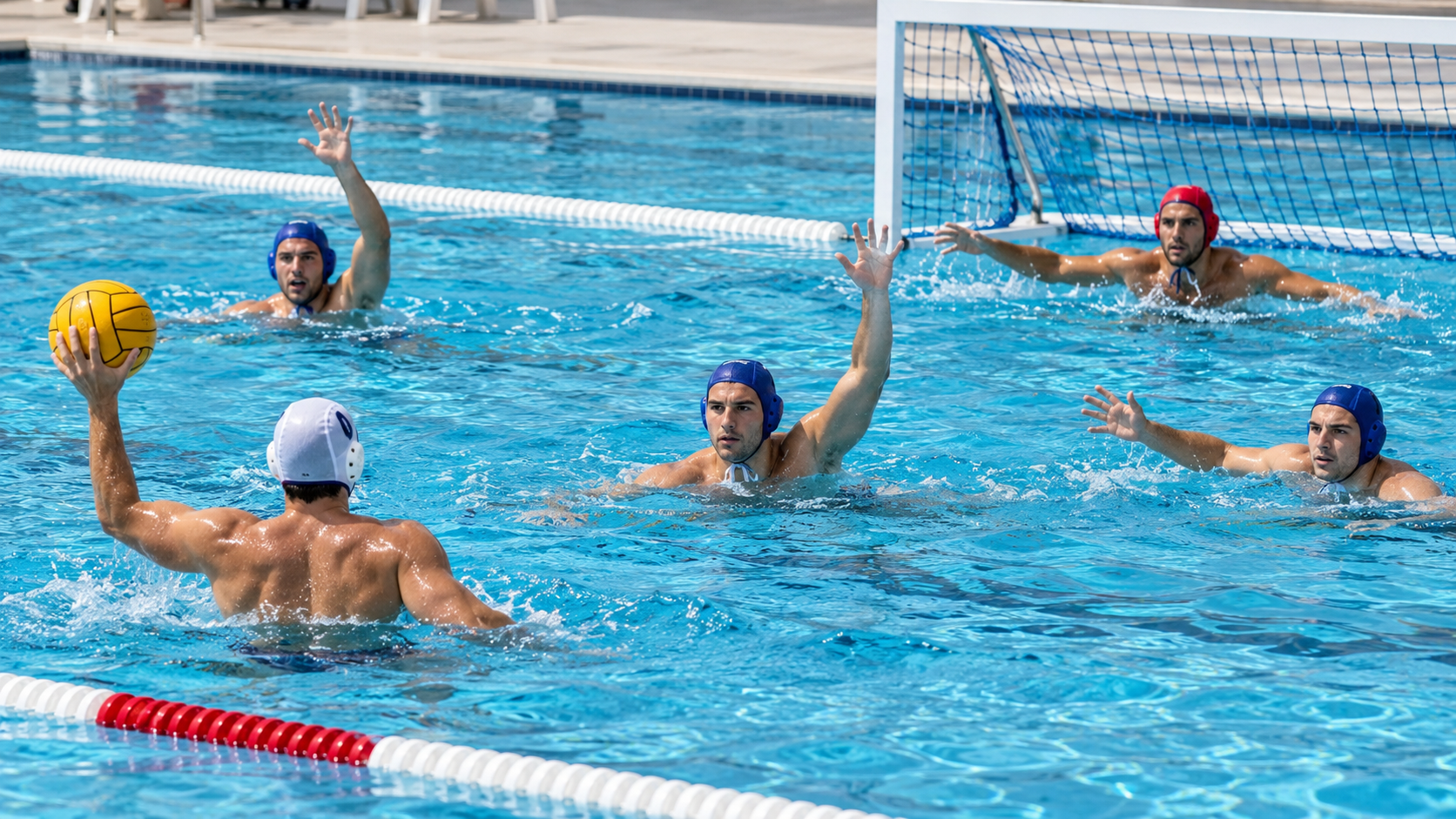
The attacking team takes the corner from the two-metre mark on the side where the ball crossed. The player puts the ball into play without undue delay, and opponents must respect the applicable distance and may not interfere with the restart.
Once the ball is visibly put into play, the attacker may pass, shoot when the rules permit, or start a set play. Teammates spread across the attacking end while defenders organize around the goal. The possession clock follows the competition's restart and reset provisions.
Officials judge the final touch, whether a field defender acted deliberately, and the exact exit point. That distinction matters because goalkeeper contact is enough for a corner, while a field player's mere deflection is not always enough. The restart rewards the attack without treating every defensive touch identically.
A goalkeeper's last touch before the ball crosses the goal line outside the goal normally creates a corner.
From the two-metre mark on the side where the ball crossed the goal line.
No. The field player's action generally must be deliberate under the rule.
Explore more "Explainers"
Discover additional explainers across politics, science, business, technology, and other fields. Each explainer breaks down a complex idea into clear, everyday language—helping you better understand how major concepts, systems, and debates shape the world around us.