

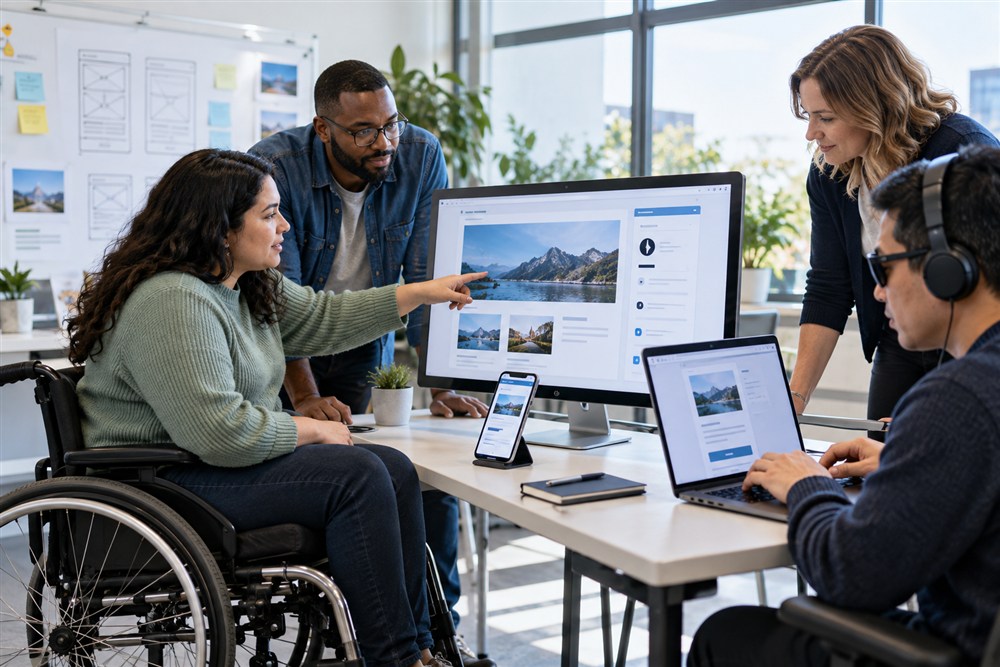
Accessibility Explainer
Accessibility in technology is about ensuring digital products can be used by as many people as possible, including those with disabilities such as visual, hearing, motor, or cognitive impairments. That means thinking beyond the “average user” and designing for real-world diversity: people using screen readers, high-contrast modes, captions, keyboard navigation, voice input, or just a cracked phone screen in bright sunlight. Rather than being a niche concern, accessibility affects core experiences on the web, in apps, in operating systems, and in connected devices.
In practice, accessibility blends technical standards with human-centered design. Developers may follow guidelines such as providing text alternatives for images, ensuring sufficient color contrast, and structuring content with headings and semantic HTML so assistive technologies can interpret it. Designers focus on readable typography, clear iconography, and interfaces that work without precise mouse movements. Product teams might add captions and transcripts for video, keyboard-accessible menus and forms, or error messages that explain what went wrong and how to fix it. All of this reduces friction not just for disabled users, but for anyone in a noisy room, on a slow connection, or multitasking while commuting.
Modern accessibility also extends into emerging tech. Voice assistants and smart speakers can enable hands-free interaction for people with mobility or vision challenges. Haptic feedback, augmented reality overlays, and customizable interfaces give users more ways to perceive information and control devices. At the same time, new technologies can introduce fresh barriers if they ignore accessibility from the start—for example, VR environments with text that’s too small to read, or AI-powered tools that produce content incompatible with screen readers. Building accessibility into design systems, component libraries, and development pipelines helps prevent these issues and spreads best practices across teams.
Ultimately, accessibility is both an ethical responsibility and a strategic advantage. Many regions now mandate digital accessibility in public services, education, and workplaces, and private companies increasingly face legal and reputational risk if their products exclude users. But beyond compliance, accessible products tend to be simpler, clearer, and more robust, leading to better user satisfaction and wider adoption. When teams treat accessibility as a core design requirement rather than an afterthought, they create technology that respects human differences and works better for everyone.
Accessibility in technology refers to designing digital products, tools, and environments so they can be used by people with a wide range of abilities, including those with visual, auditory, motor, and cognitive impairments. The concept grew alongside the rise of the modern internet, influenced by disability rights movements and early web standards that emphasized universal access.
At its core, accessibility aims to remove barriers that prevent users from fully interacting with technology. It is built on the principle that digital experiences should adapt to human diversity, not the other way around. Over time, accessibility guidelines and legislation—such as the Web Content Accessibility Guidelines (WCAG)—have shaped how developers and organizations approach inclusive design.
In practice, accessibility requires designers and developers to build interfaces that support multiple modes of interaction. This includes adding alt text to images, ensuring readable color contrast, enabling full keyboard navigation, providing captions and transcripts for audio and video, and structuring content with clear, semantic HTML that works seamlessly with assistive technologies like screen readers.
Accessibility also means designing for real-world situations: users on noisy trains, people with temporary injuries, or anyone navigating with limited bandwidth or small screens. Many accessibility improvements—such as cleaner layouts, clearer labels, and flexible controls—ultimately enhance the experience for all users, not just those with disabilities.
While accessibility standards have advanced significantly, challenges remain. Many digital products still fall short due to limited awareness, inconsistent testing, or reliance on emerging technologies—such as AI-generated content, VR interfaces, or rapidly evolving design systems—that may introduce new barriers if accessibility is not considered early.
Advocates argue that stronger enforcement, more inclusive design practices, and earlier integration of accessibility requirements can help close these gaps. The broader debate focuses on how to balance innovation with inclusive design, ensuring that new technologies expand access rather than unintentionally excluding segments of the global population.
Explore more "Explainers"
Discover additional explainers across politics, science, business, technology, and other fields. Each explainer breaks down a complex idea into clear, everyday language—helping you better understand how major concepts, systems, and debates shape the world around us.