

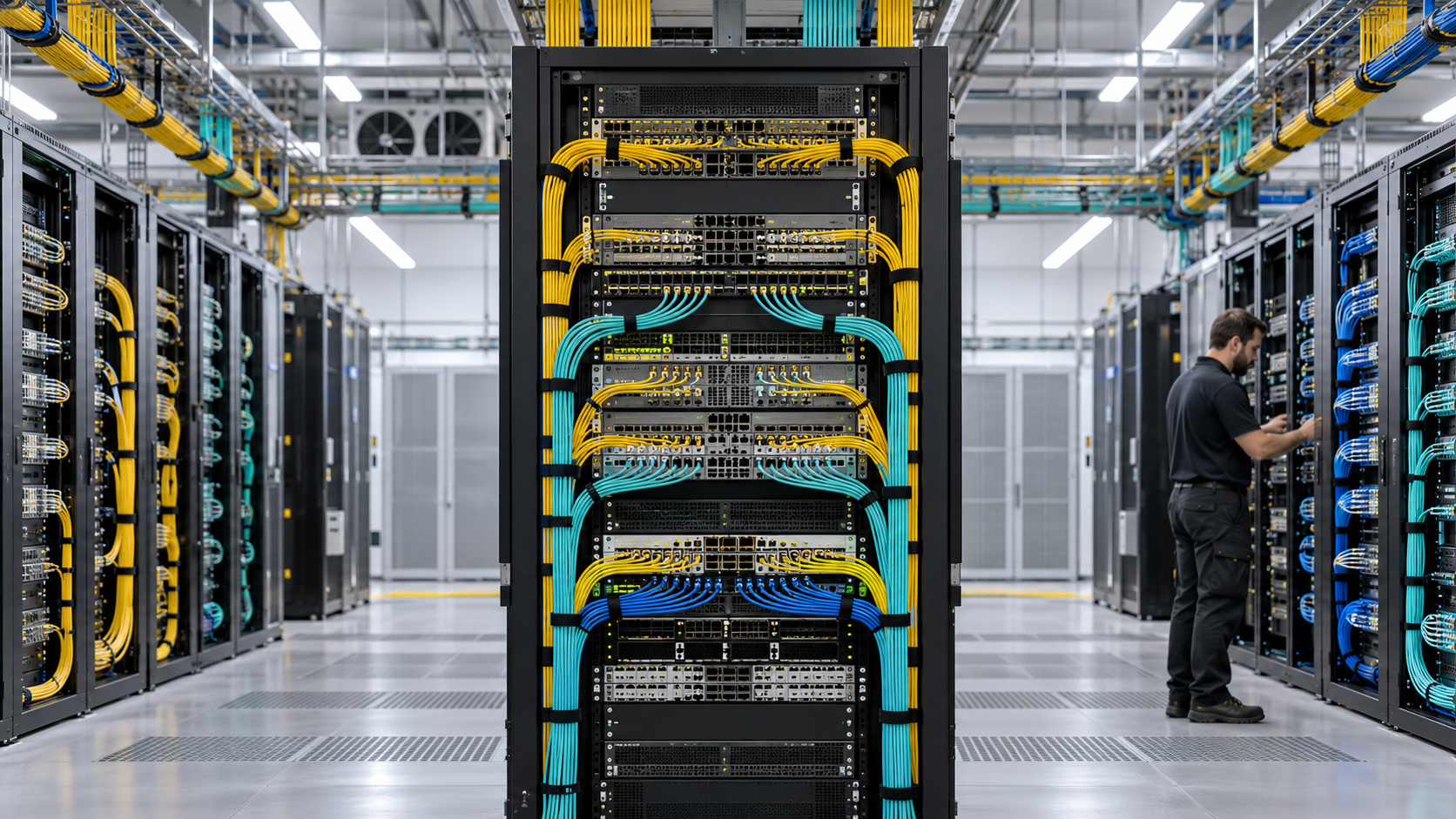
An Internet exchange point, or IXP, is shared infrastructure where independently operated networks connect and exchange traffic. Participants can include internet service providers, mobile carriers, cloud companies, content delivery networks, universities, governments, and large enterprises. Instead of sending every packet through a distant transit provider, two participants can agree to pass traffic directly at the exchange. Most IXPs provide a neutral Ethernet switching fabric across one or more data-center locations. Each member installs or leases a connection to that fabric and keeps control of its own routers, addressing, traffic policy, and business relationships.
A participating network typically connects a router port to the IXP through a fiber cross-connect or a transport circuit. The exchange assigns technical details such as a port, VLAN, and address on the shared peering network. The participants then use the Border Gateway Protocol, or BGP, to announce which IP address ranges they can reach. A bilateral peering session connects two networks directly. Many exchanges also operate route servers that collect and redistribute routes, allowing a member to establish one or two sessions instead of configuring a separate session with every willing peer.
When a user’s packet is destined for a network reachable through an accepted peering route, the sender’s router forwards it onto the IXP fabric. The exchange switch delivers the Ethernet frame to the receiving member’s port, and that member carries the packet onward. The IXP does not merge the companies into one network, rewrite their commercial policies, or own the traffic. It supplies an efficient meeting place. Networks still decide which routes to announce and accept, how much capacity to install, whether traffic is free or paid, and how to filter invalid or unwanted route information.
Direct local exchange can shorten the path between a user and a service. Fewer long-haul links may reduce latency, improve throughput, and lower the amount of paid transit a network buys. Local paths can also keep regional traffic within the region instead of sending it through a foreign hub and back. The broader benefit is resilience: an exchange gives networks more potential paths and partners. During a cable failure or congestion event, traffic may have alternatives. The gain is not automatic, however; members need adequate ports, sensible routing policies, monitoring, and diverse connections to realize it.
An IXP is not the same thing as an internet service provider, a data center, or a content delivery network. An ISP sells connectivity to customers. A data center provides space, power, cooling, and physical security, and may host one of an exchange’s sites. A CDN places copies of content near users and may join several IXPs to reach access networks efficiently. Large exchanges often span multiple facilities connected by their own backbone. The neutral organization operating the fabric may be nonprofit, commercial, or community-led, but successful exchanges commonly emphasize transparent rules, reliable operations, and trust among participants.
Operating an exchange requires more than installing a switch. Engineers plan redundant power and links, protect the management plane, watch utilization, handle abuse reports, and coordinate maintenance without surprising members. Route servers need filters that reduce accidental route leaks, while members remain responsible for their own BGP security. Capacity must grow before busy ports become bottlenecks. Governance matters too: participation fees, voting rights, acceptable-use rules, and expansion priorities can shape who benefits. At its best, an IXP is modest but important infrastructure—a well-run local crossroads that lets networks choose shorter, cheaper, and more resilient routes to one another. Members also monitor reachability and traffic patterns so they can distinguish a local port problem from a routing issue elsewhere. Public participant lists and looking-glass tools can help engineers understand available connections, but sensitive operational data and customer traffic remain under each network’s own controls and privacy obligations.
An ISP sells internet connectivity to customers. An IXP provides shared infrastructure where separate networks can exchange traffic under their own peering policies.
Peering is an arrangement in which networks exchange traffic directly, usually using BGP, rather than sending that traffic through a third-party transit provider.
No. Traffic follows routes selected by networks and may use private interconnections, transit providers, or IXPs depending on reachability and policy.
Explore more "Explainers"
Discover additional explainers across politics, science, business, technology, and other fields. Each explainer breaks down a complex idea into clear, everyday language—helping you better understand how major concepts, systems, and debates shape the world around us.