

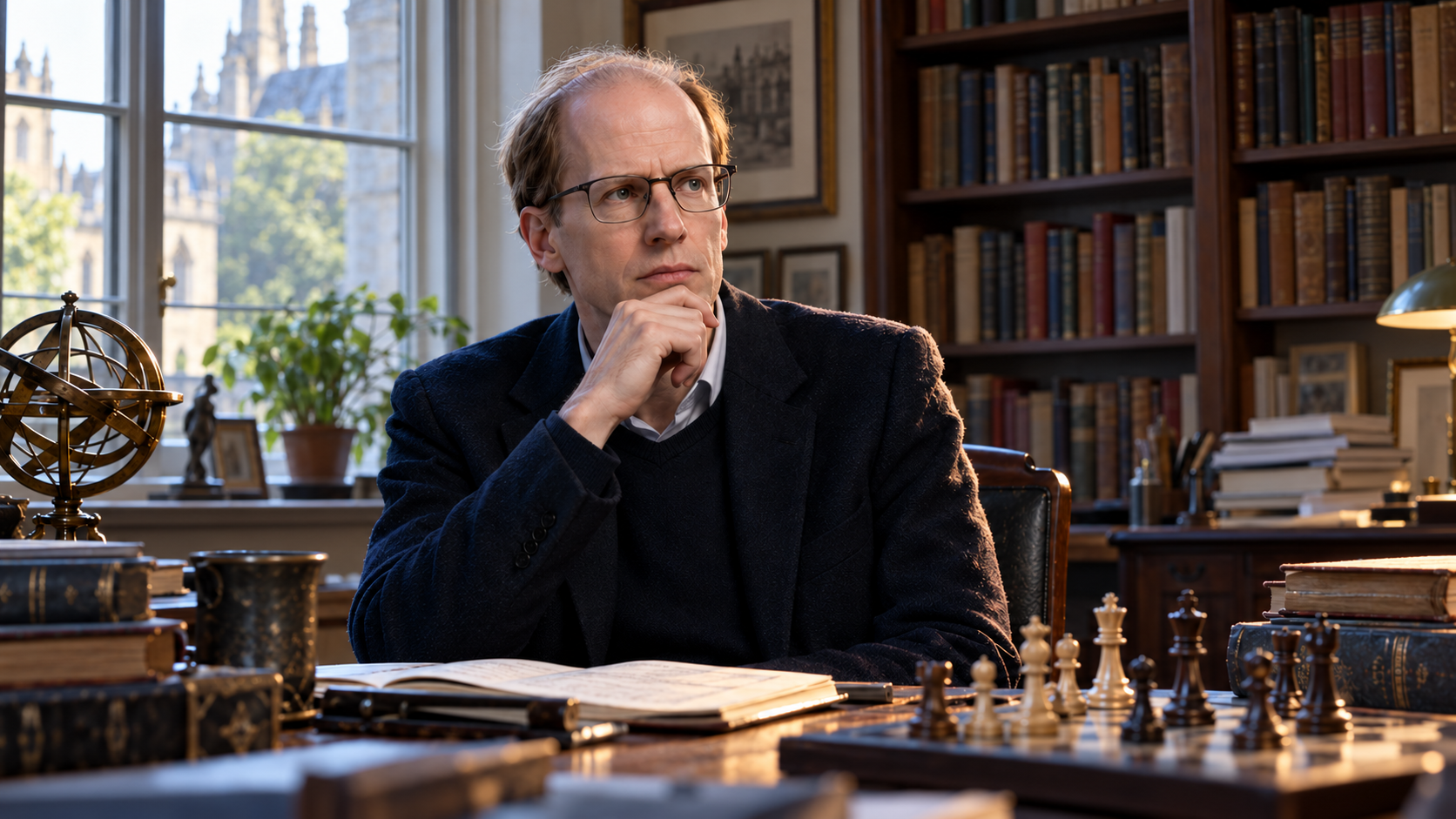
“Machine intelligence is the last invention that humanity will ever need to make.”
Nick Bostrom told a TED audience, “Machine intelligence is the last invention that humanity will ever need to make.” The sentence describes a threshold rather than a gadget. If a system could perform scientific and engineering research at or beyond the level of leading human teams, it might help design better algorithms, materials, medicines, energy systems, and machines. Invention would become an input to further invention. Humanity would not literally stop creating, but the central engine of technological progress could change from people using tools to people working with systems that can generate and test powerful new ideas themselves.
That prospect explains both the excitement and the concern surrounding advanced AI. Accelerated discovery could compress decades of work on disease, climate, or fundamental science. It could also increase the speed at which dangerous capabilities spread. The same system that improves biological research may lower barriers to misuse; one that writes secure software may also discover vulnerabilities. Bostrom’s argument focuses attention on generality and recursive improvement because the consequences could grow faster than institutions normally adapt. When capability advances quickly, safety work performed after deployment may arrive too late.
The quote should not be mistaken for a calendar prediction. No one knows whether or when systems will reach that level, and present models still show significant limits in reliability, planning, and grounding. The responsible response to uncertainty is not to accept every extreme claim, but to identify preparations that are valuable across several futures. Rigorous evaluations, secure model handling, incident reporting, international coordination, and research on controllability can reduce risk even if progress is slower than expected. Public scrutiny is especially important because decisions about frontier systems may affect people far beyond the organizations building them.
Bostrom’s line ultimately asks who controls the engine of invention and toward what ends. Intelligence alone does not supply legitimate goals. A highly capable system optimized for a narrow objective could pursue it in ways that conflict with human values, while a safe system deployed under concentrated ownership could still deepen inequality. Technical alignment, democratic governance, and broad distribution of benefits are related problems. If machine intelligence ever becomes an invention that transforms invention itself, the preparation that matters most will be preserving humanity’s ability to choose the purposes, limits, and institutions around that power. That preparation should remain open to revision as capabilities and evidence change. The seriousness of a possible threshold does not excuse secrecy or certainty; it strengthens the case for transparent assumptions, competing research programs, and institutions able to respond before decisions become irreversible.
A sufficiently capable AI system could contribute directly to research and engineering across many fields.
That would make technological progress partly self-amplifying, with discoveries improving the tools used to make later discoveries.
Faster innovation can multiply benefits while also shortening the time available to detect misuse or loss of control.
Evaluations, security, and governance therefore need to develop before capabilities become difficult to contain.
The quote describes a possibility, not a reliable date for human-level or superhuman AI.
Preparations should be proportionate, evidence-based, and useful across a range of plausible technical futures.
Explore more "Quotes of The Day"
Continue exploring how writers, thinkers, artists, and advocates have described the choices that shape an everyday life.