

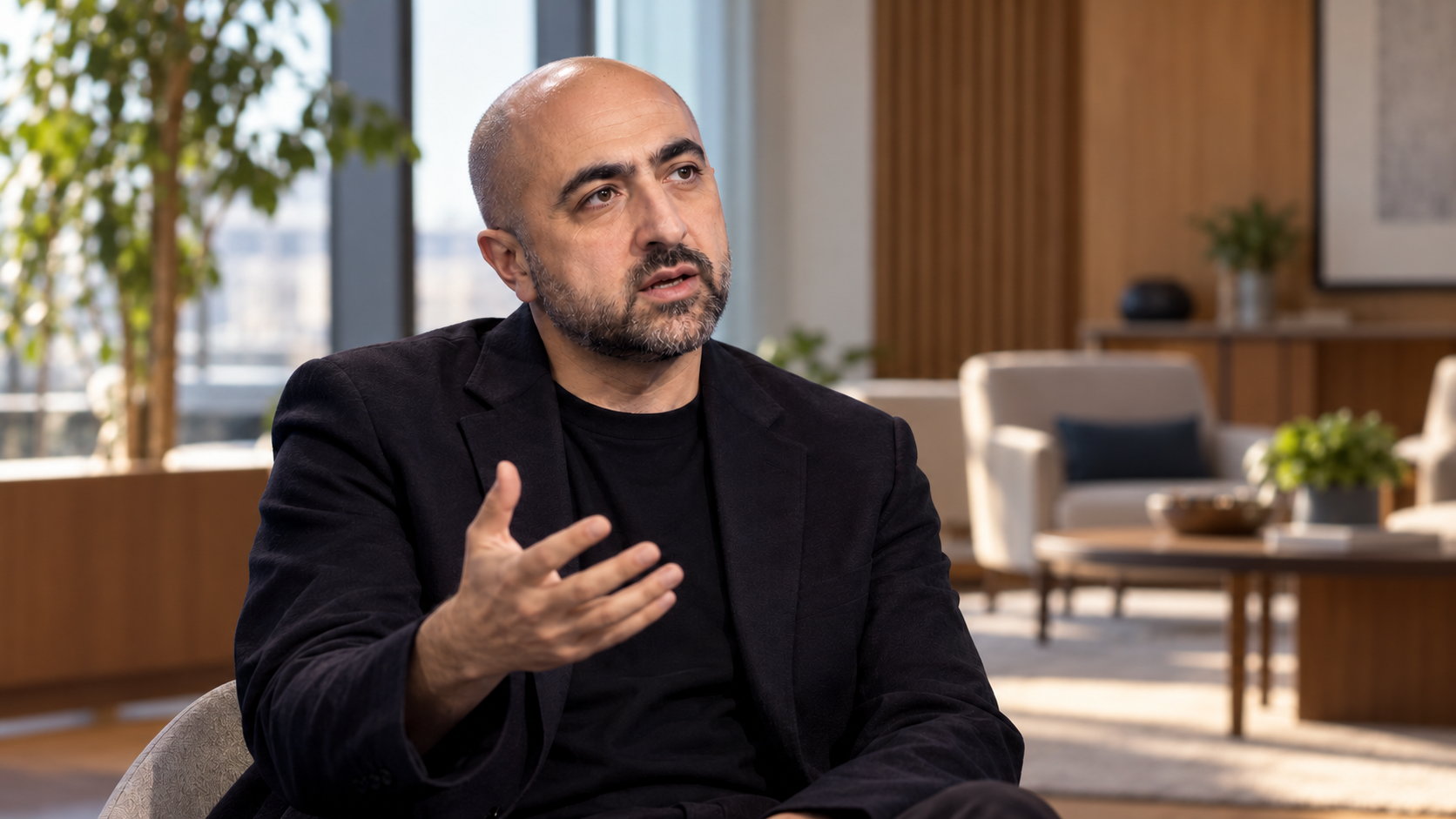
“AI is a new kind of digital species.”
Mustafa Suleyman’s statement “AI is a new kind of digital species” uses metaphor to describe systems that are becoming more conversational, adaptive, and capable of action. A species is not merely a tool; it suggests many individual agents sharing traits, interacting with an environment, and developing new capabilities over time. AI systems are not biological organisms, yet people increasingly encounter them as persistent assistants that can communicate, remember preferences, use software, and coordinate tasks. Suleyman’s phrase tries to capture the psychological and social shift created when computation begins to feel less like a menu and more like a counterpart.
The metaphor illuminates some real changes. Models can be copied at enormous scale, customized into many roles, and connected to tools that let them affect digital or physical systems. They may negotiate with one another, generate plans, and operate across longer periods. Society will need norms for identity, permission, security, and oversight that go beyond those designed for passive software. If millions of agents act on behalf of people and organizations, small design flaws or incentives can propagate rapidly. The ecology of interactions may matter as much as the behavior of any single model.
At the same time, “species” can mislead. AI systems do not reproduce, desire, suffer, or possess legal standing simply because they use language convincingly. They are engineered, owned, deployed, and switched on through human institutions. Anthropomorphic language can blur who is accountable when a model causes harm. A company should not be able to describe an AI as an independent creature when seeking attention and then as neutral software when responsibility arises. The metaphor is useful only if it sharpens preparation without erasing the people who control infrastructure, objectives, and access.
Suleyman’s quote is therefore best treated as a provocation about scale and relationship. AI may become a pervasive class of interactive digital actors, changing how people learn, work, create, and make decisions. That future requires technical boundaries, visible delegation, secure authentication, and clear human responsibility. Users should know when an agent acts, what authority it has, and how to stop or correct it. Whether or not “digital species” becomes accepted language, the underlying challenge is concrete: systems that appear increasingly agent-like must remain governed as human-built technologies serving human purposes. Metaphors shape policy, so they should be used with care. Calling an AI agent a colleague, species, or mind may help users anticipate interaction, but the legal and ethical baseline should remain clear: responsibility rests with the humans and organizations that give it power.
AI systems can be copied, specialized, networked, and given tools that let them act across digital environments.
At large scale, interactions among many agents may create effects not visible in a single conversation.
Current AI lacks biological life, independent reproduction, and demonstrated experience or desire.
Treating systems as creatures can obscure the companies and institutions that design, own, and deploy them.
People need to know what authority an AI agent has, when it acts, and how to revoke or correct that action.
Authentication, bounded permissions, monitoring, and clear human liability become essential as systems gain autonomy.
Explore more "Quotes of The Day"
Continue exploring how writers, thinkers, artists, and advocates have described the choices that shape an everyday life.