

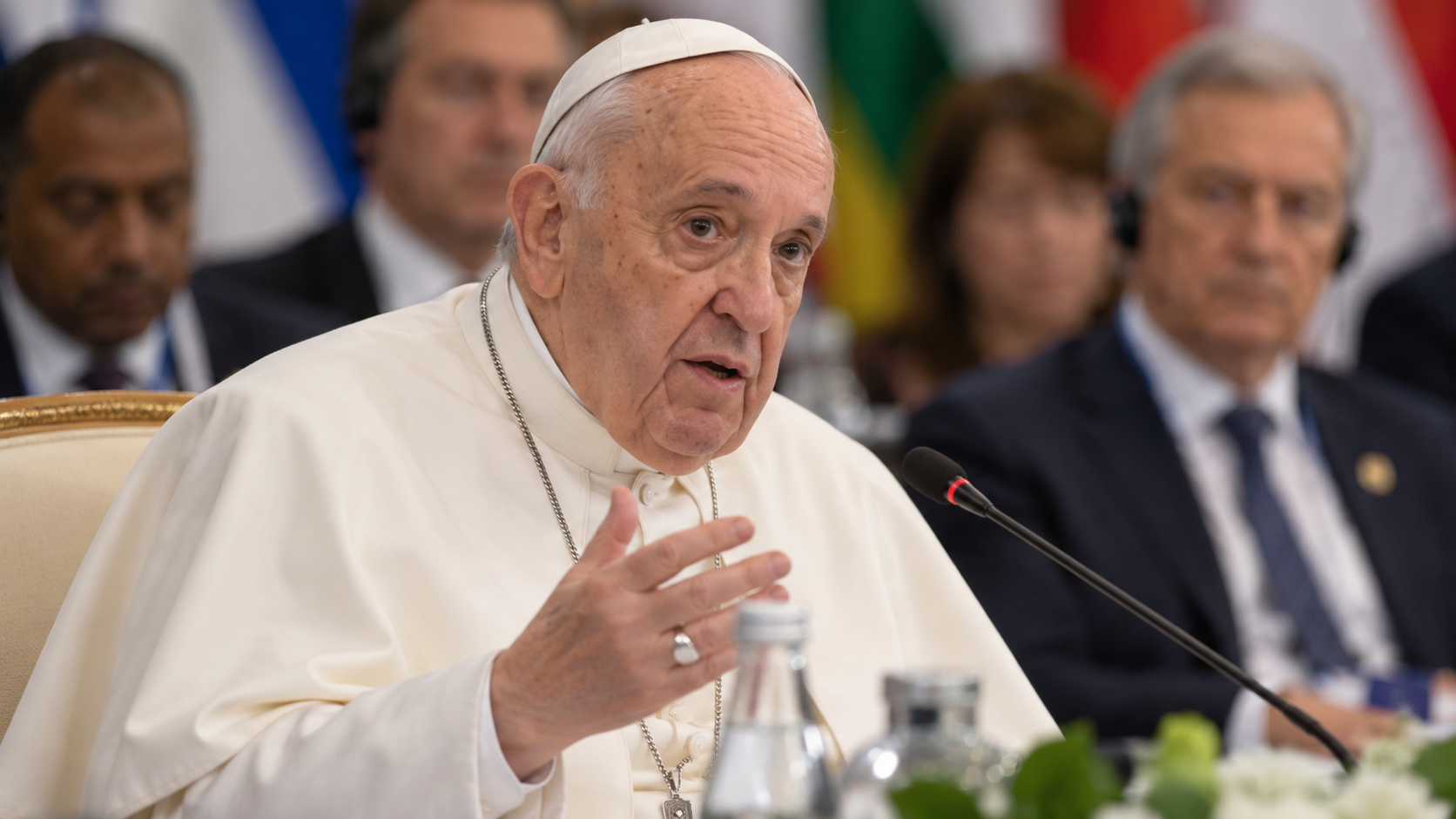
“No machine should ever choose to take the life of a human being.”
Pope Francis delivered this warning to leaders at the 2024 Group of Seven summit during a session on artificial intelligence. His address considered AI as both an impressive product of human creativity and a technology capable of reshaping power. The quoted sentence focuses on autonomous weapons, where systems may identify, select, or engage targets with decreasing human involvement. It draws a moral line: the decision to intentionally take a life cannot be reduced to a computational output or delegated to a mechanism that cannot understand dignity, suffering, or responsibility.
Military systems already use automation for navigation, surveillance, defense, and targeting support. The critical issue is not whether any software appears in the chain. It is whether human control remains meaningful when force is authorized and applied. A nominal supervisor may have only seconds to react, incomplete information, or no practical ability to understand a model’s recommendation. Speed can make human review ceremonial. Meaningful control requires time, context, technical understanding, reliable communications, and the real authority to refuse an engagement.
The concern extends beyond machine error. Even a highly accurate weapon raises questions about accountability, escalation, and the threshold for conflict. If a system kills unlawfully, responsibility cannot disappear among a commander, developer, manufacturer, data provider, and algorithm. Autonomous capabilities may also accelerate interactions faster than diplomacy can respond or spread to actors with weak safeguards. International rules must address design, testing, deployment, command structures, and prohibited uses before competitive pressure makes restraint more difficult.
Francis’s language places human dignity above efficiency. War already creates circumstances where perception is uncertain and moral judgment is strained. Removing the person who must confront the significance of a lethal choice risks making violence easier to initiate and harder to contest. The same principle informs civilian AI: decisions affecting rights and basic needs deserve accountable human authority, not ritual oversight. Technology can support analysis, but it cannot bear guilt, offer reasons to the harmed, or repair a moral wrong. Those obligations remain with people and institutions. The boundary in this quote is intentionally clear. Machines may inform people, but the gravity of lethal force requires identifiable human judgment, legal responsibility, and the possibility of moral refusal. Those requirements must be engineered into command systems and enforced through doctrine and international law. They cannot depend on a last-minute gesture toward oversight after speed and automation have already removed meaningful choice. The safeguard must remain effective and real.
Pope Francis addressed world leaders in June 2024 during a summit discussion devoted to artificial intelligence.
He linked technological innovation to human dignity, political responsibility, peace, and the need for effective safeguards.
A human operator needs time, information, understanding, and genuine authority to approve or refuse lethal force.
A person who merely watches an automated process without practical control cannot supply moral or legal accountability.
Lethal systems raise questions about escalation, responsibility, restraint, and the dignity of those placed at risk.
No performance statistic can transfer moral agency to software or absolve institutions that choose to deploy it.
Explore more "Quotes of The Day"
Continue exploring how writers, thinkers, artists, and advocates have described the choices that shape an everyday life.