

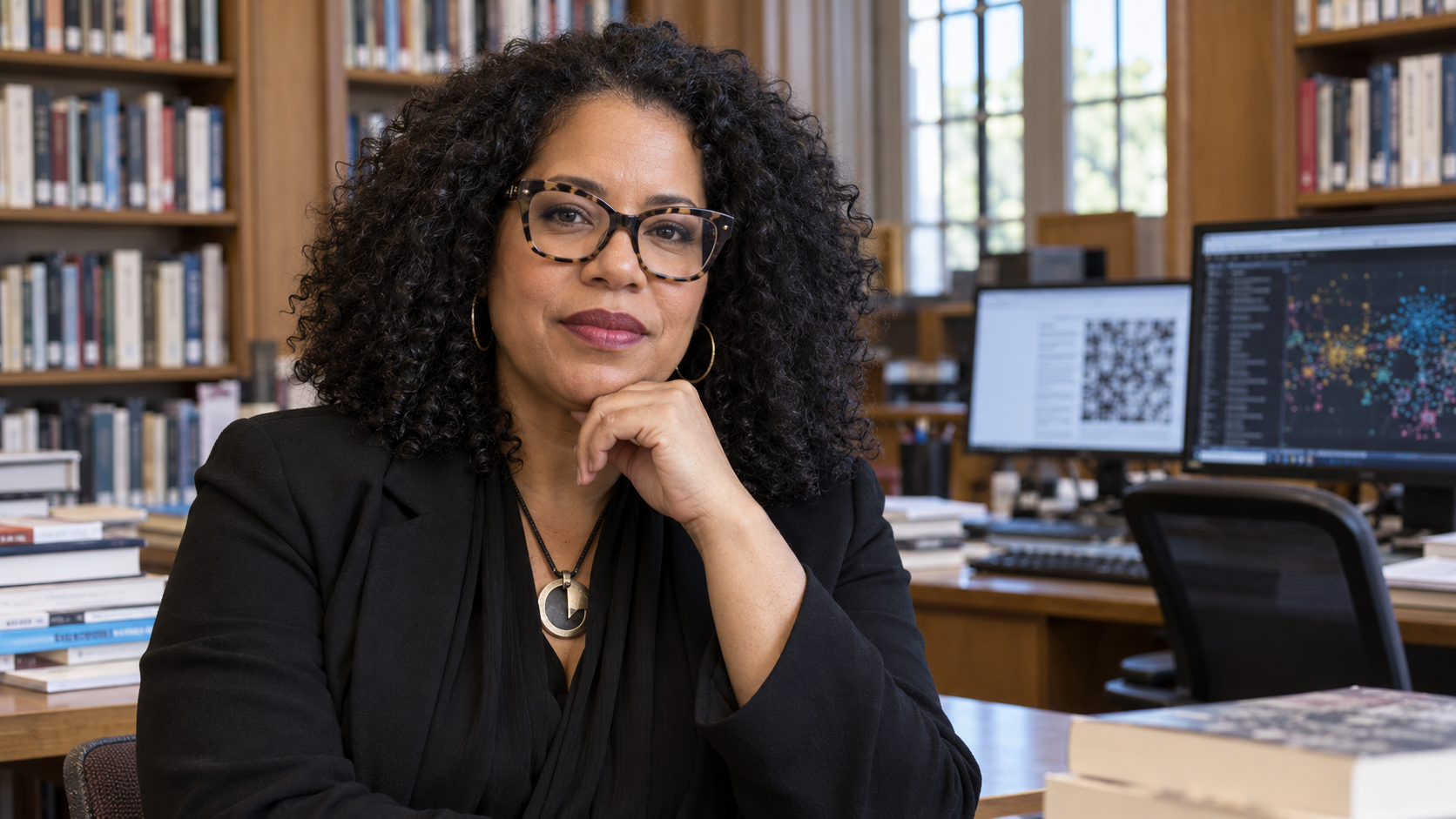
“The greater challenge before us will not be access to the internet, but freedom from machine-based decision making and control over our lives.”
Scholar Safiya Umoja Noble offered this warning while examining how search engines and other information systems reproduce social power. For years, closing the digital divide was often framed as a problem of access: connect more households, provide devices, and teach digital skills. Those goals remain important. Noble argues that a second problem grows once digital systems become unavoidable. People may gain access to the internet while losing control over how they are represented, ranked, watched, or judged by the organizations operating its infrastructure.
Search results offer a clear example. They can look like a neutral map of the web, yet rankings reflect commercial priorities, data, design choices, and patterns in society. Harmful stereotypes can be elevated and repeated at a scale no individual publisher could achieve. Similar dynamics appear when automated systems influence employment, housing, education, credit, policing, or public benefits. A person may never see the score or classification shaping an opportunity. Formal access to a website does little if the decision behind it cannot be understood or contested.
Freedom from machine-based control does not require rejecting every algorithm. It requires limits on where automated decisions belong and rights proportionate to their impact. People should know when a consequential system is being used, what information it relies upon, and how to correct inaccurate data. Institutions should test for discriminatory effects, offer accessible human review, and maintain records that allow oversight. Some decisions demand a person with authority to listen and provide reasons; adding a nominal human who simply accepts the machine’s output is not meaningful protection.
Noble’s work also directs attention to ownership and business models. Systems optimized for engagement, advertising, surveillance, or cost reduction may not serve the communities whose lives they organize. Technical literacy helps users navigate these systems, but it cannot substitute for public accountability. Individuals cannot opt out of essential services or negotiate alone with dominant platforms. Collective rules, research access, competition, worker voice, and civil-rights enforcement are necessary to ensure that digital participation expands freedom rather than creating new forms of invisible control. Noble’s warning expands the meaning of digital rights. People need connectivity, but they also need boundaries on automated power, visibility into consequential systems, and institutions capable of restoring control when technology narrows it. Freedom includes the ability to question a ranking, refuse unnecessary surveillance, correct a record, and reach a responsible person when a machine-mediated process goes wrong. Access must include recourse.
Devices, connectivity, and digital skills matter, but they do not determine how platforms rank or govern people.
A person can be connected while remaining unable to see or challenge the systems shaping opportunity.
Consequential uses should include notice, data correction, impact testing, understandable reasons, and meaningful human review.
The strength of protection should reflect what a system can do to a person’s livelihood, rights, or access to essentials.
Ranking and decision systems often optimize commercial or institutional objectives rather than community well-being.
Collective oversight is needed because individuals cannot negotiate alone with essential services or dominant platforms.
Explore more "Quotes of The Day"
Continue exploring how writers, thinkers, artists, and advocates have described the choices that shape an everyday life.