

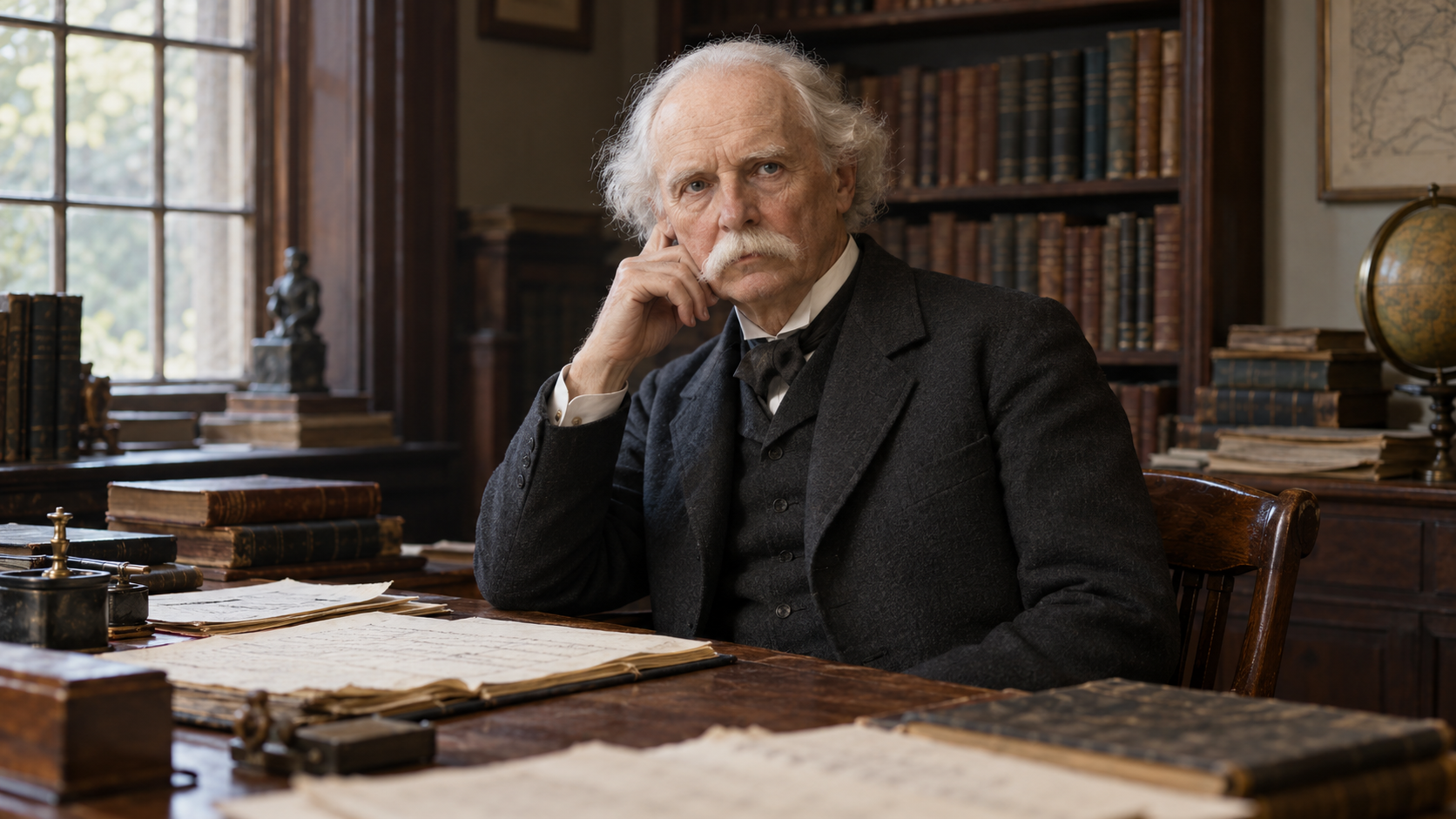
“The most valuable of all capital is that invested in human beings.”
Alfred Marshall placed this sentence in Principles of Economics while examining the forces that shape productive capacity across generations. He was not using “capital” only as an accounting label. He was arguing that health, education, judgment, and practical ability are productive resources, built slowly through families, schools, workplaces, and public institutions. In an industrial age fascinated by factories and machines, Marshall directed attention to the capabilities of people who design, operate, improve, and govern them. His claim makes human development central to economic strength rather than a charitable extra added after growth occurs.
For a business, the idea changes how spending on people should be evaluated. Training, safe conditions, useful feedback, apprenticeships, and opportunities to exercise judgment can create future capability, even when their return does not appear neatly in the next quarter. A machine can be listed on a balance sheet, while the knowledge that prevents defects or earns a customer’s trust often cannot. Marshall’s language reminds managers that the most consequential assets may leave the building every evening and decide each morning whether the organization still deserves their effort.
The metaphor also requires care. Calling people “capital” can flatten human worth into expected output, and Marshall’s surrounding Victorian discussion included assumptions about gender that should not be carried forward uncritically. People are not equipment owned by an employer. They have rights, lives, and purposes beyond any firm. The useful modern reading is therefore about investment in human capability, not possession of it. Development works best when employees gain portable skills, meaningful agency, and a fair share of the value their growing competence helps create.
That distinction matters in an economy shaped by automation and rapid technological change. Companies can treat workers as costs to be minimized, or they can build systems in which people learn to use new tools, question weak processes, and move into more valuable work. The second path demands patience and measurement beyond payroll efficiency. Leaders can ask whether today’s decisions leave their workforce healthier, more capable, and better able to adapt tomorrow. Marshall’s enduring point is that durable prosperity begins with developed human beings, not merely accumulated things. A useful board-level application is to compare human-development spending with other long-lived investments. Leaders can track internal mobility, skill acquisition, retention after training, safety, and the quality of decisions made closer to customers. They should also ask who receives development and who remains trapped in roles with little progression. If learning is reserved for already privileged employees, the company reproduces scarcity instead of building capacity. Marshall’s point becomes measurable when opportunity to grow is distributed deliberately and when the gains from higher productivity are shared with the people whose capabilities produced them.
Marshall published the line in the 1890 first edition of Principles of Economics during a discussion of education, family influence, and productive capacity.
Its language challenged an economic view that noticed physical plant more readily than the accumulated abilities of people.
The statement treats knowledge, health, and judgment as investments with long-lived economic effects.
A modern reading should reject any implication that employers own people; human capability belongs first to the person who develops it.
Automation increases the value of learning, adaptation, and responsible judgment even as some routine tasks disappear.
Organizations that build portable skills and genuine agency create resilience that simple labor-cost reduction cannot provide.
Explore more "Quotes of The Day"
Discover more notable quotes from influential voices across politics, science, business, technology, sports, and culture. Each quote offers insight into how ideas, beliefs, and decisions shape the world around us.