

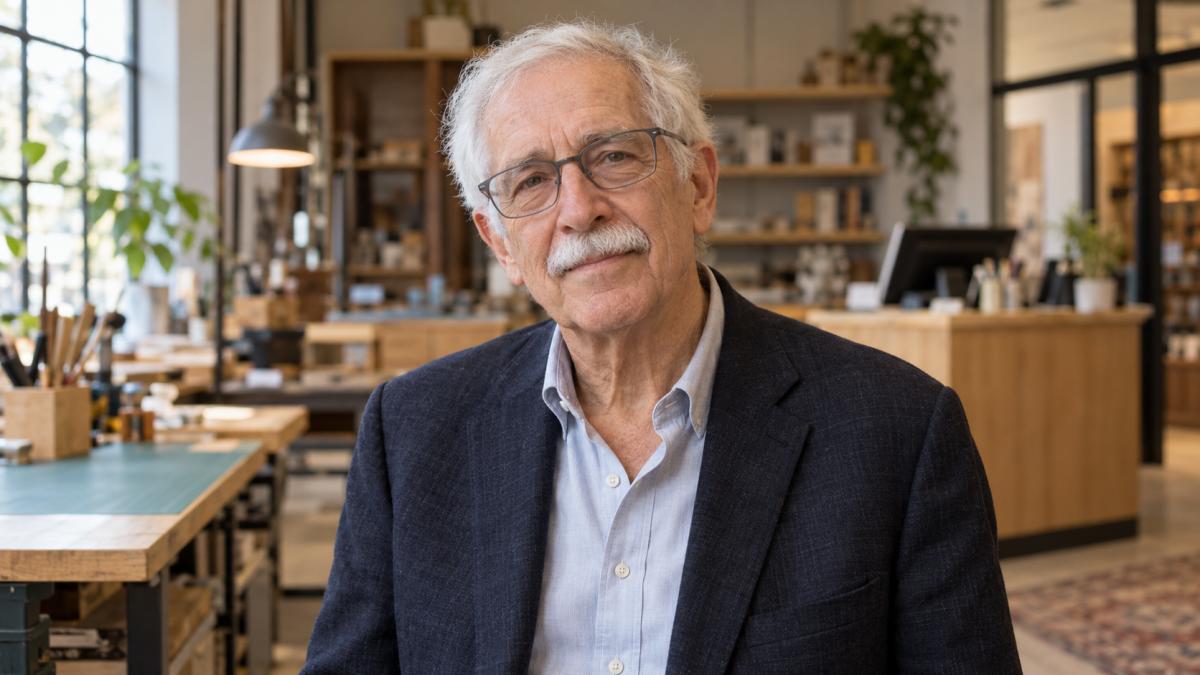
“The way we think about work is broken.”
Barry Schwartz used this sentence as the title and central claim of a 2014 TED talk. He challenged the assumption that most people work only for pay and will avoid effort unless tightly controlled. Organizations built on that belief create fragmented, monitored, and meaningless jobs. People then disengage, appearing to confirm the original theory. Schwartz argued that human nature is partly shaped by institutions. Workplaces can cultivate initiative, responsibility, and practical wisdom, or they can design those qualities out of the job and mistake the result for evidence about workers.
Meaningful work does not require every role to be a personal calling. It can arise from service to another person, visible contribution, craftsmanship, learning, discretion, and relationships. Managers can connect tasks to outcomes, let employees solve appropriate problems, and make the beneficiary of the work less abstract. Jobs can include enough variety and feedback for skill to grow. Fair pay and safe conditions remain foundational; meaning is not a substitute for them. The opportunity is to improve the work itself rather than relying only on incentives around it.
The argument can be romanticized. Some necessary tasks are repetitive, and customers still need consistency. Autonomy without staffing, training, or boundaries can become extra burden. Workers also differ in what they seek from a job, and nobody should be judged for treating employment principally as income. Better design begins with listening to the people doing the work, including those in hourly and contracted roles. The goal is not compulsory passion but a system that does not unnecessarily strip dignity, judgment, and connection from ordinary labor.
Automation makes the question urgent. Companies can use technology to remove danger and drudgery, then enrich the human role, or use it to intensify surveillance and leave people handling only the most stressful exceptions. A work-design review can examine discretion, learning, customer connection, pace, and the distribution of gains. Employees should help decide which tasks tools assume and which capabilities they want to develop. Schwartz’s line reminds leaders that theories of motivation become self-fulfilling through policy. Design work for the kind of human behavior the organization hopes to deserve. A redesign pilot can begin with one role and compare outcomes before and after employees gain clearer purpose, more discretion, better feedback, or closer customer contact. Quality, retention, safety, and stress should be assessed together. The experiment makes the business effect visible while giving workers a formal role in interpretation. If the change only raises output by transferring pressure elsewhere, the broader measures will expose the false improvement.
Schwartz made the claim in his 2014 TED talk on the ideas and institutions shaping work.
He argued that workplaces can create the disengaged behavior they assume to be natural and then cite it as proof.
Meaning can come from contribution, craft, learning, relationships, and discretion when fair pay and safety are present.
Not every job must be a calling, and autonomy without resources or employee voice can simply add burden.
Automation can remove drudgery and expand judgment, or intensify monitoring and concentrate stressful exception work.
Employee-led work design helps technology improve dignity, capability, and the distribution of productivity gains.
Explore more "Quotes of The Day"
Discover more notable quotes from influential voices across politics, science, business, technology, sports, and culture. Each quote offers insight into how ideas, beliefs, and decisions shape the world around us.