

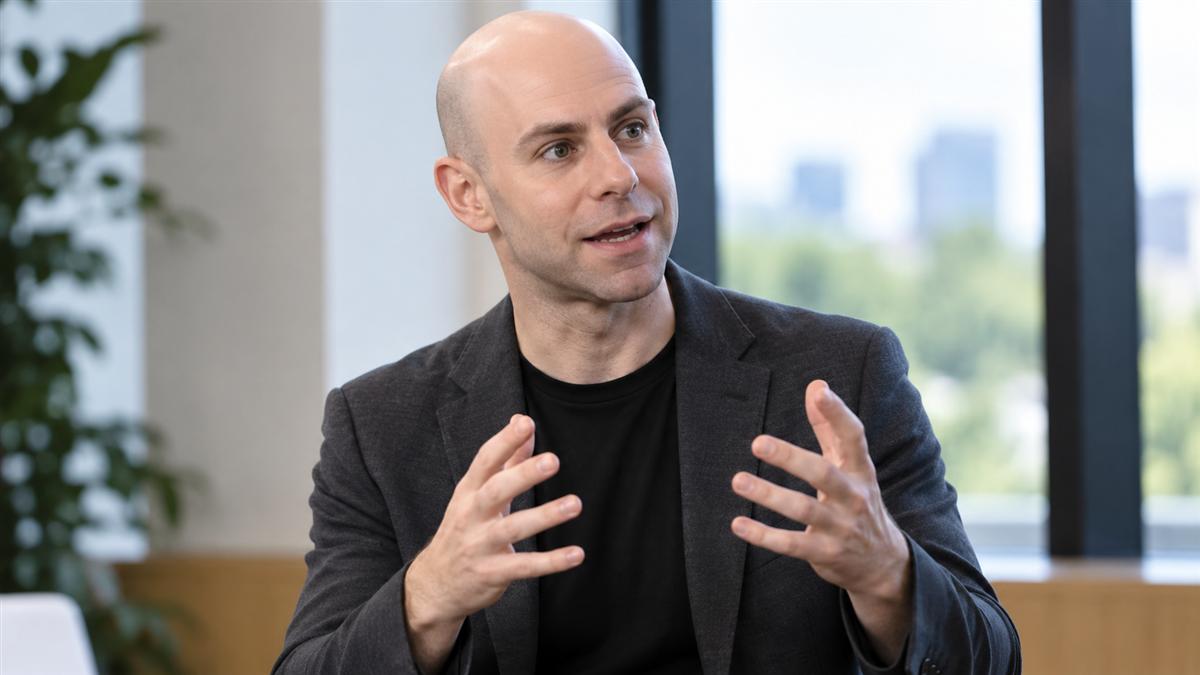
“The hallmark of an open mind is refusing to let your ideas become your identity.”
Adam Grant’s sentence extends the central argument of Think Again: intellectual flexibility depends on separating what we believe from who we are. When an opinion becomes an identity badge, contrary evidence feels like a personal attack. People defend the self by defending the claim, even after its explanatory power weakens. Grant proposes a different identity—curious person or lifelong learner—that makes revision a sign of integrity rather than betrayal. The quote moves open-mindedness beyond polite listening and toward a deeper willingness to let information alter a cherished conclusion.
Organizations can reinforce that willingness through their decision processes. A proposal can list assumptions, confidence levels, and evidence that would change the recommendation. Leaders can appoint a challenger, run a premortem, and reward the person who identifies a flaw before launch. Meeting notes should record why a choice was made so later revision does not depend on memory or status. When executives publicly update a view and explain what changed, they show that accuracy ranks above consistency theater. That example matters more than asking employees to “speak up.”
Detachment from ideas does not require detachment from values. Some commitments—human dignity, safety, honesty, or equal treatment—should guide inquiry rather than remain permanently negotiable. Nor is rapid opinion change always a virtue; evidence may be weak or manipulated. Grant’s principle calls for calibrated confidence, not fashionable doubt. People should examine source quality, seek disconfirmation, and distinguish a factual prediction from a moral commitment. Open minds need standards, or flexibility can become a cover for convenience and power.
AI systems make identity-protective reasoning easier because anyone can generate persuasive support for a preferred position. Teams can ask models to produce counterarguments, but they must verify evidence and prevent synthetic debate from replacing contact with affected people. Decision reviews can compare the original assumptions with observed results and name which beliefs were retired. Grant’s sentence supplies a healthy cultural ambition: employees should be able to say “I was wrong” without losing status—and leaders should lose more credibility for ignoring evidence than for changing their minds. Teams can normalize revision with an “updated beliefs” section in major reviews. The author states one view that strengthened, one that weakened, and the evidence responsible. Leaders participate first and avoid rewarding theatrical reversals unsupported by facts. The practice builds a history of calibrated learning and makes it harder to rewrite earlier certainty after results arrive. It also teaches that credibility comes from transparent reasoning across time, not from maintaining an image of having predicted every outcome.
Grant developed the idea through Think Again and later restated it in his public writing.
He argues that attaching identity to opinions makes evidence feel threatening and turns revision into a personal loss.
Assumptions, disconfirming evidence, decision records, and leaders who update publicly make reconsideration safer.
Open-mindedness still requires stable ethical values and rigorous standards for judging evidence.
Generative AI can manufacture persuasive support for nearly any preferred conclusion.
Counterarguments, verified sources, and outcome reviews help teams revise beliefs instead of automating confirmation bias.
Explore more "Quotes of The Day"
Discover more notable quotes from influential voices across politics, science, business, technology, sports, and culture. Each quote offers insight into how ideas, beliefs, and decisions shape the world around us.