

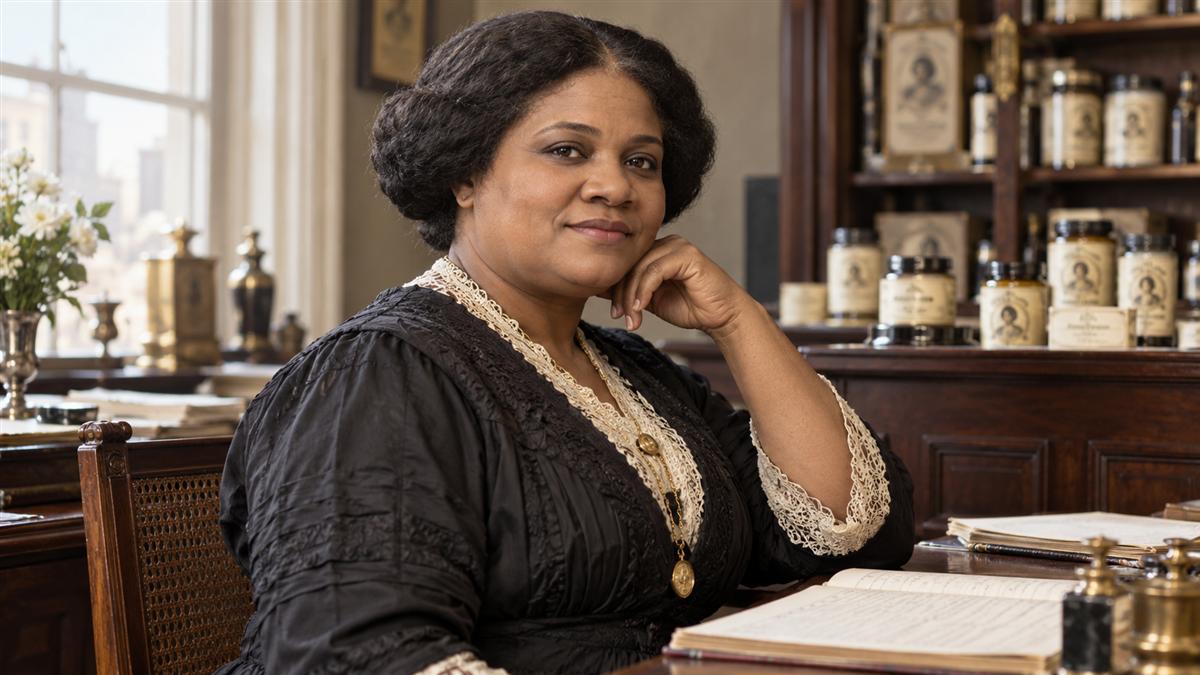
“I got my start by giving myself a start.”
Madam C. J. Walker often used this line to describe a rise that began in poverty and manual labor and led to a national hair-care enterprise. Born Sarah Breedlove to formerly enslaved parents, she built products, a sales organization, training systems, and economic opportunity for thousands of Black women. The quote claims agency without denying hardship. Walker did not wait for an established institution to assign her a role; she began by acting on a problem she understood and by creating a route into markets that excluded or overlooked her customers.
Giving yourself a start can be translated into a small, testable first move. An entrepreneur can serve a handful of customers, demonstrate a product, learn the language people use for the problem, and reinvest early revenue. Walker’s model also shows that growth comes through other people. Her agents were not merely a distribution channel; training and entrepreneurship allowed value to spread through a community. Modern founders can design opportunity into the business by making skills, ownership, and advancement available to the people who help create demand.
Self-starting should not be turned into a myth that everyone faces equal options. Walker confronted racism, sexism, poverty, and limited access to capital; her achievement is remarkable partly because those barriers were real. Celebrating personal initiative must not absolve institutions from removing unfair obstacles or investing in public opportunity. Entrepreneurship also depends on customers, employees, family, networks, and infrastructure. Agency is most powerful when society widens the space in which more people can exercise it.
The line still resonates in markets where established funding and distribution favor familiar founders. Businesses, lenders, and platforms can create smaller entry points, transparent criteria, and support that lets evidence of demand count before social pedigree. Entrepreneurs can begin with lived knowledge and a narrow customer promise rather than imitating a venture-backed template. Walker’s sentence is not a guarantee that effort will overcome every barrier. It is a call to make the first credible move—and to build systems through which other people can start as well. Incubators can honor Walker’s legacy by evaluating the quality of a customer insight and evidence of disciplined action before demanding a polished network. Microgrants, shared services, and purchase commitments can help a founder reach the next proof point without surrendering control prematurely. Programs should also track who becomes an employer, trainer, or supplier for others. The strongest start is not only a personal escape from exclusion; it can become infrastructure through which a community builds additional starts.
Walker often used the line when recounting her journey from washerwoman to entrepreneur and philanthropist.
Her company combined specialized products with training and a sales network that expanded economic opportunity for Black women.
A practical first move can create evidence, learning, revenue, and a path for wider participation.
Self-starting does not erase structural barriers or the customers, workers, communities, and institutions that make growth possible.
Capital and distribution still favor founders with familiar networks and credentials.
Smaller entry points, transparent criteria, and support let lived knowledge and demonstrated demand count more heavily.
Explore more "Quotes of The Day"
Discover more notable quotes from influential voices across politics, science, business, technology, sports, and culture. Each quote offers insight into how ideas, beliefs, and decisions shape the world around us.