

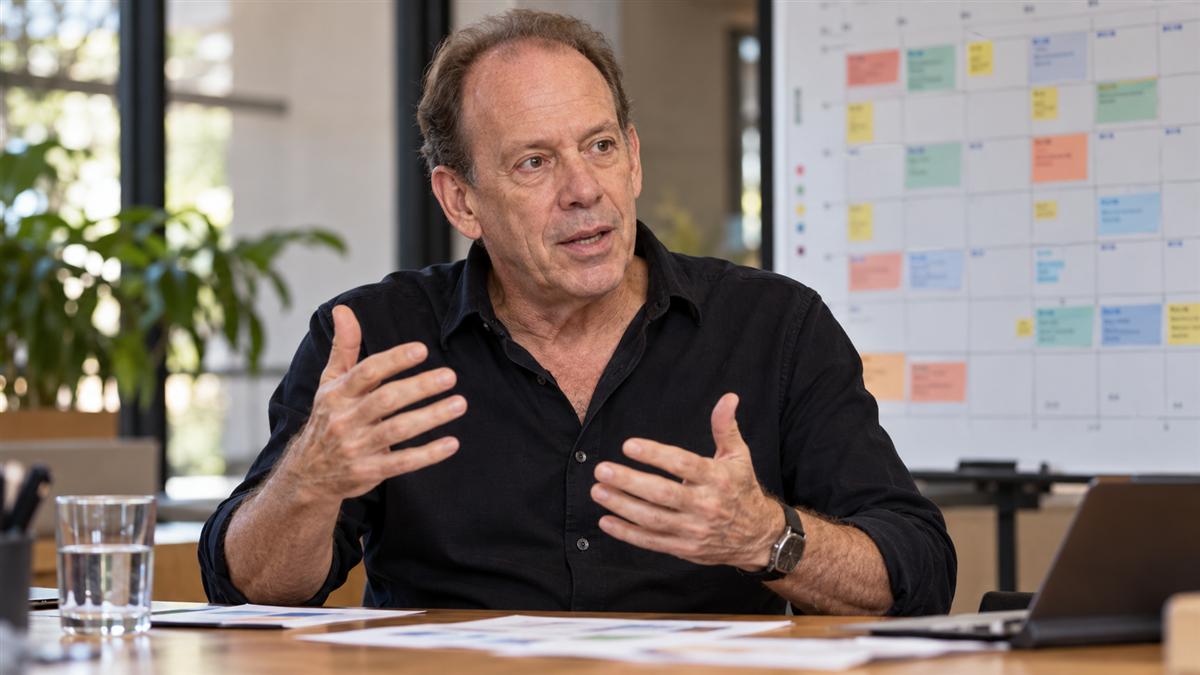
“Everyone here is a full adult. Why can’t they make a decision about their workplace?”
Ricardo Semler posed this challenge while describing democratic management at Semco. His approach questioned rules about schedules, information, salaries, and supervision that treated capable adults as though judgment disappeared when they entered an organization. The question exposes a contradiction between responsibility outside work and dependence inside it. Transparency and voice can let employees use local knowledge, understand tradeoffs, and make choices that would otherwise travel through a hierarchy too slowly or without enough context. Read closely, the line is not a promise of easy certainty. It asks decision makers to examine the assumptions and conditions behind ordinary results, especially when familiar routines conceal what customers, employees, or the wider system actually experience.
Leaders can begin with decisions closest to the work, share the economic information needed to make them, and agree on boundaries for safety, law, and coordination. Peer review and visible consequences can support accountability without restoring permission for every step. Managers can make the principle observable by naming the decision it should change, the evidence they will review, and the person accountable for follow-through. That discipline keeps an admired quotation from becoming wall decoration and turns it into a repeatable way of working.
Formal freedom can mask unequal power or place difficult tradeoffs on employees without security. Participation needs access to information, protected dissent, fair pay, and an appeal path. Some risks legitimately require independent oversight or consistent enterprise standards. The useful interpretation keeps ambition and restraint together. Leaders should ask who benefits, who bears the risk, what would disconfirm the current belief, and whether people have a fair way to challenge the decision before a local success is mistaken for a durable one.
Remote work and digital monitoring have revived questions about adult autonomy. Organizations can judge people through agreed outcomes and responsible collaboration rather than activity traces that encourage performance of busyness and erode the trust needed for real discretion. A decision-rights audit can move authority toward informed adults while preserving the safeguards that protect colleagues, customers, and the enterprise. A practical review can compare the stated promise with customer outcomes, employee experience, operating evidence, and unintended effects. It should record what changed, what remains uncertain, and when the decision will be examined again with documented evidence. The final test is not whether the line sounds inspiring, but whether it helps the organization learn sooner, act more responsibly, and create value that can survive scrutiny over time.
Ricardo Semler posed this challenge while describing democratic management at Semco. His approach questioned rules about schedules, information, salaries, and supervision that treated capable adults as though judgment disappeared when they entered an organization.
The question exposes a contradiction between responsibility outside work and dependence inside it. Transparency and voice can let employees use local knowledge, understand tradeoffs, and make choices that would otherwise travel through a hierarchy too slowly or without enough context.
Leaders can begin with decisions closest to the work, share the economic information needed to make them, and agree on boundaries for safety, law, and coordination. Peer review and visible consequences can support accountability without restoring permission for every step.
Formal freedom can mask unequal power or place difficult tradeoffs on employees without security. Participation needs access to information, protected dissent, fair pay, and an appeal path. Some risks legitimately require independent oversight or consistent enterprise standards.
Remote work and digital monitoring have revived questions about adult autonomy. Organizations can judge people through agreed outcomes and responsible collaboration rather than activity traces that encourage performance of busyness and erode the trust needed for real discretion.
A decision-rights audit can move authority toward informed adults while preserving the safeguards that protect colleagues, customers, and the enterprise.
Explore more "Quotes of The Day"
Discover more notable quotes from influential voices across politics, science, business, technology, sports, and culture. Each quote offers insight into how ideas, beliefs, and decisions shape the world around us.