

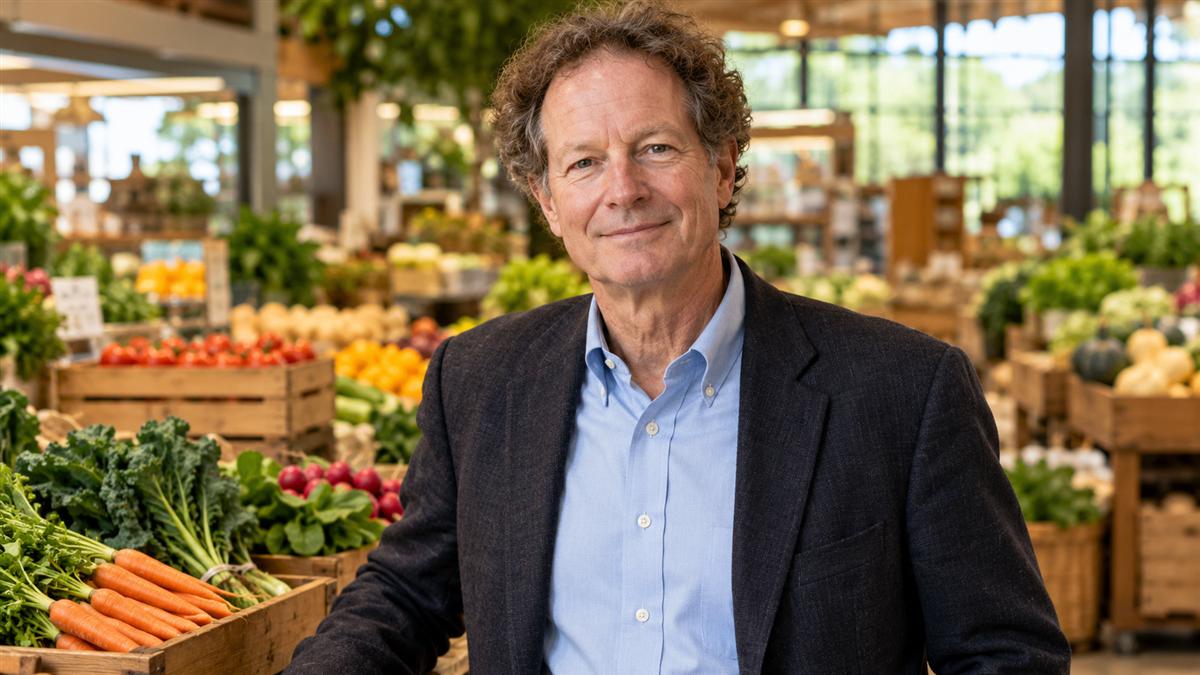
“Our purpose is to nourish people and the planet.”
John Mackey restated Whole Foods Market’s purpose in the company’s 2021 impact update. The phrase joins the customer and ecological systems that make the food business possible, framing quality, sourcing, employees, communities, waste, and environmental effect as connected parts of the enterprise. Purpose can coordinate decisions when it is specific enough to create tradeoffs. “Nourish” implies more than selling products: it asks whether the business supports health, livelihoods, soil, communities, and long-term supply rather than optimizing one transaction in isolation. Read closely, the line is not a promise of easy certainty. It asks decision makers to examine the assumptions and conditions behind ordinary results, especially when familiar routines conceal what customers, employees, or the wider system actually experience.
Leaders can translate purpose into sourcing standards, employee conditions, product criteria, waste goals, supplier development, and capital decisions. Metrics should reveal both progress and tension, while buyers and operators have authority to reject a profitable choice that violates a stated boundary. Managers can make the principle observable by naming the decision it should change, the evidence they will review, and the person accountable for follow-through. That discipline keeps an admired quotation from becoming wall decoration and turns it into a repeatable way of working.
Broad purpose claims invite skepticism when pricing, labor practice, packaging, or supplier power contradicts them. A company should disclose gaps and independent evidence, not select only favorable stories. Purpose cannot erase ordinary duties to customers, workers, and law. The useful interpretation keeps ambition and restraint together. Leaders should ask who benefits, who bears the risk, what would disconfirm the current belief, and whether people have a fair way to challenge the decision before a local success is mistaken for a durable one.
Food systems face climate, affordability, health, and resilience pressures at once. Data and AI can improve forecasting or traceability, but the purpose determines which outcomes the technology optimizes and whose knowledge counts when tradeoffs emerge. A purpose audit can trace one product from supplier to customer and test whether the full chain supports people and planet as promised. A practical review can compare the stated promise with customer outcomes, employee experience, operating evidence, and unintended effects. It should record what changed, what remains uncertain, and when the decision will be examined again with documented evidence. The final test is not whether the line sounds inspiring, but whether it helps the organization learn sooner, act more responsibly, and create value that can survive scrutiny over time.
John Mackey restated Whole Foods Market’s purpose in the company’s 2021 impact update. The phrase joins the customer and ecological systems that make the food business possible, framing quality, sourcing, employees, communities, waste, and environmental effect as connected parts of the enterprise.
Purpose can coordinate decisions when it is specific enough to create tradeoffs. “Nourish” implies more than selling products: it asks whether the business supports health, livelihoods, soil, communities, and long-term supply rather than optimizing one transaction in isolation.
Leaders can translate purpose into sourcing standards, employee conditions, product criteria, waste goals, supplier development, and capital decisions. Metrics should reveal both progress and tension, while buyers and operators have authority to reject a profitable choice that violates a stated boundary.
Broad purpose claims invite skepticism when pricing, labor practice, packaging, or supplier power contradicts them. A company should disclose gaps and independent evidence, not select only favorable stories. Purpose cannot erase ordinary duties to customers, workers, and law.
Food systems face climate, affordability, health, and resilience pressures at once. Data and AI can improve forecasting or traceability, but the purpose determines which outcomes the technology optimizes and whose knowledge counts when tradeoffs emerge.
A purpose audit can trace one product from supplier to customer and test whether the full chain supports people and planet as promised.
Explore more "Quotes of The Day"
Discover more notable quotes from influential voices across politics, science, business, technology, sports, and culture. Each quote offers insight into how ideas, beliefs, and decisions shape the world around us.