

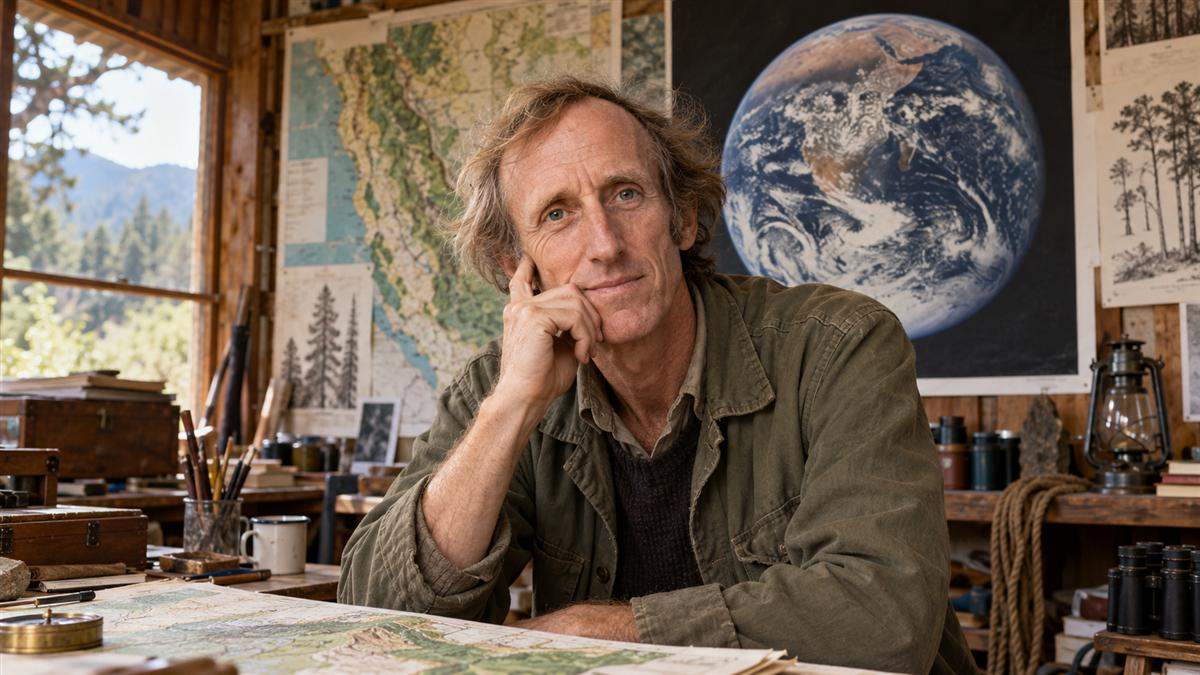
“We are as gods and might as well get good at it.”
Stewart Brand placed this line at the opening of the Whole Earth Catalog in 1968. The publication offered access to tools and ideas for people shaping their own education and environment, while the sentence insisted that growing human power carries a corresponding need for skill and responsibility. The claim is intentionally unsettling. Technology, institutions, and markets already alter ecosystems and communities at vast scale, whether leaders acknowledge that agency or not. Getting good at it means seeing whole systems, long time horizons, feedback, and unintended effects. Read closely, the quotation is an operating claim rather than a decorative slogan. It asks leaders to connect an admired principle with the conditions, measures, and behavior through which customers and employees would actually experience it.
Organizations can map material and social dependencies, include long-term scenarios in capital decisions, and involve people who experience downstream effects. Experiments should measure not only the intended output but also the system changes that accumulate around it. To make that connection visible, decision makers should name the choice the idea is meant to change, the evidence they will review, and the person responsible for follow-through. A principle becomes useful when others can observe its effect on work.
Powerful actors can use stewardship language to justify control or technological fixes without consent. Humility, democratic oversight, ecological evidence, and reversibility are essential. Capability does not create moral authority, and some interventions should not proceed. The strongest interpretation holds ambition and restraint together. Teams should ask who benefits, who carries risk, what evidence would disconfirm the current belief, and how a person affected by the decision can question it before costs become difficult to reverse.
AI, biotechnology, and climate intervention make Brand’s challenge newly literal. Companies need governance that matches the scale of their tools, including independent review, public accountability, red-team testing, and investment in the capacity to repair harm. A long-horizon review can ask what the decision changes beyond the balance sheet, who gains agency, which feedback loops intensify, and whether the organization can reverse or repair the outcome. A practical review should compare the promise with outcomes, experience, and unintended effects. The final test is not whether the words sound inspiring, but whether they help the organization learn earlier, act responsibly, and create value that can withstand scrutiny. Results should be shared in plain language, including disappointments, so later decisions begin with accumulated evidence rather than a polished story that hides the conditions under which the earlier choice succeeded.
Stewart Brand placed this line at the opening of the Whole Earth Catalog in 1968. The publication offered access to tools and ideas for people shaping their own education and environment, while the sentence insisted that growing human power carries a corresponding need for skill and responsibility.
The claim is intentionally unsettling. Technology, institutions, and markets already alter ecosystems and communities at vast scale, whether leaders acknowledge that agency or not. Getting good at it means seeing whole systems, long time horizons, feedback, and unintended effects.
Organizations can map material and social dependencies, include long-term scenarios in capital decisions, and involve people who experience downstream effects. Experiments should measure not only the intended output but also the system changes that accumulate around it.
Powerful actors can use stewardship language to justify control or technological fixes without consent. Humility, democratic oversight, ecological evidence, and reversibility are essential. Capability does not create moral authority, and some interventions should not proceed.
AI, biotechnology, and climate intervention make Brand’s challenge newly literal. Companies need governance that matches the scale of their tools, including independent review, public accountability, red-team testing, and investment in the capacity to repair harm.
A long-horizon review can ask what the decision changes beyond the balance sheet, who gains agency, which feedback loops intensify, and whether the organization can reverse or repair the outcome.
Explore more "Quotes of The Day"
Discover more notable quotes from influential voices across politics, science, business, technology, sports, and culture. Each quote offers insight into how ideas, beliefs, and decisions shape the world around us.