

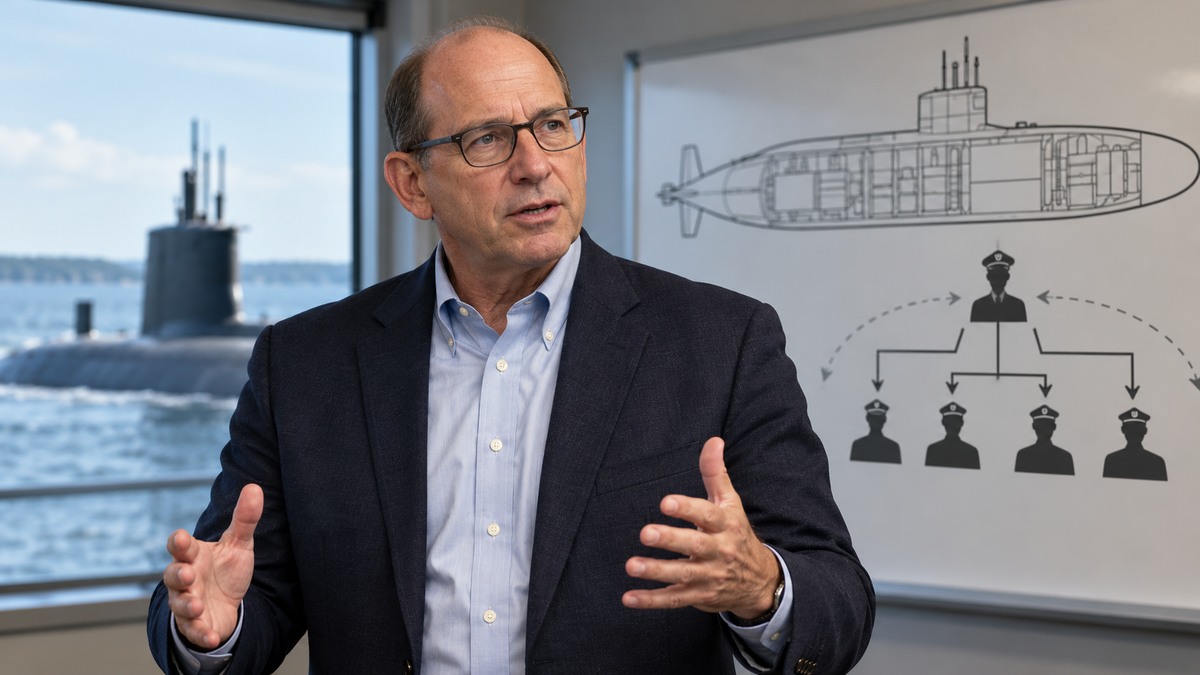
“Leadership should be recognized as a model to “Give Control” over “Take Control”.”
L. David Marquet used this wording in a 2015 discussion of intent-based leadership, drawing on his command of the USS Santa Fe. He found that a leader-follower model encouraged people to obey even when an order did not fit the situation, while a leader-leader model developed judgment throughout the crew. Giving control does not mean withdrawing. Marquet connects control with competence and clarity. People need the technical ability to decide and a shared understanding of purpose; leaders must create those conditions and remain accountable for the system in which authority is distributed. Read closely, the quotation is an operating claim rather than a decorative slogan. It asks leaders to connect an admired principle with the conditions, measures, and behavior through which customers and employees would actually experience it.
A manager can replace permission-seeking with statements of intent, ask what evidence supports the proposed action, and move decisions toward the person with the most relevant information. Training, certification, guardrails, and after-action reviews should expand alongside decision rights. To make that connection visible, decision makers should name the choice the idea is meant to change, the evidence they will review, and the person responsible for follow-through. A principle becomes useful when others can observe its effect on work.
Control handed off without preparation can expose people and customers to risk. A leader cannot delegate legal, ethical, or organizational accountability. Authority should be tuned to competence, consequences, and reversibility, with a clear route for escalation when uncertainty exceeds the boundary. The strongest interpretation holds ambition and restraint together. Teams should ask who benefits, who carries risk, what evidence would disconfirm the current belief, and how a person affected by the decision can question it before costs become difficult to reverse.
Knowledge work moves too quickly for every judgment to climb a hierarchy, especially when AI accelerates the flow of options. Distributed control can improve speed and learning if teams understand the goal, can interrogate automated advice, and know when human review is required. Select one routine approval and move it closer to the work. Define purpose, limits, evidence, and escalation conditions, then review whether the change improved decision quality as well as speed. A practical review should compare the promise with outcomes, experience, and unintended effects. The final test is not whether the words sound inspiring, but whether they help the organization learn earlier, act responsibly, and create value that can withstand scrutiny. Results should be shared in plain language, including disappointments, so later decisions begin with accumulated evidence rather than a polished story that hides the conditions under which the earlier choice succeeded.
L. David Marquet used this wording in a 2015 discussion of intent-based leadership, drawing on his command of the USS Santa Fe. He found that a leader-follower model encouraged people to obey even when an order did not fit the situation, while a leader-leader model developed judgment throughout the crew.
Giving control does not mean withdrawing. Marquet connects control with competence and clarity. People need the technical ability to decide and a shared understanding of purpose; leaders must create those conditions and remain accountable for the system in which authority is distributed.
A manager can replace permission-seeking with statements of intent, ask what evidence supports the proposed action, and move decisions toward the person with the most relevant information. Training, certification, guardrails, and after-action reviews should expand alongside decision rights.
Control handed off without preparation can expose people and customers to risk. A leader cannot delegate legal, ethical, or organizational accountability. Authority should be tuned to competence, consequences, and reversibility, with a clear route for escalation when uncertainty exceeds the boundary.
Knowledge work moves too quickly for every judgment to climb a hierarchy, especially when AI accelerates the flow of options. Distributed control can improve speed and learning if teams understand the goal, can interrogate automated advice, and know when human review is required.
Select one routine approval and move it closer to the work. Define purpose, limits, evidence, and escalation conditions, then review whether the change improved decision quality as well as speed.
Explore more "Quotes of The Day"
Discover more notable quotes from influential voices across politics, science, business, technology, sports, and culture. Each quote offers insight into how ideas, beliefs, and decisions shape the world around us.