

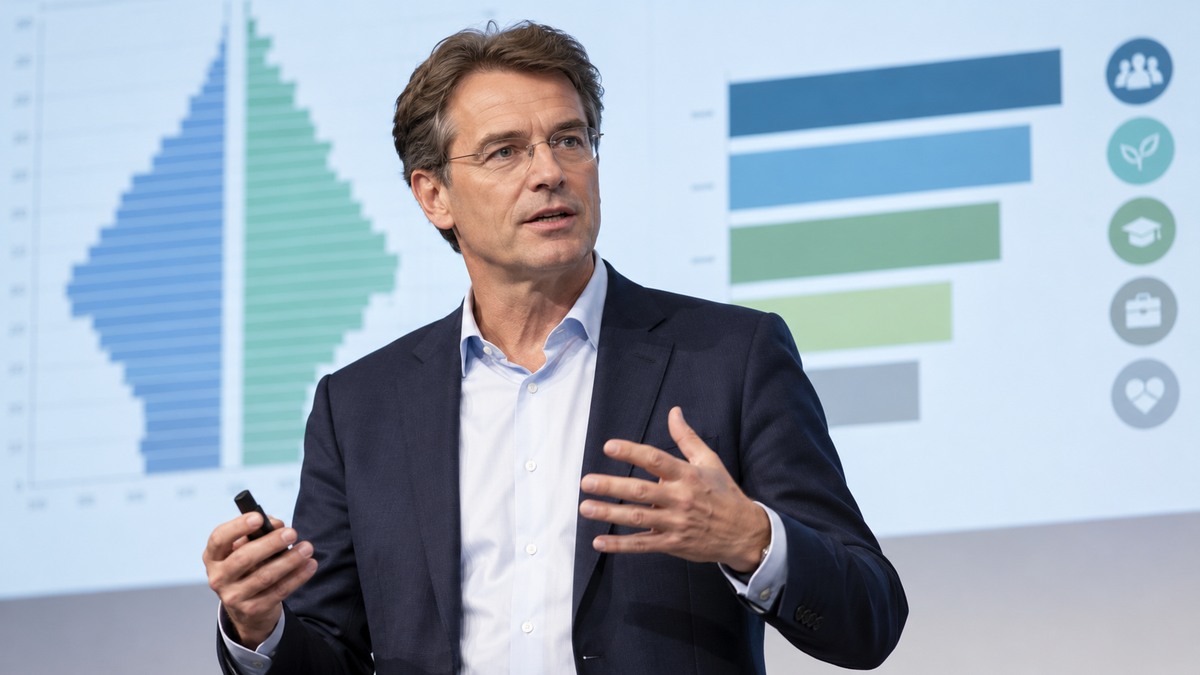
“People are looking for recognition.”
Rainer Strack emphasized this finding in a 2014 TED talk about the approaching global workforce crisis. Research he presented on employee preferences showed that appreciation, relationships, and meaningful recognition often matter more than employers assume when they focus narrowly on compensation and demographic supply. Recognition is evidence that a contribution has been seen and understood. It differs from generic praise because it identifies the behavior, judgment, or collaboration that created value. Done well, it helps people understand standards and belonging; done mechanically, it becomes another corporate script. Behind the concise wording is a claim about how organizations create results. It encourages leaders to look beyond individual effort and examine design, incentives, information, relationships, and the customer context that determine whether a good intention becomes reliable performance.
Managers can name specific contributions close to the event, connect them to customers or colleagues, and distribute attention across visible and less visible work. Workforce reviews should also examine development, job design, flexibility, and the quality of supervision rather than treating recognition as a substitute for fair pay. Managers can translate the claim into a small experiment with a baseline, an owner, a defined customer or employee outcome, and a review date. Specificity protects the work from drifting into broad language that nobody can challenge or verify.
Recognition programs can reproduce bias when leaders notice self-promotion more readily than maintenance, care, or behind-the-scenes coordination. Public praise can also be uncomfortable. Employees need multiple ways to be acknowledged, transparent criteria, and protection from favoritism disguised as culture. Responsible use also requires naming the tradeoff. Speed, cost, autonomy, safety, equity, and learning may not all improve at once. People closest to the consequences should have a meaningful voice, and uncertainty should be reported instead of hidden behind confidence.
In hybrid and AI-assisted workplaces, important contributions can become harder to observe. Managers should avoid measuring activity as a proxy for value and instead build shared records of decisions, mentoring, problem prevention, and customer outcomes that make distributed work legible without expanding surveillance. At the next team review, identify one contribution whose value was real but largely invisible. Ask how the person prefers to be acknowledged, describe the effect precisely, and check whether the system reliably notices similar work across roles and locations. Evidence from the experiment can guide scaling, revision, or stopping. The durable lesson is to join purpose with measurement and human judgment, so the organization becomes better at seeing reality and responding before a local success or failure hardens into mythology. Recording the decision and its limits gives colleagues a foundation they can inspect, challenge, and improve instead of asking them to rely on memory, authority, or an unexplained result.
Rainer Strack emphasized this finding in a 2014 TED talk about the approaching global workforce crisis. Research he presented on employee preferences showed that appreciation, relationships, and meaningful recognition often matter more than employers assume when they focus narrowly on compensation and demographic supply.
Recognition is evidence that a contribution has been seen and understood. It differs from generic praise because it identifies the behavior, judgment, or collaboration that created value. Done well, it helps people understand standards and belonging; done mechanically, it becomes another corporate script.
Managers can name specific contributions close to the event, connect them to customers or colleagues, and distribute attention across visible and less visible work. Workforce reviews should also examine development, job design, flexibility, and the quality of supervision rather than treating recognition as a substitute for fair pay.
Recognition programs can reproduce bias when leaders notice self-promotion more readily than maintenance, care, or behind-the-scenes coordination. Public praise can also be uncomfortable. Employees need multiple ways to be acknowledged, transparent criteria, and protection from favoritism disguised as culture.
In hybrid and AI-assisted workplaces, important contributions can become harder to observe. Managers should avoid measuring activity as a proxy for value and instead build shared records of decisions, mentoring, problem prevention, and customer outcomes that make distributed work legible without expanding surveillance.
At the next team review, identify one contribution whose value was real but largely invisible. Ask how the person prefers to be acknowledged, describe the effect precisely, and check whether the system reliably notices similar work across roles and locations.
Explore more "Quotes of The Day"
Discover more notable quotes from influential voices across politics, science, business, technology, sports, and culture. Each quote offers insight into how ideas, beliefs, and decisions shape the world around us.