

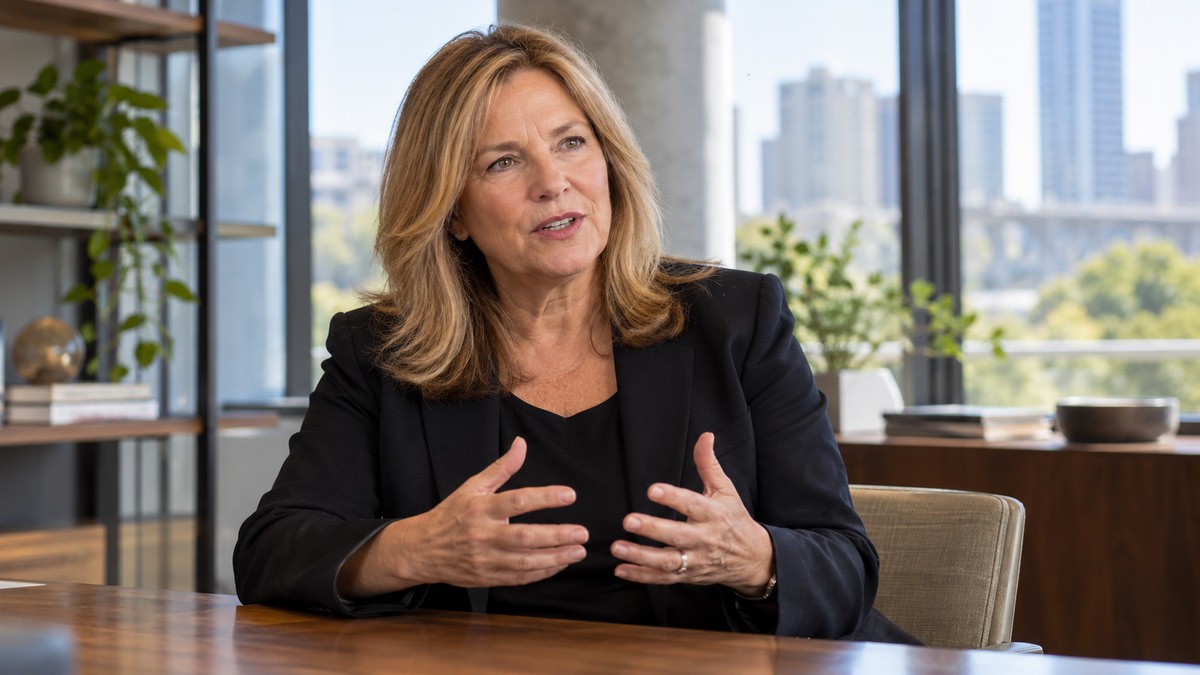
“There’s a leader inside every single one of us.”
Entrepreneur and public leader Halla Tómasdóttir offered this message in a 2019 TED conversation about renewing leadership. She argued that meaningful action need not wait for formal authority or a perfect moment. The line broadens leadership from position to behavior. People lead when they take responsibility, tell the truth about risk, connect others to a purpose, and create the conditions for collective action. The quotation becomes operational only when leaders connect it to the design of work rather than to enthusiasm alone. The point is to make judgment observable without reducing a complicated human system to one convenient number.
Organizations can distribute bounded decision rights, train managers to coach rather than control, and recognize employees who surface problems early. Clear escalation paths let initiative coexist with accountability. Evidence should come from people experiencing the process as well as from aggregate performance. Qualitative evidence, operational data, and direct experience should be considered together before expansion.
Inviting everyone to lead can become empty rhetoric if power, information, and protection remain concentrated. Employees should not be expected to absorb executive risk or challenge misconduct without credible safeguards. Boundaries matter because a practice that helps one context may transfer cost or risk in another. This prevents the loudest advocate or most polished presentation from defining reality for everyone else.
Fast-moving work requires judgment at the edge of the organization. Tómasdóttir’s idea remains useful because resilience grows when leadership capacity is cultivated widely instead of reserved for a small hierarchy. Identify one recurring decision delayed by unnecessary escalation. Give the closest qualified team a clear boundary, the information it needs, and a review date, then examine speed, quality, and whether people felt safe using the authority. A transparent review lets the team preserve what worked while changing assumptions that no longer fit. Scaling should follow demonstrated value and clear safeguards, with enough flexibility to pause when new evidence changes the balance. For disciplined follow-through, the team should compare the result with the baseline after the first review and after the practice becomes routine. Early enthusiasm can hide maintenance cost, while later observation shows whether the behavior survives ordinary workload. Publishing both checkpoints helps colleagues distinguish a promising trial from a dependable operating improvement. The owner should return with evidence and a recommendation at the agreed review date, including what should continue, change, or stop. That final choice keeps the quotation connected to operating judgment instead of leaving it as inspiration alone. Follow-up should include the people who use the process and those who absorb its risks, costs, or delays.
Entrepreneur and public leader Halla Tómasdóttir offered this message in a 2019 TED conversation about renewing leadership. She argued that meaningful action need not wait for formal authority or a perfect moment.
The line broadens leadership from position to behavior. People lead when they take responsibility, tell the truth about risk, connect others to a purpose, and create the conditions for collective action.
Organizations can distribute bounded decision rights, train managers to coach rather than control, and recognize employees who surface problems early. Clear escalation paths let initiative coexist with accountability.
Inviting everyone to lead can become empty rhetoric if power, information, and protection remain concentrated. Employees should not be expected to absorb executive risk or challenge misconduct without credible safeguards.
Fast-moving work requires judgment at the edge of the organization. Tómasdóttir’s idea remains useful because resilience grows when leadership capacity is cultivated widely instead of reserved for a small hierarchy.
Identify one recurring decision delayed by unnecessary escalation. Give the closest qualified team a clear boundary, the information it needs, and a review date, then examine speed, quality, and whether people felt safe using the authority.
Explore more "Quotes of The Day"
Discover more notable quotes from influential voices across politics, science, business, technology, sports, and culture. Each quote offers insight into how ideas, beliefs, and decisions shape the world around us.