

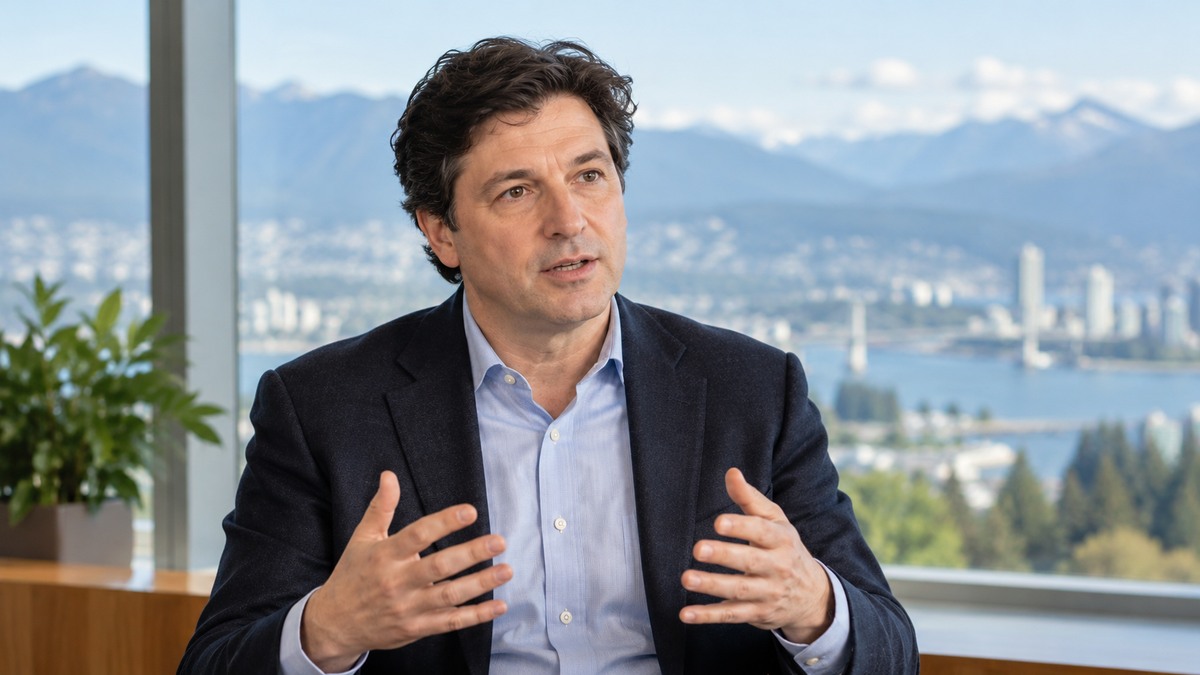
“GDP is not destiny.”
Social-progress expert Michael Green stated this in a 2015 TED talk about measuring progress toward global goals. Comparing countries, he showed that similar levels of wealth can produce very different outcomes for human well-being. The short line distinguishes resources from results. Revenue, output, and growth reveal capacity, but they do not determine whether people gain health, opportunity, safety, trust, or a sustainable environment. The line is best treated as a hypothesis about how results are created, not as a universal law. This separates a durable practice from a phrase repeated after the important choices have already been made.
Businesses can complement financial reporting with outcome measures that show whether products and operations improve customers’ and workers’ lives. Targets should focus on results rather than money spent or activities completed. Teams can translate that hypothesis into a defined behavior and a signal that matters to customers or colleagues. The experiment should be small enough to reverse but real enough to expose behavior, cost, and response.
Composite indexes can conceal distribution and local context. A rising average may coexist with worsening outcomes for a vulnerable group, so measures need disaggregation, transparent methods, and direct testimony. Nuance protects the idea from becoming a justification for speed, pressure, or symbolic compliance. Leaders should state the tradeoff in ordinary language so colleagues can challenge it before commitment grows.
Stakeholders increasingly expect evidence that growth translates into shared benefit. Green’s idea helps leaders ask what their economic success enables and whether management choices convert resources into outcomes efficiently. Take one strategic goal stated only in financial terms and add a human outcome it is supposed to support. Establish a baseline, disaggregate the evidence, and review whether growth and progress move together. When results are shared honestly, later decisions can build on evidence instead of authority or memory. That record makes it easier to transfer useful learning without pretending a result will repeat under every condition. A practical decision record should preserve the expected mechanism, the strongest alternative explanation, and the point at which leaders would stop or redesign the work. This makes accountability useful instead of punitive and helps a future team see which parts depended on conditions that may no longer exist. The record should be short enough to revisit and specific enough that another person could challenge its assumptions. Clear ownership then turns reflection into a scheduled management responsibility. A named owner should bring the evidence back to the decision forum with a recommendation, not merely another status update.
Social-progress expert Michael Green stated this in a 2015 TED talk about measuring progress toward global goals. Comparing countries, he showed that similar levels of wealth can produce very different outcomes for human well-being.
The short line distinguishes resources from results. Revenue, output, and growth reveal capacity, but they do not determine whether people gain health, opportunity, safety, trust, or a sustainable environment.
Businesses can complement financial reporting with outcome measures that show whether products and operations improve customers’ and workers’ lives. Targets should focus on results rather than money spent or activities completed.
Composite indexes can conceal distribution and local context. A rising average may coexist with worsening outcomes for a vulnerable group, so measures need disaggregation, transparent methods, and direct testimony.
Stakeholders increasingly expect evidence that growth translates into shared benefit. Green’s idea helps leaders ask what their economic success enables and whether management choices convert resources into outcomes efficiently.
Take one strategic goal stated only in financial terms and add a human outcome it is supposed to support. Establish a baseline, disaggregate the evidence, and review whether growth and progress move together.
Explore more "Quotes of The Day"
Discover more notable quotes from influential voices across politics, science, business, technology, sports, and culture. Each quote offers insight into how ideas, beliefs, and decisions shape the world around us.