

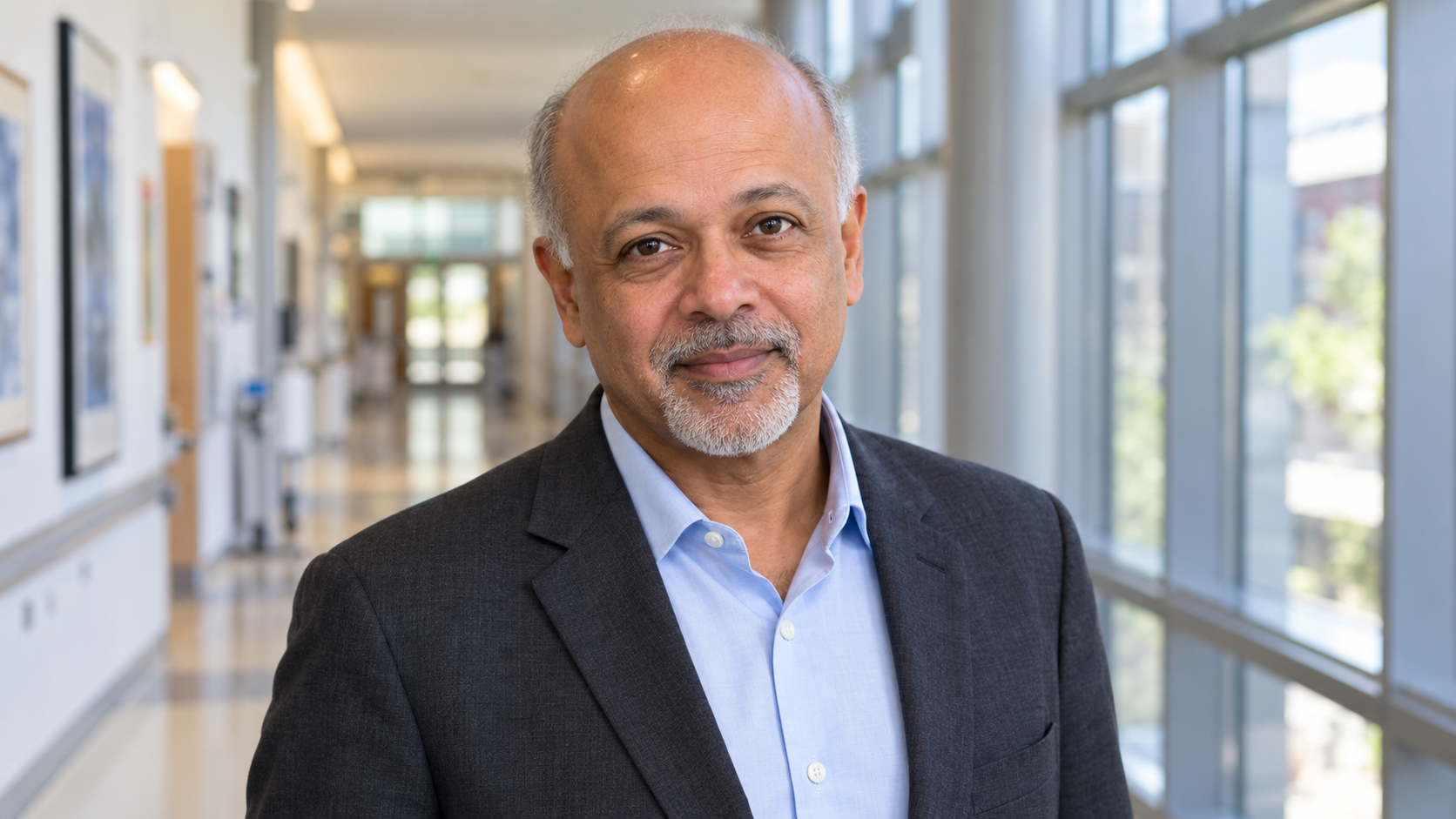
“I want to teach the art of being present.”
Abraham Verghese wrote this sentence in The Importance of Being, an essay published in the October 2016 issue of Health Affairs. He approaches medicine through an unexpected setting: repeated visits to Stanford’s Anderson Collection, where looking at modern art gradually changes the way he thinks about attention. The connection is not that a painting can diagnose an illness. It is that observing without immediately reaching for a familiar label can reveal something an observer otherwise overlooks. When the essay turns to teaching at the bedside, Verghese describes wanting students to encounter a person, rather than only the information already assembled about that person. The short declaration identifies a skill he considers teachable. Being present, in this account, asks more than occupying the same room or appearing briefly in a patient’s field of vision.
The essay gives that aspiration a practical tension: records, screens, and institutional requirements can draw clinicians away from the people whose care the information is meant to support. Verghese does not deny the necessity of a medical record. He distinguishes the representation of a patient within it from the actual encounter. His recollections of caring for patients in the early AIDS era also connect presence to the assurance that someone will not be abandoned when effective treatment is unavailable. Writing in Health Affairs shortly afterward, Eric Topol welcomed the essay while arguing that technology and human connection need not conflict. That response prevents an easy reduction of the quotation to a demand to discard computers. A useful question is whether a tool supports the encounter or consumes the attention that the encounter requires. Stanford’s later Presence work likewise treats focused attention and connection as practices to investigate and cultivate.
Consider an ordinary conversation in which one person explains a worry while the listener completes a separate task. The listener may capture every factual detail yet miss the hesitation that gives a detail its significance. In a clinical setting, that distinction can affect whether someone feels able to speak freely about what matters to them. This example is an interpretation of the essay’s concern, rather than evidence that a particular manner guarantees a medical outcome. Attention must work alongside knowledge, appropriate examination, and sound judgment. Teaching presence could therefore involve noticing when one’s own assumptions are directing the conversation, making room for the patient’s priorities, and recognizing the limits of a first impression. There is also an institutional dimension: an individual clinician cannot create unlimited time inside a schedule that provides too little. Verghese’s sentence gives educators a reason to examine both habits and working conditions, so that contact with patients remains a central part of learning medicine.
The sentence appears in Verghese’s October 2016 Health Affairs essay The Importance of Being. His visits to an art collection inform a reflection on observation and bedside teaching.
The essay asks students to see the person beyond an already assigned diagnostic label. The quotation concerns a clinical habit of attention, rather than an alternative diagnostic technique.
Verghese distinguishes necessary information about a patient from direct contact with that patient. A record can support care while also occupying time and attention.
Eric Topol’s response emphasizes that technology may strengthen human connection. The question is how a tool serves an encounter, rather than whether medicine should reject technology altogether.
One application is to consider whether teaching makes room for a patient’s concerns and for observations that do not fit a first impression. The essay treats presence as a capacity to develop.
Attention complements clinical knowledge and judgment. Working conditions also matter, because educators and clinicians practice within schedules and systems that can support or restrict contact.
Explore more "Quotes of The Day"
Discover more notable quotes from influential voices across politics, science, business, technology, sports, and culture. Each quote offers insight into how ideas, beliefs, and decisions shape the world around us.