

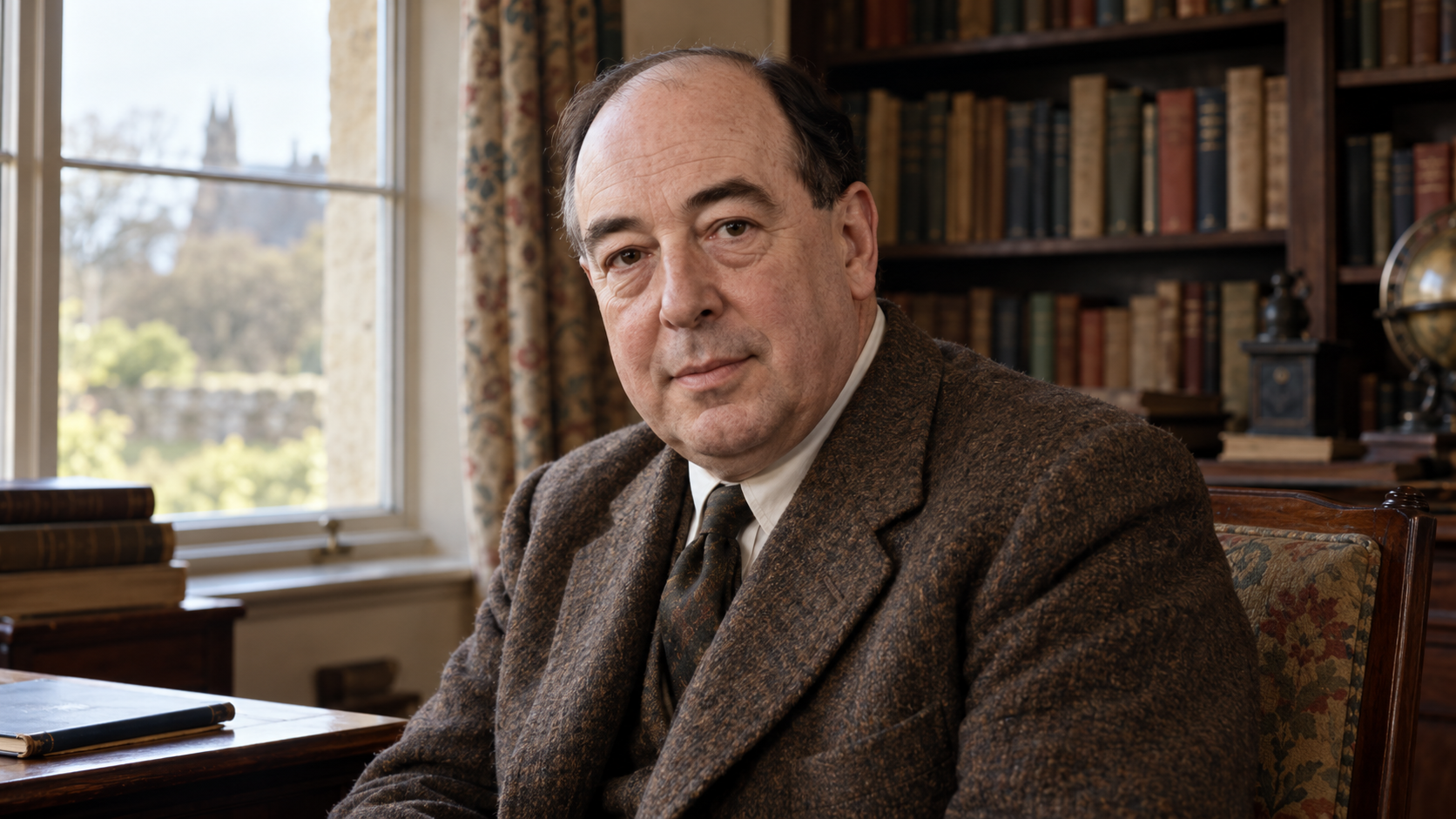
“No one ever told me that grief felt so like fear.”
C. S. Lewis begins A Grief Observed with this startling comparison. First published in 1961 under the name N. W. Clerk, the book grew from reflections written after the death of his wife, Joy Davidman, in 1960. Lewis was already known for writing about faith and suffering, but bereavement confronted him with an experience that intellectual preparation could not make familiar. His opening sentence names an unexpected bodily unease. In the lines that follow, he distinguishes the sensation of fear from being afraid of a particular thing. Restlessness and unsettled physical feelings become part of the experience he is trying to describe. The precision matters: he is observing his grief as it feels, rather than offering a formula for how grief ought to unfold. A comparison that seems unusual from outside becomes recognizable when spoken from within the loss.
The book also records difficult questions about faith, memory, and the absence of a person whose daily presence had shaped his life. Lewis does not present those questions as a neat sequence leading automatically toward resolution. The published extracts available through PBS show him revisiting thoughts and acknowledging changes in his own perspective. That movement gives the writing its intimate character. Readers encounter someone attempting to understand an experience while still living through it. His language can offer recognition without requiring agreement with every theological conclusion. It also gives a listener reason to be cautious about quick explanations. A bereaved person may be describing an altered sense of time, an unfamiliar silence at home, or an ordinary routine that has suddenly lost its meaning. An answer about the general nature of loss may fail to address the particular absence they are trying to express.
Within a health conversation, Lewis’s observation makes room for the relationship between emotional experience and bodily awareness. It offers personal testimony rather than a diagnosis, or as evidence that every bereaved person will feel the same sensations. Its usefulness lies in encouraging attention to an individual account. Consider a friend who finds a familiar evening unexpectedly difficult: listening to what has changed may be more helpful than assuming that a past good day means the loss has been resolved. Practical companionship can also take an ordinary form, such as sharing a meal or keeping a promised visit. These are reflections on support, not a timetable or treatment plan. The quotation asks for patience with experiences that resist easy explanation. Lewis’s candor allows sorrow to be spoken in its own language, making a conversation possible before anyone tries to turn it into a lesson.
C. S. Lewis was a literary scholar and author. A Grief Observed was first published in 1961 under the pseudonym N. W. Clerk.
The book follows the death of his wife, Joy Davidman. Its personal reflections differ from a detached argument about suffering.
This is the book’s opening sentence. Lewis then describes sensations resembling fear while distinguishing them from fear of a particular threat.
His later reflections revisit faith, memory, and the changes bereavement brings to ordinary life. The writing records uncertainty as well as moments of altered perspective.
The comparison invites careful listening to how loss is experienced. Emotional distress may be expressed through physical sensations and disrupted routines.
A personal account should not become a rule for everyone who grieves. Patient companionship leaves room for different experiences and different ways of expressing them.
Explore more "Quotes of The Day"
Discover more notable quotes from influential voices across politics, science, business, technology, sports, and culture. Each quote offers insight into how ideas, beliefs, and decisions shape the world around us.