

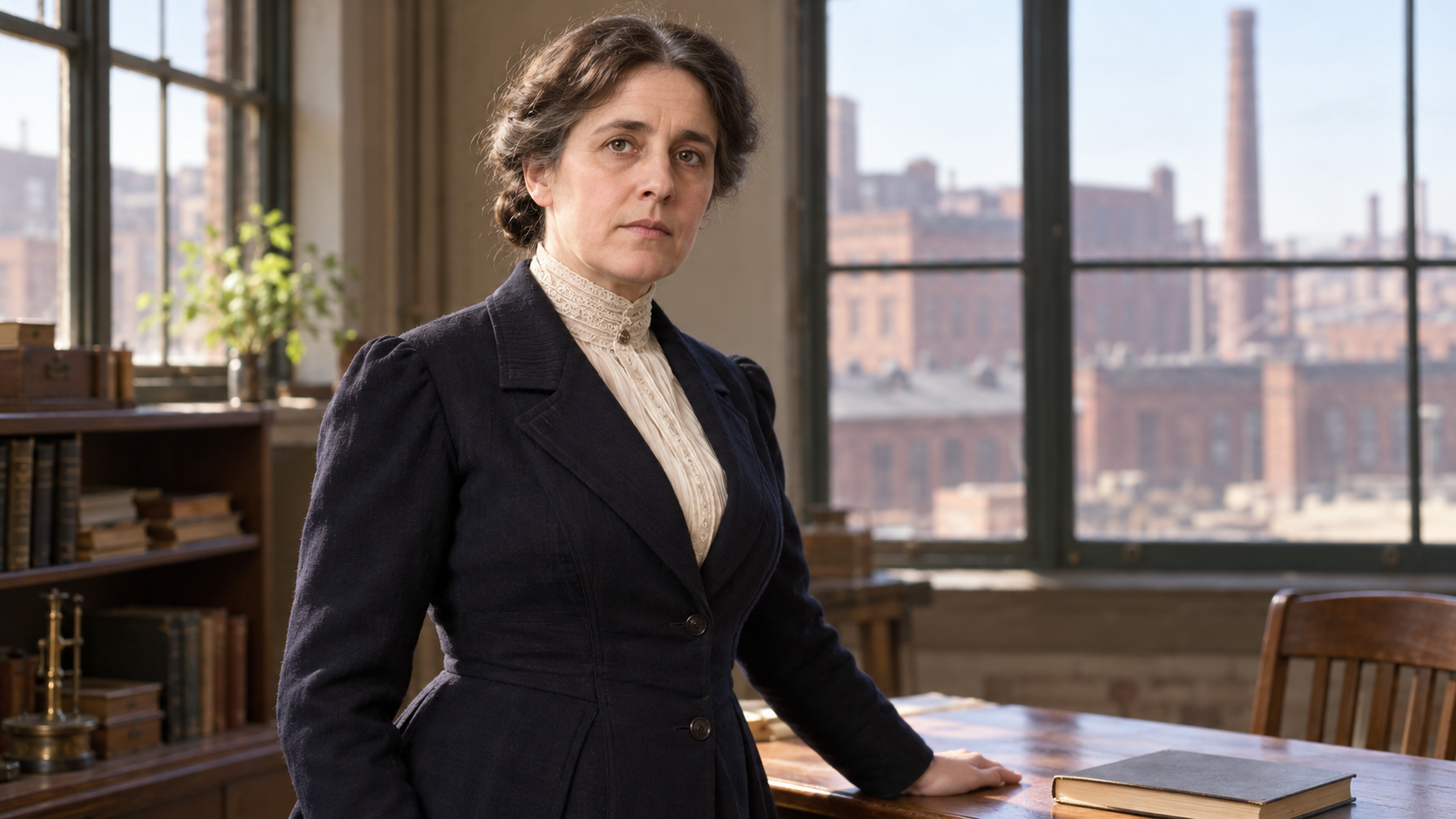
“The factory which is safe and clean, is the factory which has a foreman who wishes it to be safe and clean.”
Alice Hamilton wrote these words to a factory foreman, Mr. Foster, on May 22, 1911. Her letter, preserved in Alice Hamilton: A Life in Letters, followed an investigation of conditions in the white lead industry. She was asking for changes, and she addressed the person who would be present to see whether they happened. The sentence can sound like a statement about good intentions, but the surrounding letter makes it more demanding. Hamilton sent a list of practical concerns and asked to hear whether the factory had improved. Her interest was in what workers encountered each day. Concern for their health had to become part of the place itself. This gives the quotation a useful place in a health series: it brings attention to the responsibilities of people who organize work and shape the conditions under which others earn a living.
Think of a supervisor who says that wellbeing matters, then receives a report about a problem in the working environment. The statement becomes meaningful through the next decisions. Is the concern heard? Does someone have responsibility for following it up? Are people told what will happen and when they can expect an answer? These questions move attention from the warmth of a message to the substance of a response. A worker may be willing to speak and still have little power to change a condition alone. The person responsible for organizing the work has a different opportunity to act. Hamilton’s sentence directs attention toward that opportunity. It also reminds us that a workplace is experienced repeatedly, through ordinary tasks and routines. A single announcement cannot demonstrate that a concern has been resolved. People need to see what has changed in the work they actually perform.
Reading the quotation today also requires care with its historical language. A foreman was the role Hamilton addressed in this particular factory; responsibility in another workplace may be distributed across several people and institutions. The larger question remains useful: who can make a needed change, and how will they know whether it has worked? Wishing for safe conditions does not replace reliable assessment, suitable resources or the involvement of people affected. Nor should responsibility be reduced to one person’s character while the organization avoids its own obligations. Hamilton’s letter connects intention with continued attention. For readers who manage others, it can prompt a review of the gap between what is promised and what is experienced. For those reporting a concern, it gives language for asking who will follow through. Health at work deserves that kind of seriousness: a commitment that can be recognized in daily conditions, supported by evidence and sustained after the conversation ends.
It appears in her May 22, 1911 letter to Mr. Foster, a foreman in a white lead factory. The published collection preserves the letter alongside the history of her investigation.
She sent practical recommendations and requested news of changes. The context links intention with responsibility for the conditions workers faced.
A wish is a starting point. The surrounding letter asks for action and follow-up, giving the sentence a meaning beyond a statement of goodwill.
Dependable assessment, resources and the participation of affected people matter. This historical quotation is not a substitute for present-day occupational health guidance.
Ask how a reported concern moves toward a response. Someone should understand who is responsible and how progress will be communicated.
The useful measure is the experience of the people doing the work. A promise has substance when it leads to conditions they can recognize as changed.
Explore more "Quotes of The Day"
Discover more notable quotes from influential voices across politics, science, business, technology, sports, and culture. Each quote offers insight into how ideas, beliefs, and decisions shape the world around us.