

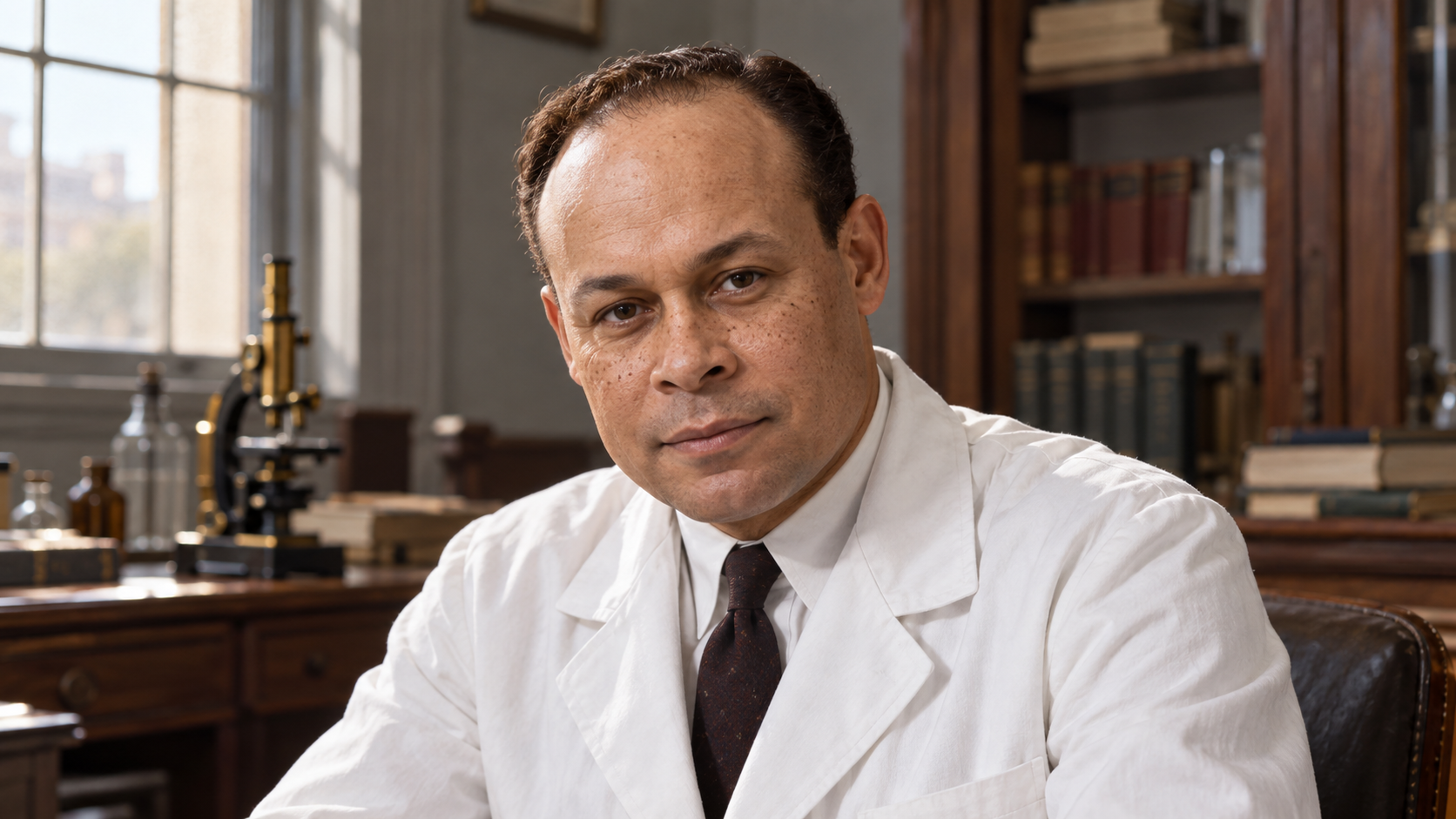
“Excellence of performance will transcend artificial barriers created by man.”
Charles Richard Drew’s achievements in blood preservation are only part of his place in medical history. He was also a surgeon and a teacher who worked to expand opportunities for Black physicians. The United States Patent and Trademark Office’s account of his life records this motto through recollections from his family. A separate surgical history reports that former trainees independently remembered the same words as his identifying principle. The evidence supports a repeated credo rather than a single, precisely dated speech, so the line should be read that way. For Drew, excellence concerned what people did with their knowledge: careful preparation, demanding standards and the development of other practitioners. His teaching at Howard University and Freedmen’s Hospital gave that outlook a concrete professional setting. This was an ambition expressed amid exclusion, not an observation that exclusion had already ended.
There is a productive tension inside the sentence. Performance refers to something a practitioner can work on, while artificial barriers are restrictions imposed by people and institutions. One belongs to the discipline of practice; the other belongs to the distribution of opportunity. Conflating them would turn Drew’s determination into an unfair instruction that every excluded person simply needs to become more capable. His own work instead invites two questions at once: how well is someone prepared, and what prevents that preparation from receiving a fair hearing? A hospital can rightly insist that every surgeon meet rigorous standards while also examining whether its routes into training are open on equal terms. Lowering expectations is not the only alternative to exclusion. Making expectations clear, providing serious instruction and applying them consistently offers a more demanding response. Excellence becomes a shared educational responsibility rather than a badge that an individual must produce without assistance.
Consider an imagined teaching round in which a resident offers a careful explanation but receives less attention than a colleague offering the same reasoning. The immediate issue is not a missing fact in the resident’s answer. It is whether the discussion gives each contribution an honest assessment. A useful supervisor would examine both the reasoning and the pattern of whose voice is heard. That example is a present interpretation of Drew’s motto, not a documented incident from his life. It shows why the words remain relevant to health: patients depend on institutions that recognize and develop ability fairly. The sentence can encourage persistence, but it should never be used to excuse a closed door or to blame the person outside it. Readers can honor its hope by looking beyond the impressive individual toward the conditions that allow good work to emerge, receive recognition and benefit the people who need it.
Family recollections and interviews with Drew’s former trainees corroborate the wording as a principle he repeatedly expressed. A verified first occasion has not been established.
The entry therefore leaves a year out of the title and discusses the motto within his medical teaching career rather than assigning it an invented speech date.
The line states a hope and a professional commitment. It does not establish that discrimination disappears whenever someone performs well.
A fair institution must assess ability seriously and examine its own barriers. Those duties remain even when a practitioner is exceptionally accomplished.
Demanding preparation and equal opportunity can reinforce each other. Mentorship, clear expectations and fair assessment make standards meaningful.
The practical question is who receives the instruction and opportunity needed to meet those standards, as well as who ultimately benefits from the work.
Explore more "Quotes of The Day"
Discover more notable quotes from influential voices across politics, science, business, technology, sports, and culture. Each quote offers insight into how ideas, beliefs, and decisions shape the world around us.