

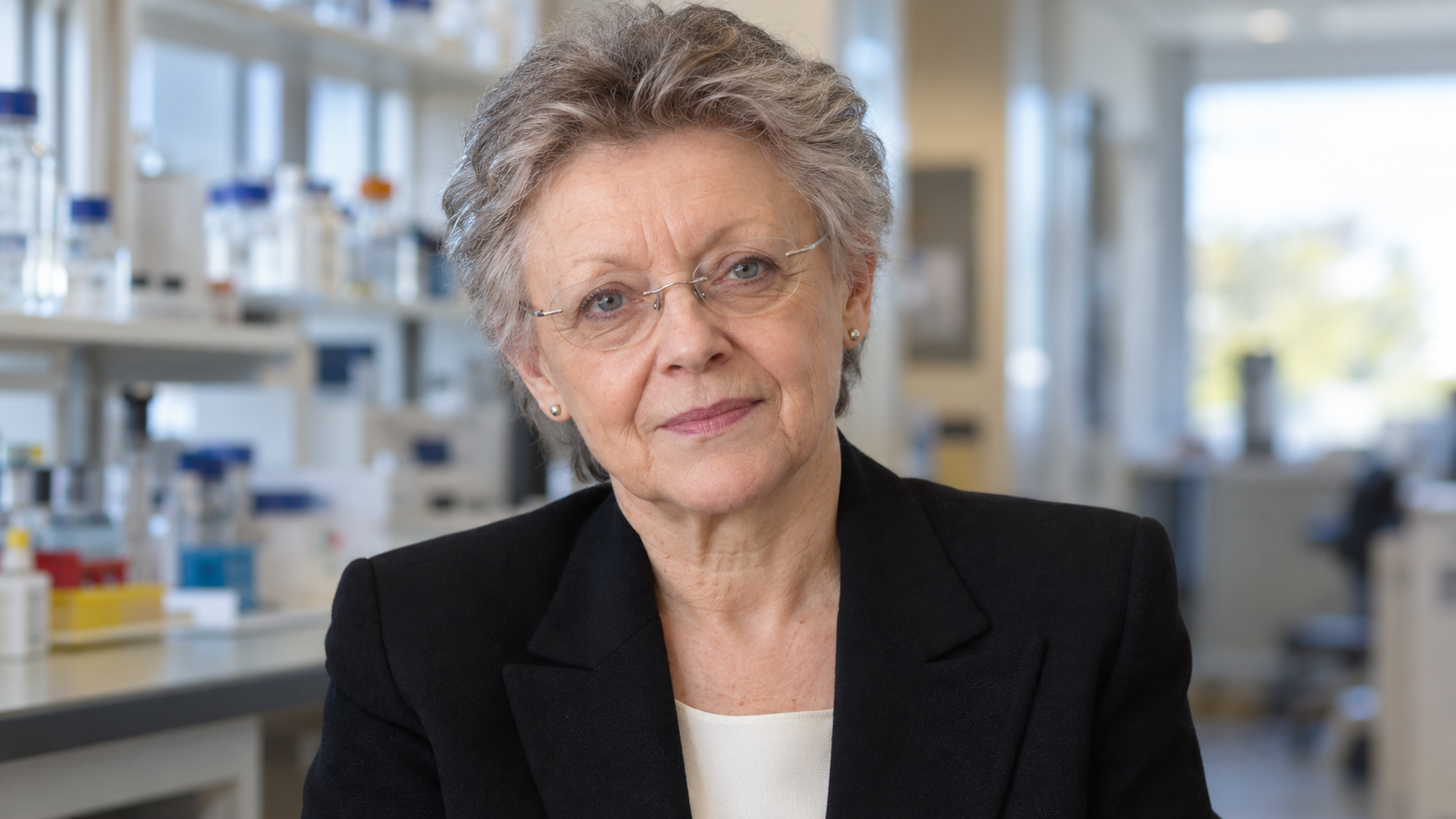
“We are not making science for science. We are making science for the benefit of humanity.”
Françoise Barré-Sinoussi’s scientific career joined discovery with an unusually direct encounter with the people waiting for its benefits. She and colleagues identified the virus that would become known as HIV in 1983, work recognized by a Nobel medicine prize in 2008. NobelPrize.org preserves these words in an account of her research and advocacy, and Hong Kong’s 2024 Health Research Symposium programme independently repeats them in its discussion of translating research into public benefit. Neither record establishes the first occasion on which she expressed the thought, so no originating year is assigned here. Her statement is especially meaningful within the history of HIV: identifying a cause opened important possibilities, but did not instantly provide everyone with effective care. The quotation directs attention toward the people at the other end of a research project, beyond the point at which a discovery enters the scientific record.
A finding and a benefit are connected through a sequence of demanding questions. Is the evidence reliable? Can the finding support an intervention? Who can obtain it, and under what conditions? Those questions involve different kinds of work, and success at one stage cannot simply be assumed at the next. Barré-Sinoussi’s statement gives the sequence a purpose without prescribing a shortcut through it. It does not require every investigation to produce an immediate treatment; basic research can be essential even when its eventual applications are uncertain. Nor does a compassionate aim establish that an approach is safe or useful. The aim supplies a reason to carry out the careful work and to remain interested in what happens after a result is announced. In health research, that perspective can keep technical achievement connected with practical questions of access, communication and the experience of people who are meant to benefit from it.
Picture an imagined research team presenting a promising result to a community group. A participant asks when the finding might affect everyday care, while another asks whether people outside a well-resourced clinic would be able to obtain any resulting treatment. These are hypothetical questions, not a documented exchange involving Barré-Sinoussi. Answering them honestly may require acknowledging uncertainty and explaining the work still ahead. The conversation does not diminish a discovery; it clarifies the distance between scientific promise and available help. That distance is where many forms of collaboration become necessary. Researchers, clinicians, public institutions and affected communities bring different knowledge to it. Readers can take the quotation as an invitation to examine whether those voices remain connected as a project develops. Human benefit is a purpose to pursue through evidence and cooperation, rather than a reassuring label to attach to a result before its consequences and accessibility are understood.
NobelPrize.org quotes the statement in its account of Barré-Sinoussi’s research and advocacy. Hong Kong’s 2024 Health Research Symposium programme also reproduces it.
These records support the wording and attribution but do not identify a verified first occasion. The title therefore includes no originating year.
The statement identifies a human purpose for science. It does not establish that a particular experiment must immediately produce a treatment.
Basic research, careful testing and long-term collaboration can all contribute to that purpose. A worthy aim still requires evidence about a proposed intervention.
A reliable finding creates possibilities, while obtaining useful care also depends on further development, delivery and the circumstances of the people who need it.
The hypothetical community conversation makes that distinction visible. It offers questions for interpretation, without attributing a particular exchange or policy to Barré-Sinoussi.
Explore more "Quotes of The Day"
Discover more notable quotes from influential voices across politics, science, business, technology, sports, and culture. Each quote offers insight into how ideas, beliefs, and decisions shape the world around us.