

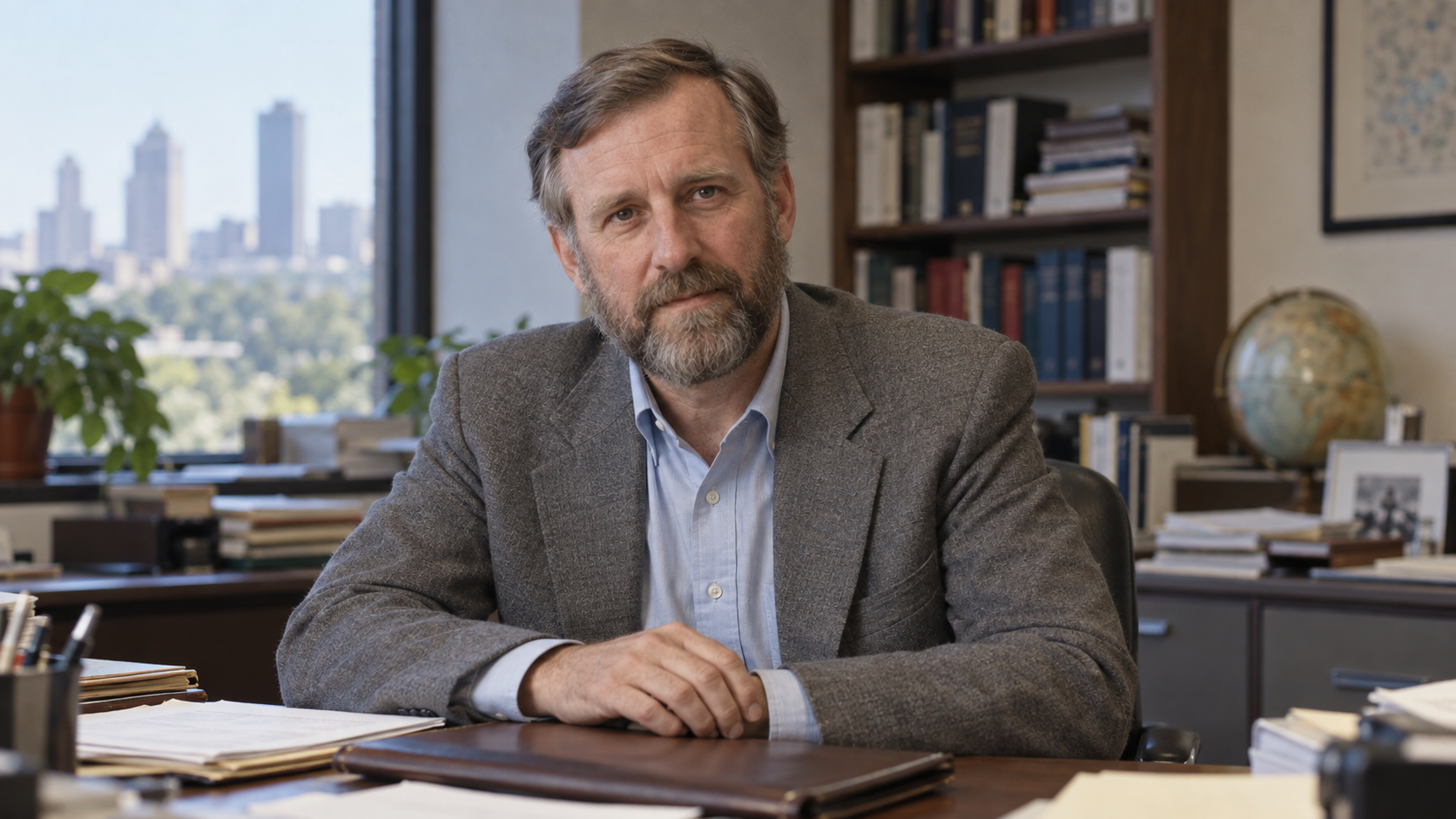
“the philosophy of public health is social justice”
William Foege placed this principle at the center of his 1986 presidential address to the American Public Health Association. The speech, published the following year as Public Health: Moving from Debt to Legacy, looked both backward and forward: what had earlier generations made possible, and what would their successors inherit? The featured words come from a longer sentence urging his audience to keep returning to the purpose of their profession. Foege distinguished discovering knowledge, applying it to a patient and making it useful to an entire population. Each activity matters, but the last carries a particular obligation toward people who might otherwise be overlooked. A later National Academy of Medicine collection on health equity repeated the central phrase. Its force comes from joining technical competence to a reason for using it, rather than assuming that activity alone demonstrates progress.
A program can be energetic and still have an uncertain purpose. Staff may hold meetings, produce reports and count every appointment without learning which residents can actually use the service. Imagine a community outreach project that records attendance at a well-advertised event. The number is useful, yet it cannot tell the whole story if the venue excludes wheelchair users or the hours prevent some workers from coming. Foege’s principle changes the questions asked of the project. Who helped choose its priorities? Which barriers remained? Did anyone listen to people who were absent? These are examples of how a public purpose can guide evaluation, not claims about a particular intervention. Scientific methods remain essential because good intentions cannot establish whether a program works. The moral aim helps determine what deserves measuring and whose experience belongs in the picture.
Social justice also directs attention toward the decisions an institution controls. A public agency cannot immediately resolve every condition affecting health, but it can make its own procedures understandable, explain how resources are allocated and take criticism seriously. Those choices connect a broad philosophy to ordinary work. They also expose tensions: limited funds, competing needs and uncertain evidence require judgment rather than a slogan that supplies every answer. Foege’s address gives readers a way to assess that judgment. Knowledge becomes a public achievement when its benefits can reach beyond the people best positioned to request them. The legacy of a health program is therefore larger than its busiest day or most impressive report. It includes whether those who follow inherit useful services, accountable institutions and a clearer expectation that nobody’s needs disappear simply because they are difficult to count.
The phrase appears inside a longer sentence in Foege’s address. Its original grammatical form is preserved here.
The address was delivered in 1986 and published in the American Journal of Public Health in 1987; those dates describe different stages of the same work.
A purpose helps an organization decide which problems and outcomes deserve attention. It cannot establish whether a chosen intervention succeeds.
The article treats evidence and public responsibility as complementary requirements. Its outreach scenario is an illustration, not a reported study.
The address asks what present work will leave for future generations. It situates public health within a history of inherited knowledge and responsibilities.
A legacy can include durable services and institutions that listen to underserved people, alongside discoveries and professional accomplishments.
Explore more "Quotes of The Day"
Discover more notable quotes from influential voices across politics, science, business, technology, sports, and culture. Each quote offers insight into how ideas, beliefs, and decisions shape the world around us.