

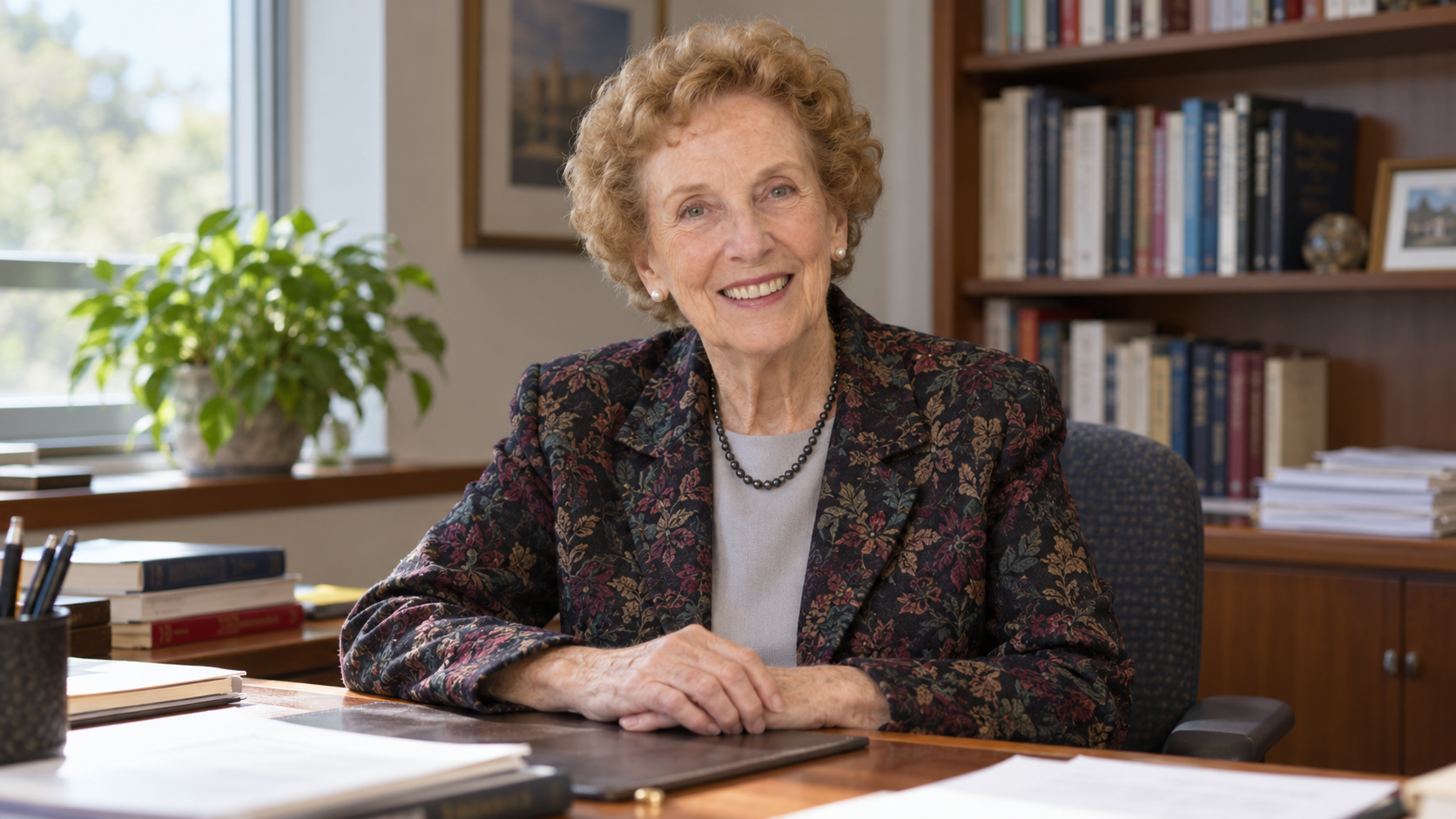
“helping others deal with the changes in their lives in ways that lead to wholeness for individuals and for society.”
Callista Roy’s reflection looks toward the future of nursing through a broad question: how can care help people live with change? Boston College reported the statement during the 2016 fiftieth-anniversary celebration of the Roy Adaptation Model. The words featured here are the closing part of her longer sentence about what nurses might contribute through continued learning. They connect the experience of an individual to the wellbeing of society. That connection reflects the reach of a nursing theory concerned with people in ongoing interaction with their surroundings. A change in health can affect far more than a symptom or a test result. It may alter familiar activities, relationships, expectations, or the sense of what a day can hold. Roy’s language directs attention to those wider effects without promising that every change can be resolved.
The model’s interest in adaptation deserves a careful reading. In ordinary speech, being told to adapt can sound like being told to accept an arrangement and stop asking for help. Roy’s reflection points toward a different responsibility: helping people respond to changes with attention to the whole life involved. This interpretation does not turn a theoretical model into a universal treatment rule. It asks what support means when a person is dealing with circumstances that cannot simply be returned to their earlier state. A useful response may need to consider the surrounding environment as well as the individual’s efforts. If an explanation notices only a person’s determination, it can miss the practical obstacles that make daily life difficult. The word ‘helping’ matters because it places a task on care, rather than leaving the person to manage change alone.
Roy’s former students provide another view of that task. In a 2018 Mount Saint Mary’s University article, nurses recall learning to observe, listen, and consider patients within the circumstances of their lives. Their reflections describe the influence of an education, rather than proving that one model delivers a particular clinical outcome. They nevertheless show how an idea can shape what a practitioner notices. Read alongside the quotation, they invite a modest test of attention: are we considering only the immediate difficulty, or also the person who must live with it? Wholeness need not mean restoring every ability or erasing every limitation. As an editorial reading, it can mean refusing to let one change become the person’s entire identity. Care can recognize loss, support adjustment, and still make space for relationships, preferences, and purposes that remain meaningful.
Boston College reported Roy's statement when her nursing model marked fifty years in 2016. She was reflecting on future contributions as well as expressing gratitude for the nurses she had encountered.
The featured words are an exact closing clause from that longer sentence. Their opening lowercase letter preserves the excerpt, and May 24 is the series date rather than the anniversary event's date.
Roy's model considers the person in relationship with an environment that continues to change. The quotation gives nursing an active role in helping someone respond, rather than treating adjustment as a private obligation.
This reading should not be used to demand cheerful acceptance of illness or to blame someone who finds change difficult. It asks what assistance and attention are needed, not whether a person has performed resilience well enough.
In Mount Saint Mary's University's 2018 account, former students describe how Roy's teaching influenced their observation and understanding of patients. Those personal recollections show an educational legacy across different nursing roles.
Their memories are not a comparison trial of clinical methods. The useful connection to the quotation is about perspective: a person's history and surroundings can matter when care tries to understand an immediate problem.
Explore more "Quotes of The Day"
Discover more notable quotes from influential voices across politics, science, business, technology, sports, and culture. Each quote offers insight into how ideas, beliefs, and decisions shape the world around us.