

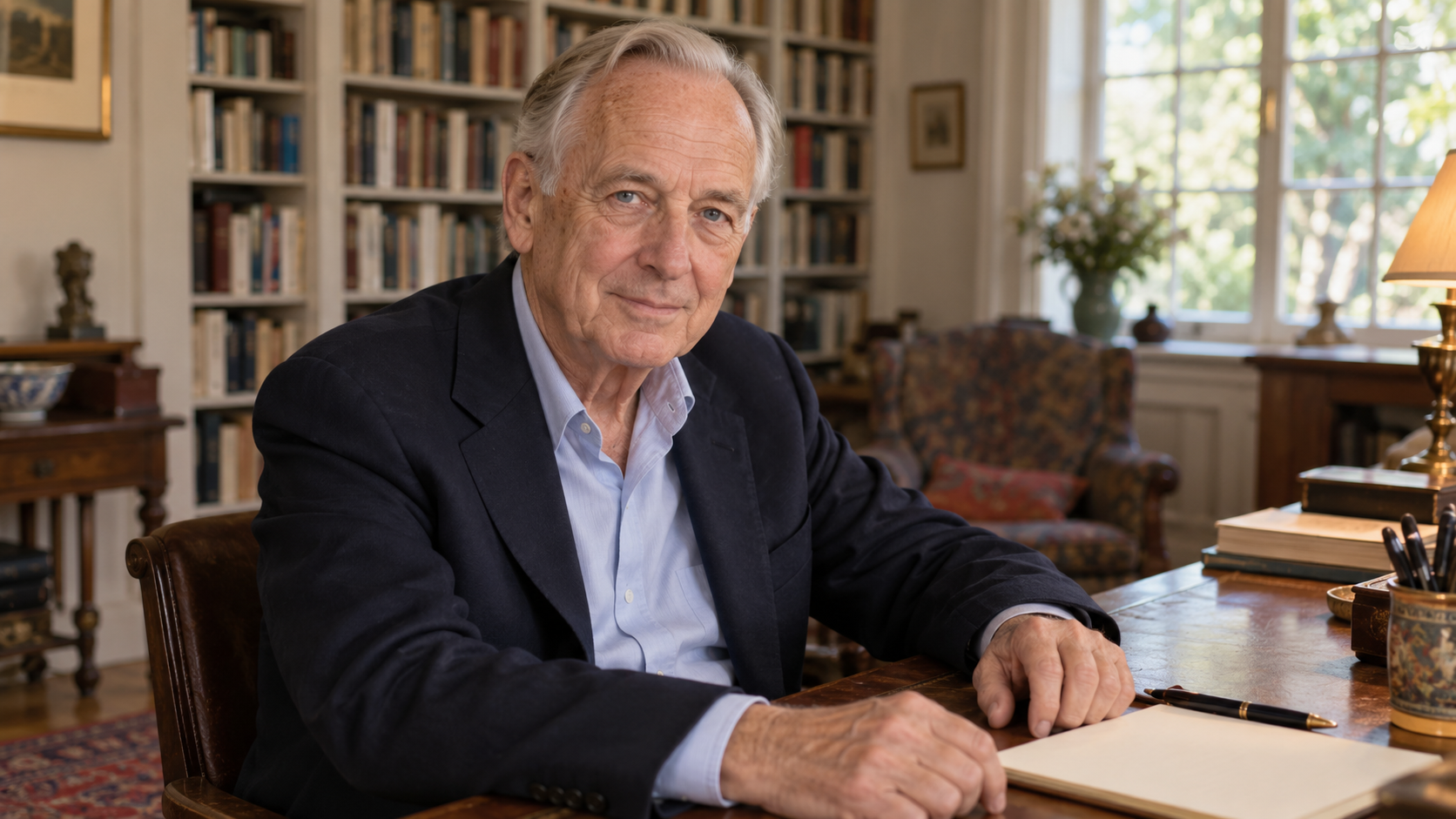
“The whole idea is that each of us is a bundle of inconsistencies.”
Sherwin B. Nuland made this observation while discussing his memoir Lost in America with Yale Medicine writer Cathy Shufro in 2003. The surgeon and author was reflecting on the distance between the composed professional people knew and the more complicated life behind that appearance. His statement does not announce a new medical theory. It makes a personal recognition available to other people: outward assurance need not mean that every part of a life feels settled. The article describes a writer trying to understand his family history and himself through a book. That setting gives the quotation its particular weight. Nuland was speaking from an accomplished career while allowing the public portrait of that career to become less tidy and more human.
His move from surgery to writing had already created a different way of speaking about medicine. An earlier Yale Alumni Magazine profile describes his decision to take leave from practice in 1992 and the books through which he addressed a wider audience. It also records his attachment to conversation and to the intellectual companionship of medical life. The publisher of Lost in America identifies him as a surgeon who taught bioethics and medical history at Yale. Together, these accounts place the 2003 reflection within a career concerned with both bodily processes and the stories people tell about them. The memoir’s candor cannot support a promise that writing will resolve someone else’s distress. Its relevance here is that a respected medical professional acknowledged a self more complicated than his public reputation suggested.
For readers, that recognition can soften the habit of treating a person’s most visible quality as their entire identity. A capable colleague may hesitate in an unfamiliar situation. Someone who explains things confidently may still need help with a private difficulty. A person receiving care may express gratitude and frustration during the same conversation. These imagined examples illustrate the thought without assigning experiences to Nuland’s patients or acquaintances. They suggest that apparent contradictions deserve attention before they are dismissed as insincerity. Allowing complexity does not require abandoning judgment about what someone does; it means judging a particular action without pretending it reveals every part of the person. In health settings, that distinction can matter when roles become especially strong. The expert and the patient each remain people with lives beyond the encounter. Nuland’s sentence offers a reason to leave room for those lives, even when we know only a small portion of them. A coherent public story can be useful, but it is never a complete inventory of a human being.
The quotation comes from Nuland’s 2003 discussion of Lost in America. He was examining the difference between public impressions and a complicated personal history.
The statement’s value does not depend on treating his experience as a model that every other person must follow. It offers recognition without promising a particular outcome.
Nuland’s professional reputation formed one part of his life. The memoir discussion brought less visible questions into that picture.
This invites caution about assuming that confidence in one role means certainty in every other area. The appearance may be accurate within its setting and still incomplete.
Gratitude, anxiety, frustration, and hope can coexist in a difficult encounter. Recognizing several feelings can make a person’s response easier to understand.
A role gives useful information about what someone is doing. It provides much less information about everything that person is living through.
Explore more "Quotes of The Day"
Discover more notable quotes from influential voices across politics, science, business, technology, sports, and culture. Each quote offers insight into how ideas, beliefs, and decisions shape the world around us.