

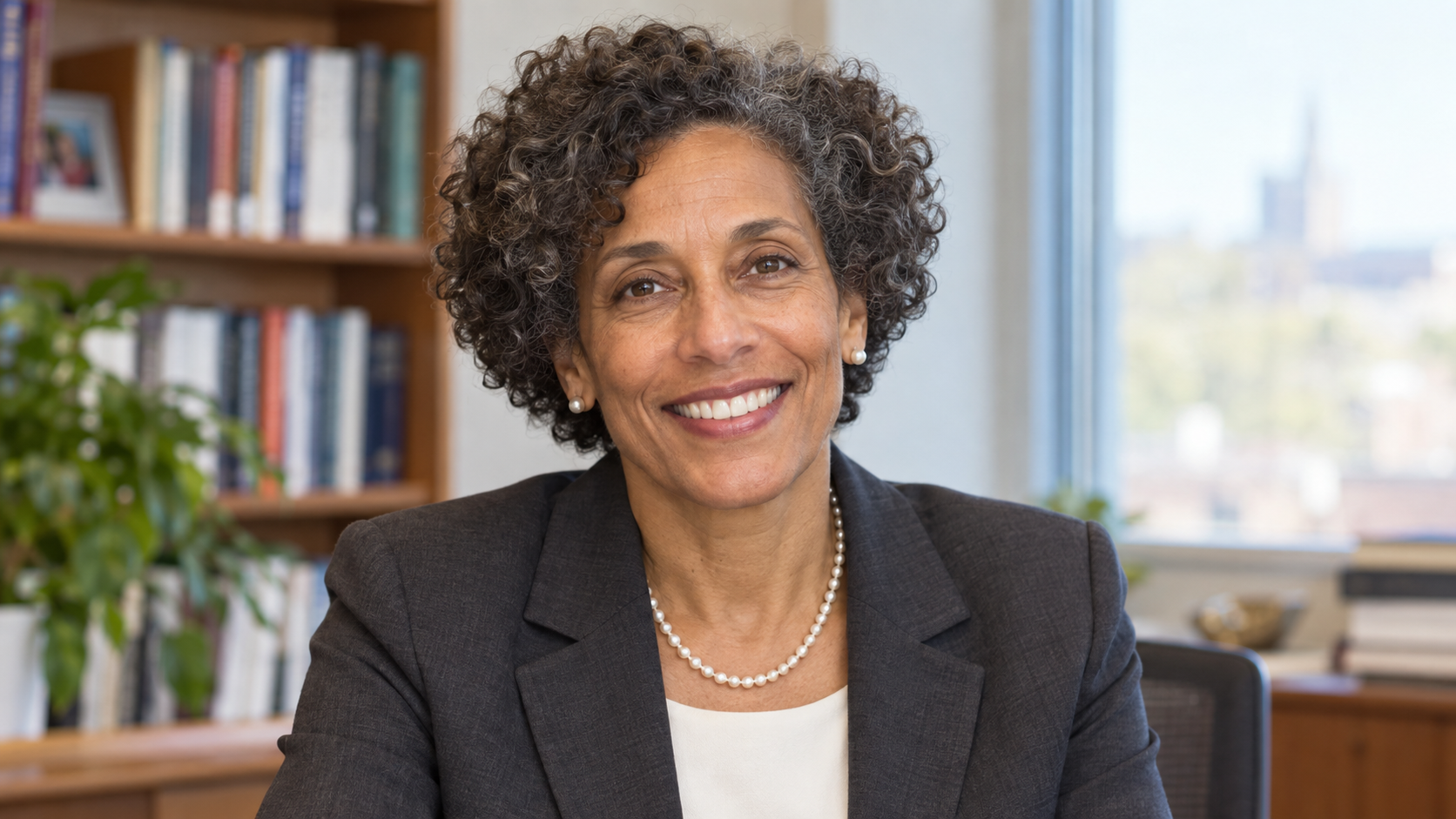
“We don't have to have all the answers to call for change.”
Mary Bassett delivered this appeal at TEDMED in November 2015, drawing on her experience as a physician in Zimbabwe and as New York City's health commissioner. She described an uncomfortable gap between treating people who were ill and challenging the arrangements that made some communities especially vulnerable. Her reflection on the early AIDS epidemic concerned the silence around structural inequality as well as the response to infection. The sentence asks health professionals to acknowledge that gap publicly. It does not dismiss scientific uncertainty or suggest that any proposed reform will work. Instead, it distinguishes uncertainty about every solution from recognition that an existing condition is unfair. A clinician can describe a pattern of avoidable hardship without pretending to possess a complete political blueprint. Bassett's argument places that responsibility alongside the familiar responsibility to care for the person already sitting in an examination room.
Read as a guide to health leadership, the quote creates room for a careful first step. A clinic might notice that its appointment rules repeatedly disadvantage people whose work schedules change without warning. Staff could document what happens, listen to affected patients and ask whether a different booking process would help. Such an example is an interpretation of Bassett's principle, rather than a report of her own program. Naming the difficulty gives it a place on the agenda; measuring the result keeps the response accountable. Neither step requires claiming that one scheduling change will erase a wider inequality. The same reasoning can apply when transportation, language access or the cost of taking time off work interrupts care. What matters is making the obstacle visible enough for people with relevant knowledge to help address it, while staying precise about the limits of the evidence.
The courage in this statement also involves sharing authority. Calling for change can become an empty gesture if the people experiencing the problem are invited only to confirm a conclusion that professionals have already chosen. A more useful response leaves room for disagreement about priorities and asks who will bear the effort of a proposed improvement. It also returns to the community with an explanation of what was learned, what changed and what still needs attention. These are ordinary forms of accountability that can prevent an inspiring sentence from standing in for sustained work. For a reader outside medicine, Bassett's words offer a modest question: which obstacle to health have become so familiar that we have stopped describing it? Raising that question carefully can begin a conversation. Following it with listening, evidence and a willingness to revise the answer gives that conversation practical value.
An observed barrier can deserve attention before a complete remedy is available. The first task is to describe who encounters it, under what circumstances and with what consequences.
Clear description creates a shared problem to investigate. It is more useful than assigning blame to a patient whose choices are already constrained.
Bassett’s appeal should not be read as permission to treat guesses as findings. Distinguish what has been observed from the explanation you are testing.
A credible request for change can state uncertainty openly. That honesty helps others contribute information and assess whether a proposed response is appropriate.
People living with a barrier may identify costs or practical difficulties that a professional overlooks. Their account can change the order of priorities.
After a discussion, explain the next action and return with the outcome. Participation means more than collecting experiences and leaving without a response.
Explore more "Quotes of The Day"
Discover more notable quotes from influential voices across politics, science, business, technology, sports, and culture. Each quote offers insight into how ideas, beliefs, and decisions shape the world around us.