

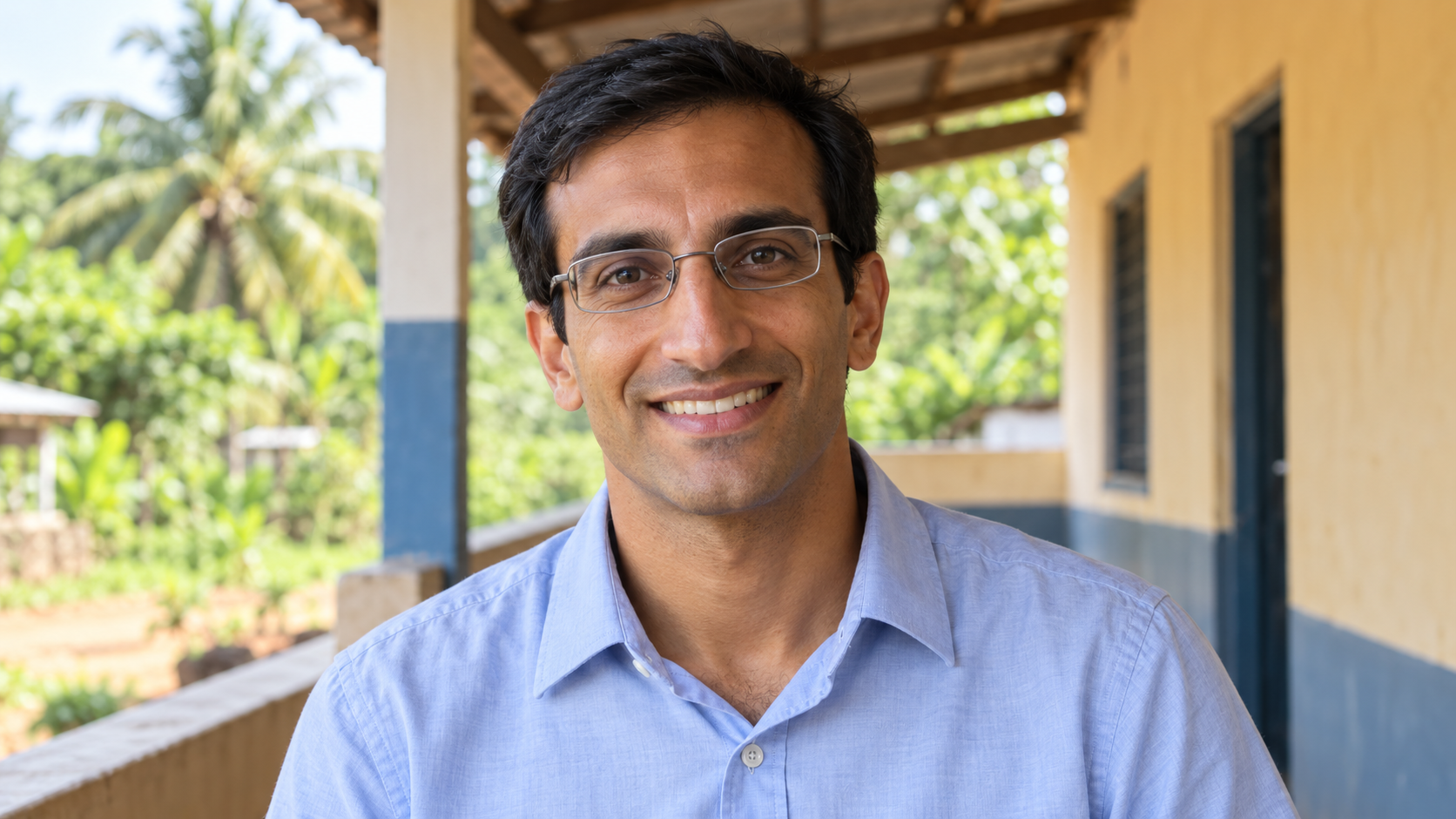
“No one should die because they live too far from a doctor.”
Raj Panjabi made this appeal at a TIME 100 and WeWork speaker event in Miami on June 6, 2018. TIME’s account quotes the sentence as part of his argument for bringing care to remote communities, and TED’s subsequent report reproduces the same words. His work with Last Mile Health and the Community Health Academy offered a practical setting for that aspiration: training and supporting community health workers who can serve their neighbors. The sentence expresses a moral aspiration, without promising that all illness or death can be avoided. Its force comes from identifying distance as a barrier that institutions should address. Where a person lives can determine whether a service is reachable, how long a journey takes and what must be sacrificed to make it. Panjabi asks health systems to treat those difficulties as a central part of their work.
The quote changes the way a familiar phrase can sound. Describing a place as hard to reach may be geographically accurate, yet it can also make the absence of services feel inevitable. A different question asks what kind of service could remain dependable there. That question brings attention to the people who already know the community and the support they need to do health work well. Training alone is only one part of such an arrangement. Reliable supplies, supervision, compensation and a route to more specialized care can all matter to the usefulness of a local service. These are reflections on the conditions of dependable access, not a claim that one model suits every setting. The principle encourages a health system to look beyond a distant facility and consider the full path a person would need to follow when seeking help.
For a household, that path may begin with uncertainty about whom to contact. For a worker, it may involve balancing an appointment against travel costs and lost income. A service becomes more accessible when those practical steps are understood rather than assumed away. Panjabi’s words invite readers to picture access as a relationship between a community and a functioning network of care. A local worker needs somewhere to turn when a problem exceeds their role; a referral needs to lead to a service that can actually receive the person. The moral ambition in the sentence gains practical value when joined to these ordinary details. It asks institutions to persist with people whose location makes conventional delivery difficult. The goal is not simply to announce that everyone is included, but to build arrangements through which inclusion can be experienced: an identifiable contact, a prepared worker and a realistic next step when further help is required.
A remote location explains a difficulty; it does not decide the response. Ask which parts of care can be delivered dependably closer to home.
The answer should reflect the community’s needs and the capabilities of the wider service. Access requires a workable connection between both.
A local worker’s commitment cannot substitute for supplies, supervision or fair compensation. A durable service supports the person expected to deliver it.
Recognition should be matched by practical resources. Those arrangements help make the role sustainable rather than relying on endless personal sacrifice.
Local care has limits. A useful network offers a clear route when a person needs help beyond the worker’s training or resources.
Access can be assessed by following the entire journey. A contact and a recommendation are only useful if the next service is genuinely reachable.
Explore more "Quotes of The Day"
Discover more notable quotes from influential voices across politics, science, business, technology, sports, and culture. Each quote offers insight into how ideas, beliefs, and decisions shape the world around us.