

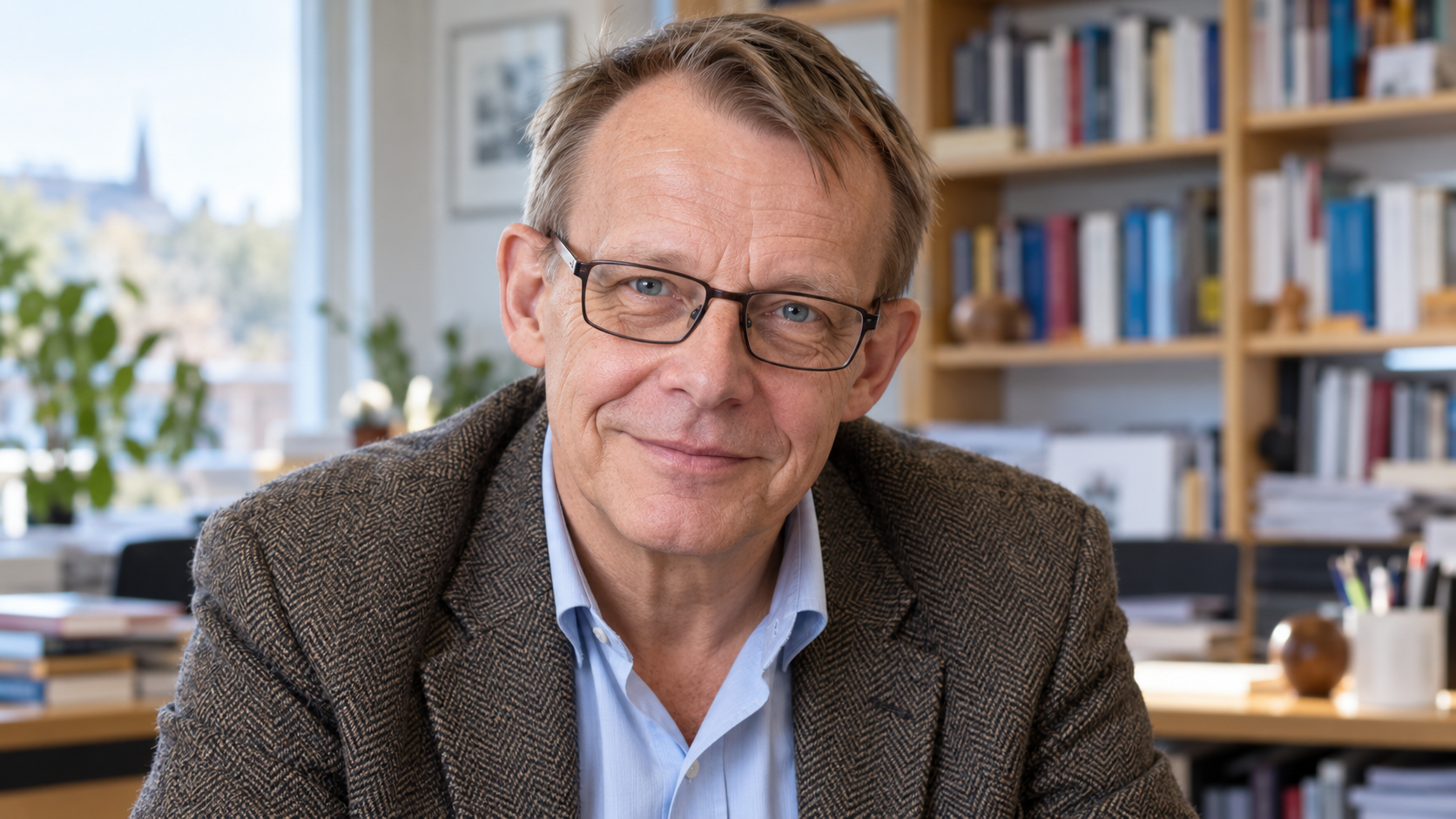
“Health cannot be bought at the supermarket.”
Hans Rosling made this observation in his 2006 TED talk about global development. The Swedish physician and professor of global health was comparing changes in health and income across countries. The speech archive Svenska Tal preserves the sentence in its transcript, and a later account by Vision of Earth reproduces it while describing the talk. Rosling followed the supermarket comparison with a discussion of investment in schooling, health workers and education. The context makes his meaning concrete: higher income does not automatically create all the capacities that support a healthier population. Those capacities have to be built. The quote is not a rejection of useful products or economic resources. It is a reminder that public health involves people, institutions and accumulated effort. His historical charts belong to their original period; the lasting question is how a society turns its resources into services and opportunities that people can actually use.
The supermarket image works because buying something usually feels immediate. We choose an item, complete a transaction and leave with it. Training a health worker or maintaining a dependable service follows a different rhythm. The benefit depends on preparation, cooperation and continued support. A building without enough staff may look complete while remaining difficult to use. Equipment without maintenance can lose its value. Information without a way to ask questions may fail to reach the people who need it. These examples are interpretations of the quote rather than measurements from Rosling’s talk. They show why visible purchases can draw attention away from the less visible work that makes a service dependable. A useful question is whether the investment supports the whole path from a resource to a person receiving help. That path may include planning, teaching, listening and correcting problems long after an opening ceremony or an announcement.
Rosling’s sentence also encourages patience about how progress is judged. A society can value improvement without assuming that one purchase, one campaign or one favorable average describes everyone’s experience. Looking more closely may reveal differences between communities or barriers hidden within an overall result. That closer view helps connect a broad ambition to the circumstances people face. Readers do not need to interpret a historical chart as a current verdict to appreciate the insight. They can ask what sustained work lies behind an apparently simple outcome, and whose experience remains difficult to see. The quote gives education and human skill a place beside material resources. It invites attention to continuity: keeping knowledge available, supporting the people who provide care and learning from gaps in delivery. Health can benefit from economic resources, but those resources acquire their public value through choices and effort. The supermarket comparison reminds us that lasting capacity is developed through relationships and responsibilities that continue after money has been spent.
A useful purchase still depends on skill, preparation and support. Material resources are part of a service rather than its entire foundation.
Consider the work needed to turn an investment into dependable help. Training and maintenance can matter after the initial purchase is complete.
Announcements can make an investment easy to see. Planning, teaching and correcting problems may attract less attention.
Ask how that continuing effort is supported. A service earns trust through repeated usefulness, not only through its opening day.
An overall result can describe progress without capturing every person’s circumstances. Differences within a population deserve attention.
Use broad information as a starting point for closer inquiry. Ask which barriers remain and whose experience the summary may miss.
Explore more "Quotes of The Day"
Discover more notable quotes from influential voices across politics, science, business, technology, sports, and culture. Each quote offers insight into how ideas, beliefs, and decisions shape the world around us.