

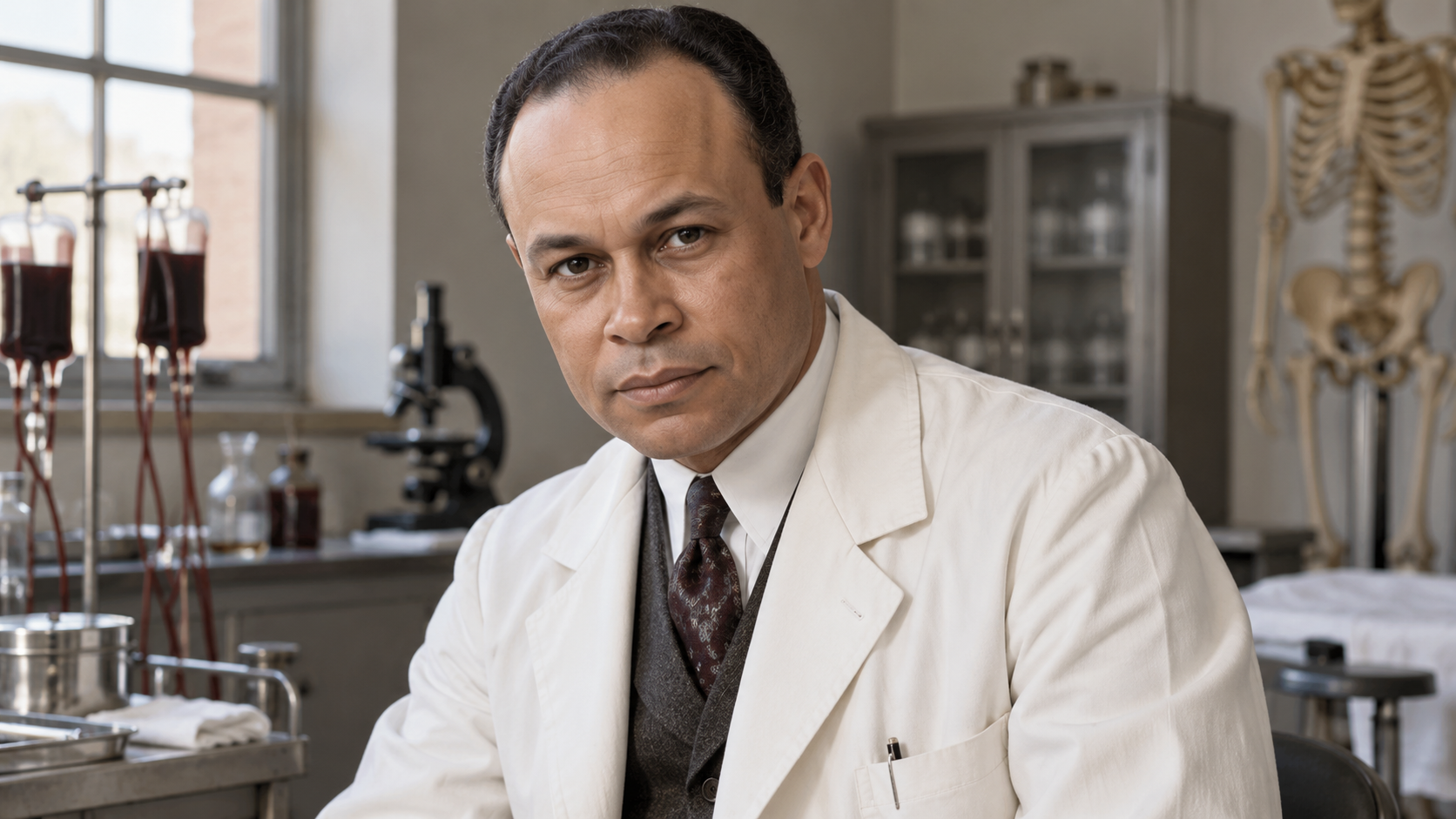
“Excellence of performance will transcend artificial barriers created by man.”
Charles R. Drew’s students and family remembered this sentence as a guiding credo of the surgeon, researcher, and teacher. Accounts from Howard University and the medical literature place it beside a career devoted to blood-plasma research and the training of Black surgeons during an era of entrenched segregation. The word “artificial” is central. Drew did not describe racial barriers as differences in ability or ambition; he identified them as human constructions. His answer was excellence, pursued with discipline in laboratories, operating rooms, and classrooms. The line carries the confidence of a mentor telling students that their work could expose the false premises behind exclusion. It also reflects the demanding standards with which Drew built a department and prepared physicians to succeed in institutions that often denied them equal opportunity. Drew’s blood-plasma work joined laboratory method with the urgent logistics of collection, processing, preservation, and transport, making performance a matter of systems as well as personal skill.
Read carelessly, the quotation could sound as though exceptional performance alone will dissolve discrimination. Drew’s life offers a more demanding reading. He achieved at the highest level while institutions continued to restrict Black professionals, and he publicly opposed discriminatory blood-donation policies. Excellence can disprove a stereotype, but the person facing the barrier should not bear sole responsibility for removing it. Institutions must also change admissions, hiring, promotion, funding, and professional networks that reproduce unequal access. The quote’s moral force comes from holding both facts at once: standards matter, and many obstacles called standards are actually inherited exclusions. Recognizing that distinction protects rigor from being used as a cover for bias. His protest against racially segregated blood policies demonstrated that scientific standards could be invoked against prejudice rather than adjusted to accommodate it.
For health professions, Drew’s credo asks what happens to excellent work after it is produced. Is it recognized, funded, taught, and trusted across lines of race and status? Are trainees evaluated by transparent measures, or by informal ideas of who looks like a leader? These questions affect the people who enter medicine and the communities that benefit from their skill. A diverse workforce is not a symbolic extra when health systems need knowledge, trust, and talent from every part of society. Drew’s sentence remains memorable because it places excellence against barriers without pretending the barriers are imaginary. Performance can reveal their injustice; policy and collective action must take them down. The enduring task is to build conditions in which excellence does not have to be extraordinary merely to receive a fair hearing. The sentence thus carries a reciprocal demand: trainees should be prepared to excel, and institutions should stop manufacturing obstacles that waste the excellence they claim to seek.
Drew used exacting standards in research, surgery, and teaching at Howard University.
His family and professional histories preserve the sentence as a statement that guided his work.
The wording rejects the idea that racial exclusion reflects ability or natural difference.
It names barriers as constructed rules and customs that institutions have the power to change.
Individual achievement can expose prejudice but cannot by itself reform admissions, hiring, funding, or promotion.
Health organizations must pair fair standards with active removal of inherited obstacles.
Explore more "Quotes of The Day"
Discover more notable quotes from influential voices across politics, science, business, technology, sports, and culture. Each quote offers insight into how ideas, beliefs, and decisions shape the world around us.