

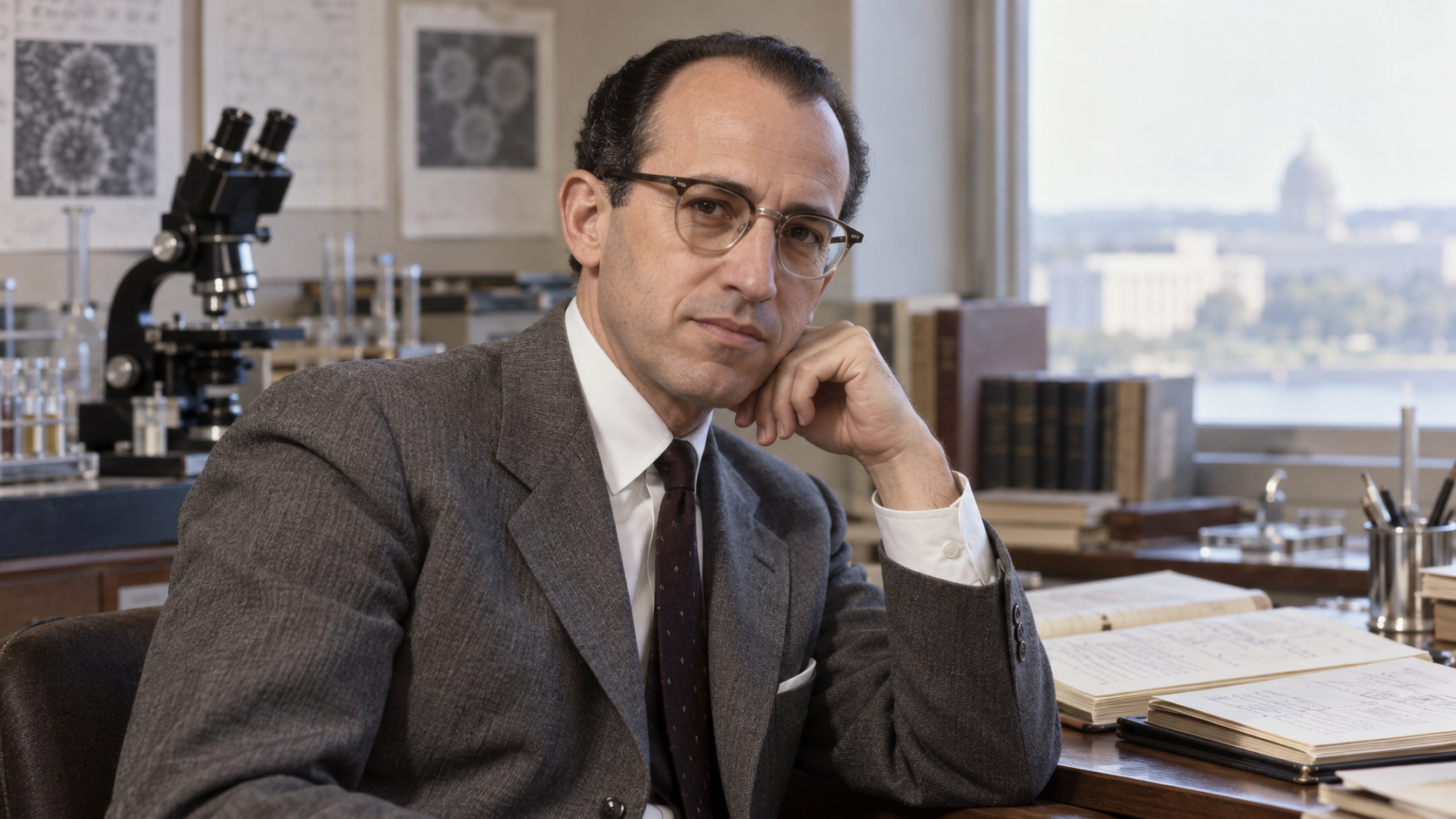
“There is no patent. Could you patent the sun?”
Jonas Salk gave this famous reply to broadcaster Edward R. Murrow in 1955, after the announcement that the inactivated polio vaccine had proved safe and effective in a vast field trial. Asked who owned the patent, Salk first said, “Well, the people, I would say,” and then reached for the image of the sun. The exchange captured a moment of relief after years when polio outbreaks brought paralysis, fear, and crowded hospital wards. It also reflected the vaccine’s public and philanthropic foundations, including support associated with the March of Dimes and participation by families and communities. Salk’s answer turned technical success into a claim about ownership: the achievement belonged within a shared effort against disease. The television exchange became memorable partly because Salk answered a legal and economic question with a moral image that an audience could grasp immediately.
The sun metaphor is powerful, but the patent history is more complicated than a single act of refusal. Legal analysis commissioned at the time concluded that key parts of the vaccine process were unlikely to meet patent requirements, and many contributors besides Salk made the program possible. Remembering those details does not empty the quote of meaning. It prevents a heroic anecdote from obscuring collective science, public funding, manufacturing, clinical testing, and the labor of participants. Nor does the sentence settle every modern argument about intellectual property. Developing and producing medical tools requires money, expertise, quality control, and dependable supply chains. The important question is how those arrangements serve access rather than treating access as an afterthought. The trial itself depended on consent, public confidence, standardized production, and careful comparison, reminding readers that a breakthrough becomes trustworthy through organized verification.
Salk’s reply remains useful whenever a lifesaving discovery moves from laboratory to population. A vaccine cannot protect someone who cannot receive it, and an elegant invention has limited public value if production, distribution, trust, or affordability fails. At the same time, access depends on maintaining safety standards and sustaining the capacity to improve a product as evidence changes. The quote encourages a broad accounting of who supports discovery and who should share its benefits. It also asks institutions to explain the public bargain behind research: what risks communities carried, what resources they supplied, and how success will reach them. The sun cannot be owned, but medical technologies must still be made, tested, and delivered. Public-minded innovation connects those practical demands to a clear purpose: knowledge should expand the number of people able to live without preventable disease. Current debates differ in technology and finance, but they retain the same public-interest questions about who absorbs early risk, who pays, and who can use the finished tool.
Salk first answered that the patent belonged to “the people” before asking whether anyone could patent the sun.
The moment followed the 1955 announcement of the successful polio-vaccine trial.
The vaccine grew from public, philanthropic, scientific, industrial, and community contributions.
Contemporary legal review also raised doubts about whether crucial parts of the process were patentable.
Research succeeds in public-health terms when safe and effective tools can actually reach people.
Funding, production, quality, affordability, and trust are part of the achievement, not tasks left outside it.
Explore more "Quotes of The Day"
Discover more notable quotes from influential voices across politics, science, business, technology, sports, and culture. Each quote offers insight into how ideas, beliefs, and decisions shape the world around us.