

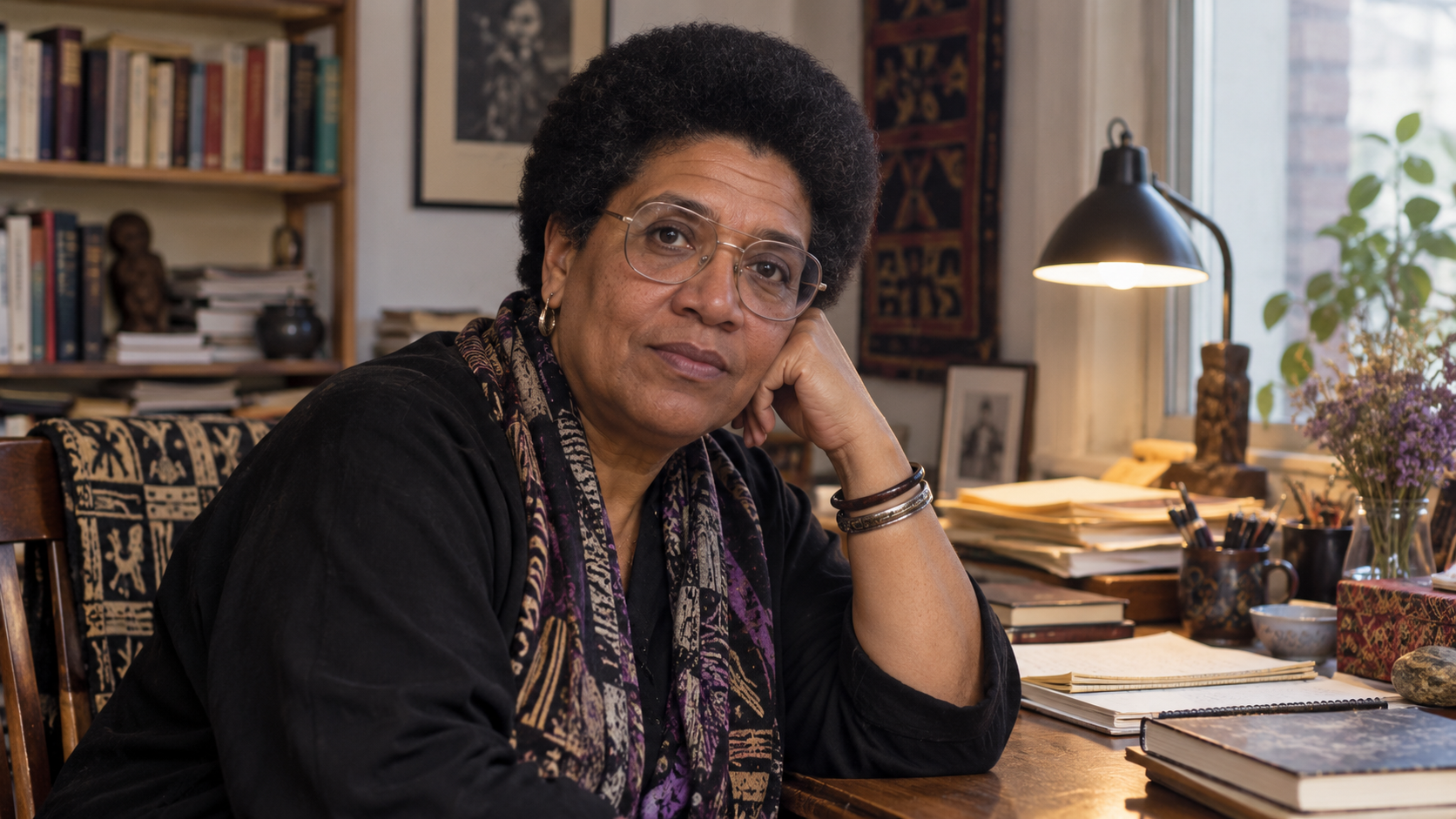
“Caring for myself is not self-indulgence, it is self-preservation, and that is an act of political warfare.”
Audre Lorde wrote this sentence in A Burst of Light, a collection of journal entries and essays shaped by her life with cancer and her work as a Black lesbian feminist poet and organizer. In its original setting, “self-care” did not mean a consumer reward detached from hardship. Lorde was writing about preserving a life under illness, racism, sexism, homophobia, work, and the demands of political struggle. The phrase “political warfare” is intentionally forceful because the conditions threatening her were not merely private. Rest, treatment decisions, boundaries, writing, companionship, and attention to the body could protect the capacity to continue living and acting in a world that often treated that life as expendable. The surrounding entries in A Burst of Light document medical encounters, fatigue, travel, work, and mortality, so the sentence emerges from repeated choices about limited energy.
The quote has traveled widely and is sometimes stripped of that context into a general slogan for personal wellness. Enjoyment and rest do not need a political defense, but Lorde’s argument is more specific than permission to purchase comfort. She linked preservation with the uneven distribution of exhaustion, danger, and care. The sentence also should not turn self-care into another duty that people can fail. Time, safe housing, money, family support, and access to competent treatment are not equally available. Telling someone to care for themselves without changing the conditions that consume them can reproduce the very burden the quote names. Preservation was connected to purpose: protecting the body also protected Lorde’s capacity to write, love, teach, and participate in collective work.
In health settings, Lorde’s words support attention to what allows a patient or worker to remain whole enough to make choices and sustain relationships. That may involve symptom relief, privacy, community, creative work, time away, or the ability to refuse an unreasonable demand. Organizations have a related responsibility: safe staffing, leave, nondiscrimination, accessible care, and protection from harassment cannot be replaced by resilience workshops. The political dimension appears wherever some groups are expected to absorb more harm with fewer resources. Lorde’s sentence remains useful because it joins an intimate practice to a public analysis. Care preserves a person; justice helps make preservation possible without requiring heroic effort from those already carrying the greatest load. A care plan informed by that context would ask what the person is trying to preserve, rather than assuming that symptom scores alone capture the desired outcome.
Lorde wrote while living with cancer and confronting overlapping political and personal demands.
Self-care named preservation of a life and voice under conditions that repeatedly threatened both.
The quotation is often detached from the unequal distribution of time, safety, money, support, and care.
Self-care should not become another standard used to blame people whose conditions leave little room for it.
Rest, boundaries, treatment, creativity, and community can sustain an individual’s capacity.
Institutions must also provide staffing, leave, access, and safety so survival does not depend on private heroics.
Explore more "Quotes of The Day"
Discover more notable quotes from influential voices across politics, science, business, technology, sports, and culture. Each quote offers insight into how ideas, beliefs, and decisions shape the world around us.