

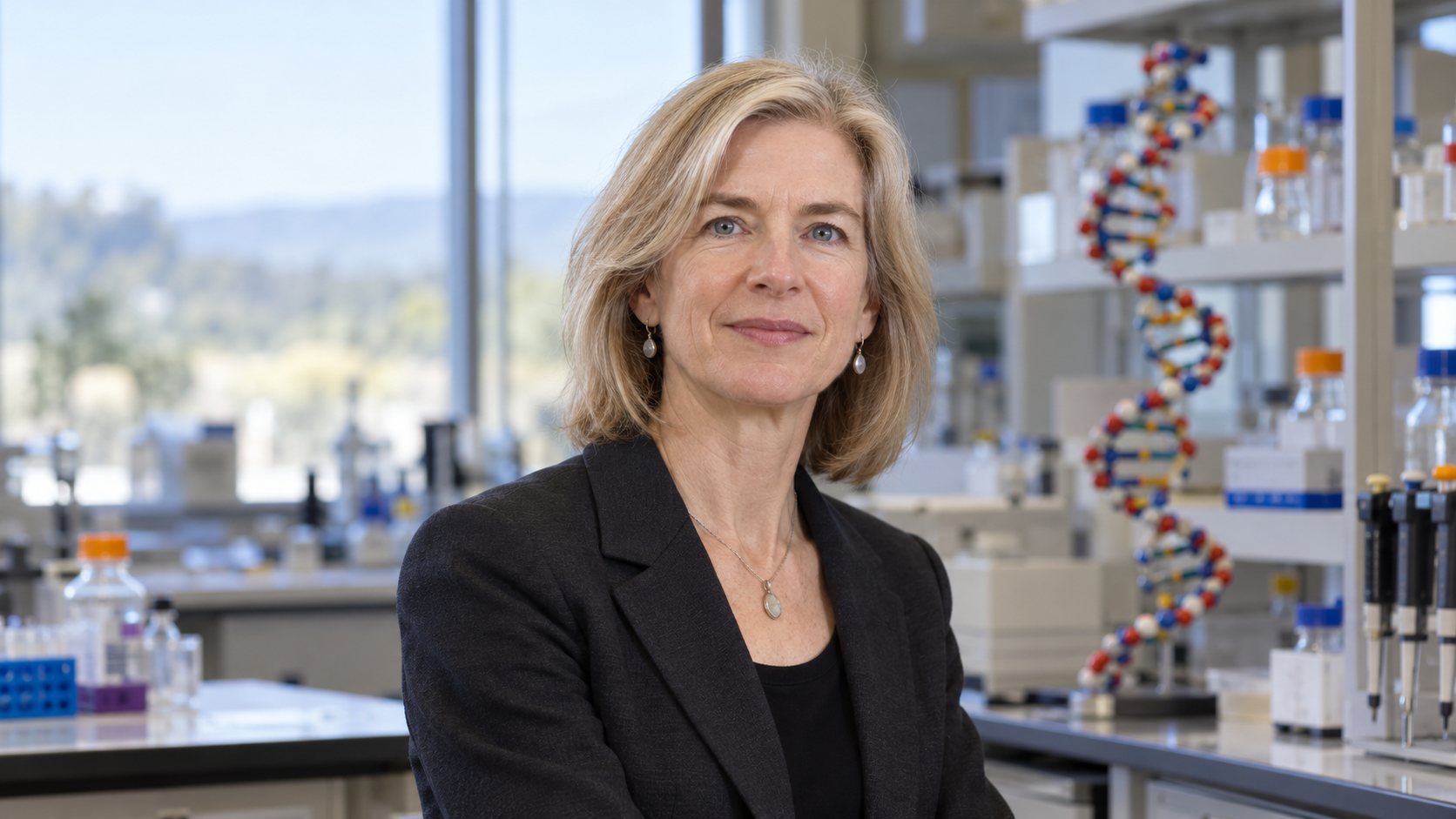
“We need to consider that the CRISPR technology can be used for things like enhancement.”
Doudna explained how a bacterial defense mechanism became a programmable genome-editing tool. She paired excitement about research and potential therapies with concern that inherited edits or enhancement could affect people who cannot consent and reshape social inequality. The primary record for Jennifer Doudna identifies Doudna’s 2015 TED talk on CRISPR-Cas9 and the ethics of genome editing. Reading Doudna’s source beside Doudna’s words separates Doudna’s verified context from Doudna’s later paraphrase. August 27 orders Doudna’s series; August 27 does not tie Doudna’s statement to Doudna’s historical anniversary for Doudna. The paired references let Doudna’s readers compare Doudna’s wording with Doudna’s institutional record and Doudna’s biography. That documented trail for Doudna preserves Doudna’s audience, Doudna’s purpose, and Doudna’s necessary limitation. Editors can quote Doudna while keeping Doudna’s original question visible to Doudna’s readers.
Technical capability does not answer whether an intervention should be used. Enhancement raises questions about normal variation, disability, parental choice, access, and which traits powerful institutions might reward or reject. CRISPR is a family of evolving methods, not a guarantee of precise or safe outcomes. Somatic treatments, laboratory research, agricultural uses, and heritable editing carry different risks and ethical questions; they should not be collapsed into one debate. For Doudna, the line becomes Doudna’s interpretive lens rather than Doudna’s complete clinical guidance. Applying Doudna’s idea requires Doudna’s current evidence, Doudna’s affected communities, and Doudna’s suitable outcomes. In health reporting, Doudna should guide Doudna’s inquiry before Doudna supports Doudna’s conclusion. A careful reading of Doudna separates Doudna’s descriptive findings from Doudna’s moral judgment and Doudna’s policy choice. Each layer around Doudna needs Doudna-specific support plus Doudna-specific accountability. That structure keeps Doudna’s memorable words connected to Doudna’s documented scope and limits.
Public governance needs scientists, patients, disabled people, ethicists, regulators, and affected communities before applications become entrenched. Clinical claims require transparent trials, long follow-up, and equitable access if benefits are established. Doudna’s warning makes foresight part of invention. Responsible innovation asks who chooses, who bears uncertainty, and whether a promised improvement expands health without narrowing human worth. The continuing question from Doudna is practical for Doudna: which decision embodies Doudna’s principle? Readers can test Doudna’s relevance when Doudna’s practical questions for Doudna ask who gains, where Doudna’s risk falls, and how Doudna’s improvement gets measured. Organizations honor Doudna by assigning Doudna-specific responsibility, Doudna-specific resources, Doudna-specific timelines, and Doudna-specific public feedback. Individuals may use Doudna for Doudna-specific reflection while qualified care addresses Doudna’s personal relevance. That distinction lets Doudna inspire Doudna-specific action without turning Doudna’s editorial context into Doudna’s medical advice. A transparent Doudna review lets Doudna’s principle face Doudna’s real outcomes and necessary correction.
Doudna’s 2015 TED talk on CRISPR-Cas9 and the ethics of genome editing.
The primary record anchors Jennifer Doudna’s wording and prevents the August calendar from being mistaken for an anniversary.
Technical capability does not answer whether an intervention should be used.
Its value is strongest when the surrounding evidence, affected people, and practical conditions remain visible.
CRISPR is a family of evolving methods, not a guarantee of precise or safe outcomes.
Apply the insight with consent, equity, current evidence, and a willingness to revise decisions when outcomes differ from expectations.
Explore more "Quotes of The Day"
Discover more notable quotes from influential voices across politics, science, business, technology, sports, and culture. Each quote offers insight into how ideas, beliefs, and decisions shape the world around us.