

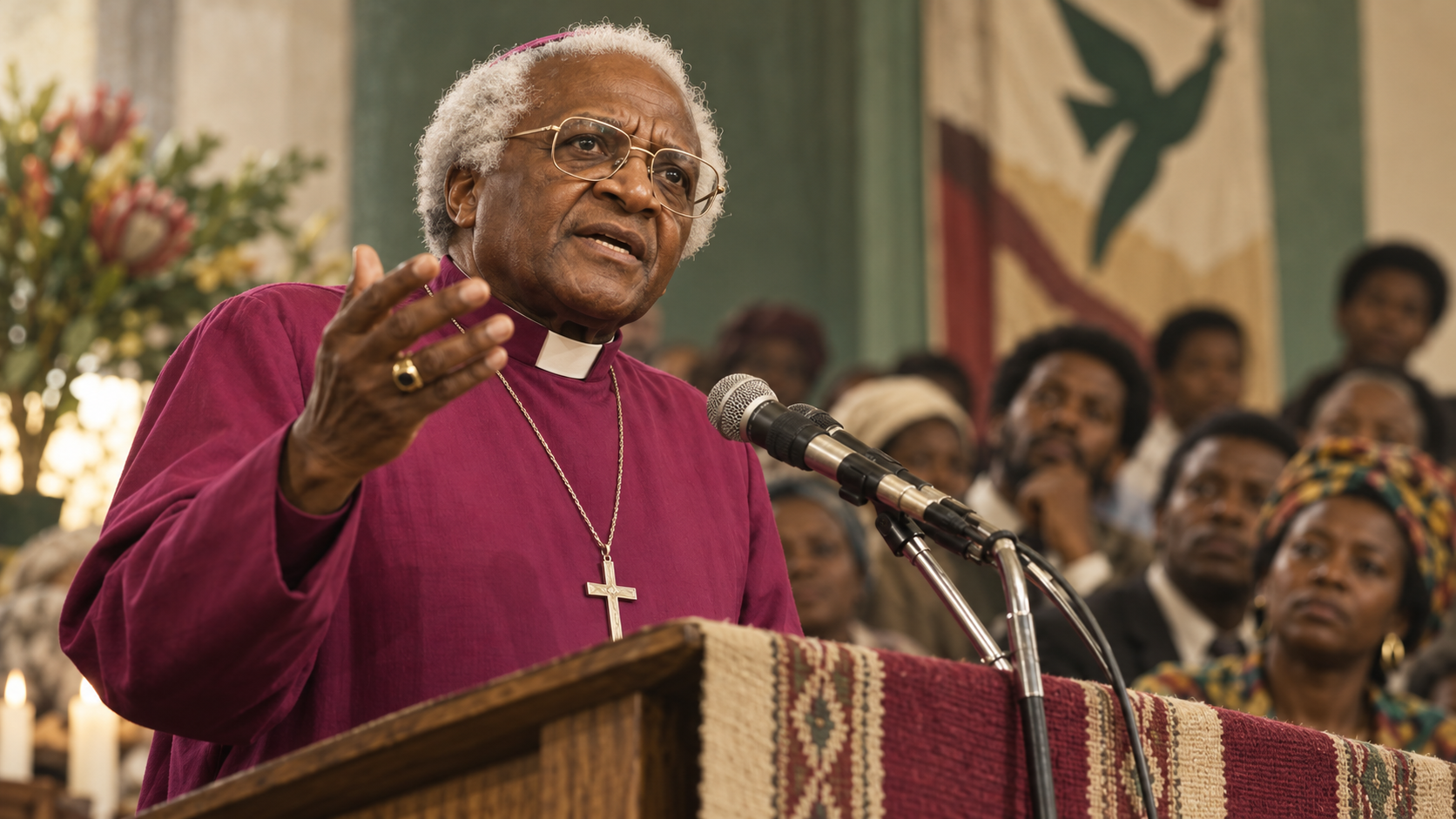
“If you are neutral in situations of injustice, you have chosen the side of the oppressor.”
Desmond Tutu’s statement was recorded in Robert McAfee Brown’s 1984 book Unexpected News: Reading the Bible with Third World Eyes. The full comparison says that if an elephant has its foot on a mouse’s tail, the mouse will not appreciate a bystander’s neutrality. Tutu was speaking during apartheid, a system in which law, policing, land, movement, and political power were deliberately unequal. In that setting, refusing to choose did not stop the existing machinery from operating.
Neutrality is not empty when power is uneven. If one party can continue causing harm without resistance, inaction preserves the conditions that already favor it. Tutu’s image shifts attention from a tidy disagreement between equal sides to the practical effect of a position. The moral question becomes not only what a bystander intends, but what the bystander’s silence, resources, or refusal allows to continue.
The quote does not eliminate the need to verify a claim or understand a complicated conflict. Acting before facts are clear can intensify harm, and some roles—judges, mediators, clinicians, journalists—require forms of procedural independence. Personal safety and limited capacity also matter. The distinction is between careful impartiality that protects fair treatment and performative neutrality that ignores a well-supported pattern of domination. One may need time to learn without pretending that uncertainty erases visible suffering.
The line remains useful in workplaces, schools, families, and public institutions where harm depends on witnesses treating it as a private disagreement. Begin by identifying the power involved: who can impose consequences, control information, or leave without cost? Verify what happened, ask what the affected person needs, and use the authority you actually have. That may mean documenting a pattern, enforcing a rule, interrupting retaliation, or directing resources toward protection. Avoid claiming the role of rescuer; accountability should increase the agency of those facing harm. Tutu’s challenge is not to adopt an opinion on every dispute. It is to recognize that when injustice is established and unequal power keeps it in place, standing aside is already an action with a predictable beneficiary. Institutions can make responsible action safer by offering confidential reporting, protection from retaliation, transparent standards, and records that reveal repeated conduct. Without those structures, the personal cost of speaking may fall on the least protected witness. Neutrality becomes less tempting when responsibility is shared and procedures translate concern into a fair response. Moral courage still matters, but it should not have to substitute for competent institutional design.
The statement was recorded in Robert McAfee Brown’s 1984 book Unexpected News during the apartheid era in South Africa.
Tutu paired it with the image of an elephant standing on a mouse’s tail to show why neutrality is not neutral when power is radically unequal.
The quote does not excuse acting on rumor. Verification, procedural fairness, and role-specific independence can be essential protections.
Safety and capacity matter; responsible action should support the agency of affected people rather than turning a bystander into a self-appointed rescuer.
Harm in institutions often continues because witnesses describe unequal situations as private disputes between equivalent sides.
Identify who controls consequences and information, verify the pattern, and use your actual authority to improve protection or accountability.
Explore more "Quotes of The Day"
Continue exploring how writers, thinkers, artists, and advocates have described the choices that shape an everyday life.