

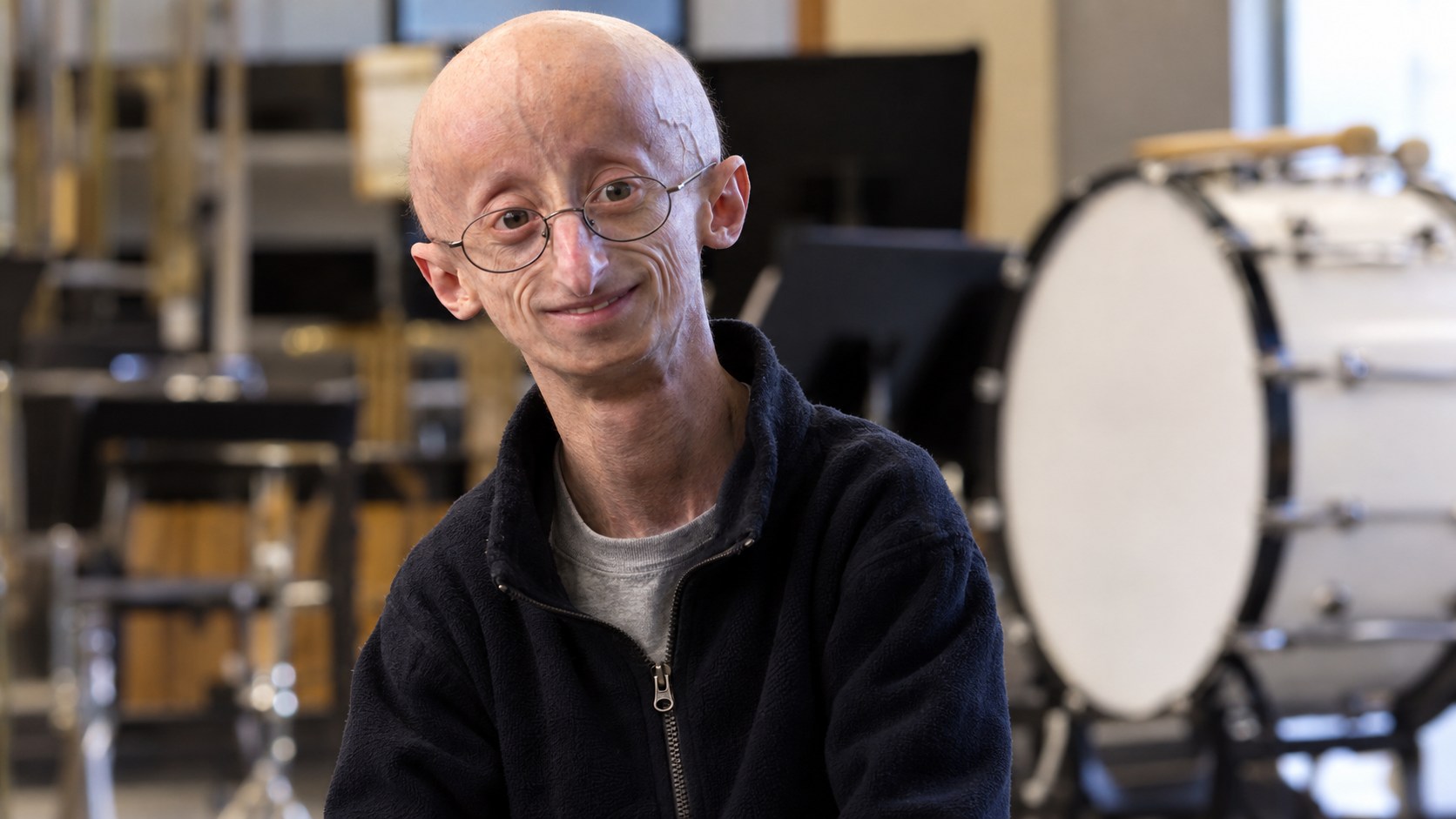
“I don't waste energy feeling bad for myself.”
July 5 uses My Philosophy for a Happy Life (2013) as Sam Berns's documented setting. Berns describes living with progeria and explains a practical philosophy built around what he could do, people he valued, and goals he could anticipate. Berns developed his philosophy while living with progeria and speaking openly about limits that could not simply be wished away. He organized the talk around activities he could pursue, relationships that sustained him, and goals ahead. The quote describes how he allocated energy; it does not erase the medical reality surrounding him. July 5 is NewsStreets placement for Sam Berns; 2013 is Sam Berns's date for My Philosophy for a Happy Life.
The sentence focuses limited attention on participation and possibility without claiming that pain, frustration, or loss should never be felt. The featured wording—“I don't waste energy feeling bad for myself.”—compresses that distinction for Sam Berns. Refusing to spend all attention on self-pity is different from refusing sadness. Berns makes room for disappointment and then redirects effort toward participation that remains possible. Agency appears as selective investment under constraint: deciding what deserves scarce time without pretending the constraint is unreal.
No person with illness or disability owes others cheerfulness, and medical, social, and accessibility barriers cannot be solved by attitude alone. For Sam Berns, the boundary guards My Philosophy for a Happy Life from overreach. Disability stories are easily turned into demands that everyone remain inspiring. That use would contradict the dignity at the center of the talk. People may grieve, require accommodation, reject public exposure, or have fewer available choices, and institutions retain responsibility for access and care.
Stories about resilience can either support agency or turn into pressure to perform gratitude for an audience. The line can guide a humane inventory rather than a mood test. Name the barrier honestly, identify support or adaptation that opens one valued activity, and let the person affected define what counts as participation. Hope is credible here because it works beside limitation instead of asking limitation to disappear. The surrounding practice should therefore be chosen by the person living the constraint. An observer may admire a small victory that the participant experiences as invasion or exhaustion. Asking first preserves agency and yields better information about what support is actually useful. Resilience deserves resources, privacy, and ordinary companionship—not only applause when it becomes publicly inspiring. For Sam Berns, a practical July 5 trial is this: Name one real limitation without minimizing it, then identify one available action, accommodation, or relationship that lets valued life continue beside it. On July 5, readers can test My Philosophy for a Happy Life through Sam Berns's guidance.
Sam Berns used the line in My Philosophy for a Happy Life, associated with 2013. Berns describes living with progeria and explains a practical philosophy built around what he could do, people he valued, and goals he could anticipate.
The source year identifies the documented work; July 5 is only this Quote of the Day series position, not the date when the words were first spoken or published.
The sentence focuses limited attention on participation and possibility without claiming that pain, frustration, or loss should never be felt.
No person with illness or disability owes others cheerfulness, and medical, social, and accessibility barriers cannot be solved by attitude alone.
Stories about resilience can either support agency or turn into pressure to perform gratitude for an audience.
Name one real limitation without minimizing it, then identify one available action, accommodation, or relationship that lets valued life continue beside it.
Explore more "Quotes of The Day"
Continue exploring how writers, thinkers, artists, and advocates have described the choices that shape an everyday life.