

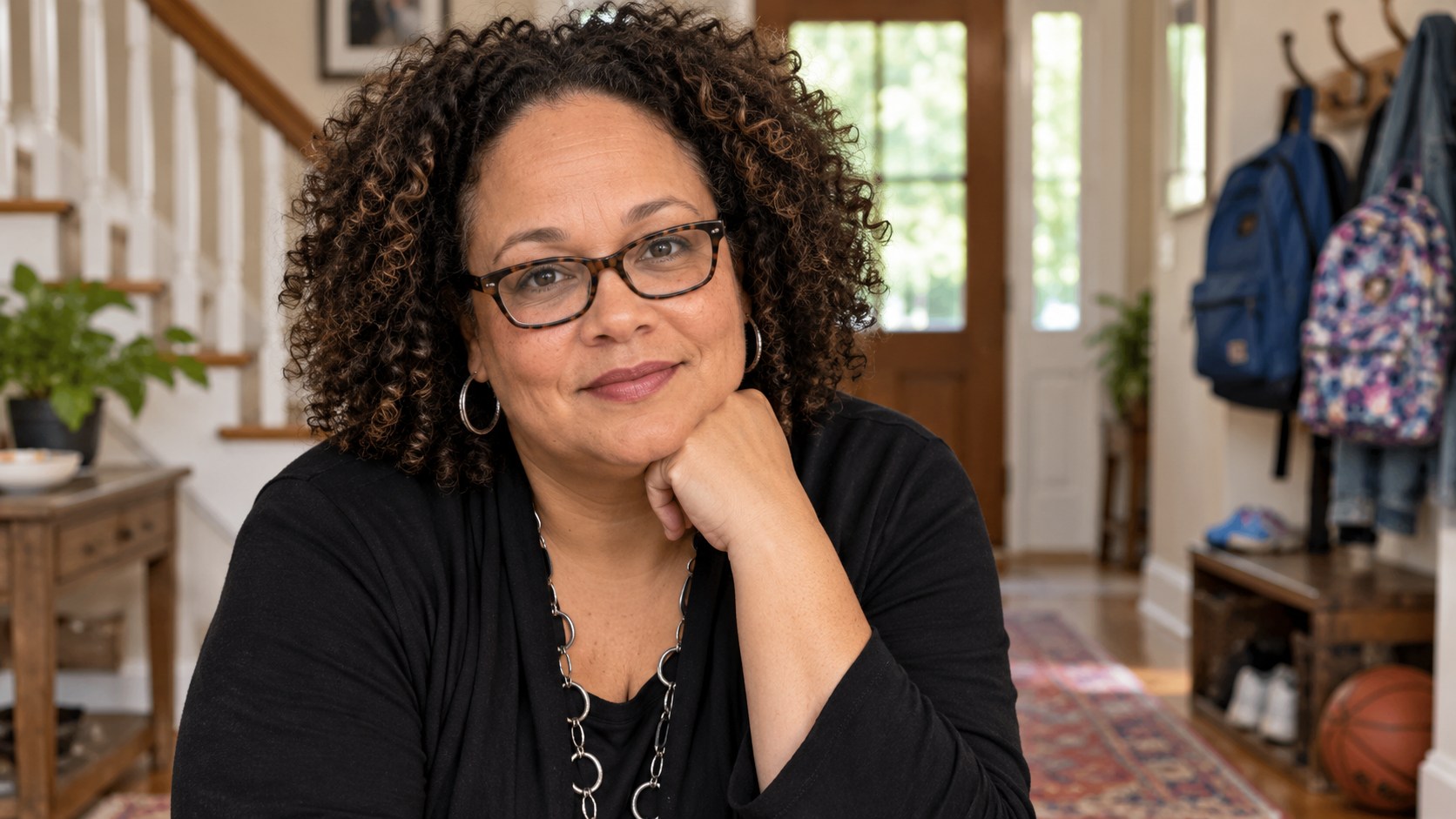
“Childhood needs to teach our kids how to love.”
July 27 uses How to Raise Successful Kids — Without Over-Parenting (2015) as Julie Lythcott-Haims's documented setting. Lythcott-Haims argues that over-managed childhood can weaken agency and that children need responsibility, unconditional regard, and room to learn from ordinary experience. Lythcott-Haims argues that an over-managed childhood can crowd out agency and contribution. Her talk contrasts résumé-building with chores, ordinary mistakes, and unconditional regard. The sentence about love arrives within a larger claim that children need to be valued as people, not treated as projects whose achievements certify their parents. July 27 is NewsStreets placement for Julie Lythcott-Haims; 2015 is Julie Lythcott-Haims's date for How to Raise Successful Kids — Without Over-Parenting.
Love develops through being valued as a person and practicing care, contribution, frustration, and repair rather than only collecting achievements. The featured wording—“Childhood needs to teach our kids how to love.”—compresses that distinction for Julie Lythcott-Haims. Learning to love includes being cared for and practicing care. Responsibility, frustration, apology, cooperation, and repair teach that other people have needs and that belonging does not depend on flawless performance. This education is relational and practical; it cannot be outsourced entirely to awards or supervised enrichment.
Independence must be age-appropriate, and children facing disability, danger, discrimination, or trauma may need additional protection and support. For Julie Lythcott-Haims, the boundary guards How to Raise Successful Kids — Without Over-Parenting from overreach. Independence must match age and circumstance. Disability, trauma, discrimination, neighborhood danger, and family instability can require additional support. Stepping back is not the same as withholding protection, and a child's wish for help should not be dismissed in service of an adult theory.
Competitive admissions and constant monitoring can make a child's résumé feel more visible than character, belonging, or practical competence. Offer one meaningful household responsibility with clear instruction and room for a manageable error. Discuss effort, impact, and repair without immediately taking the task back. The objective is not efficiency in the moment; it is a young person gradually experiencing competence and membership. Unconditional regard does not mean the absence of standards. Children can be responsible for harm and still know that love is not withdrawn as a performance penalty. That security makes honest reflection more possible. Achievement then becomes one part of development alongside empathy, practical skill, rest, curiosity, and the ability to participate in a household and community. For Julie Lythcott-Haims, a practical July 27 trial is this: Give a child one meaningful responsibility with clear support, allow a manageable mistake, and discuss effort and impact without taking the task back. On July 27, readers can test How to Raise Successful Kids — Without Over-Parenting through Julie Lythcott-Haims's guidance.
Julie Lythcott-Haims used the line in How to Raise Successful Kids — Without Over-Parenting, associated with 2015. Lythcott-Haims argues that over-managed childhood can weaken agency and that children need responsibility, unconditional regard, and room to learn from ordinary experience.
The source year identifies the documented work; July 27 is only this Quote of the Day series position, not the date when the words were first spoken or published.
Love develops through being valued as a person and practicing care, contribution, frustration, and repair rather than only collecting achievements.
Independence must be age-appropriate, and children facing disability, danger, discrimination, or trauma may need additional protection and support.
Competitive admissions and constant monitoring can make a child's résumé feel more visible than character, belonging, or practical competence.
Give a child one meaningful responsibility with clear support, allow a manageable mistake, and discuss effort and impact without taking the task back.
Explore more "Quotes of The Day"
Continue exploring how writers, thinkers, artists, and advocates have described the choices that shape an everyday life.