

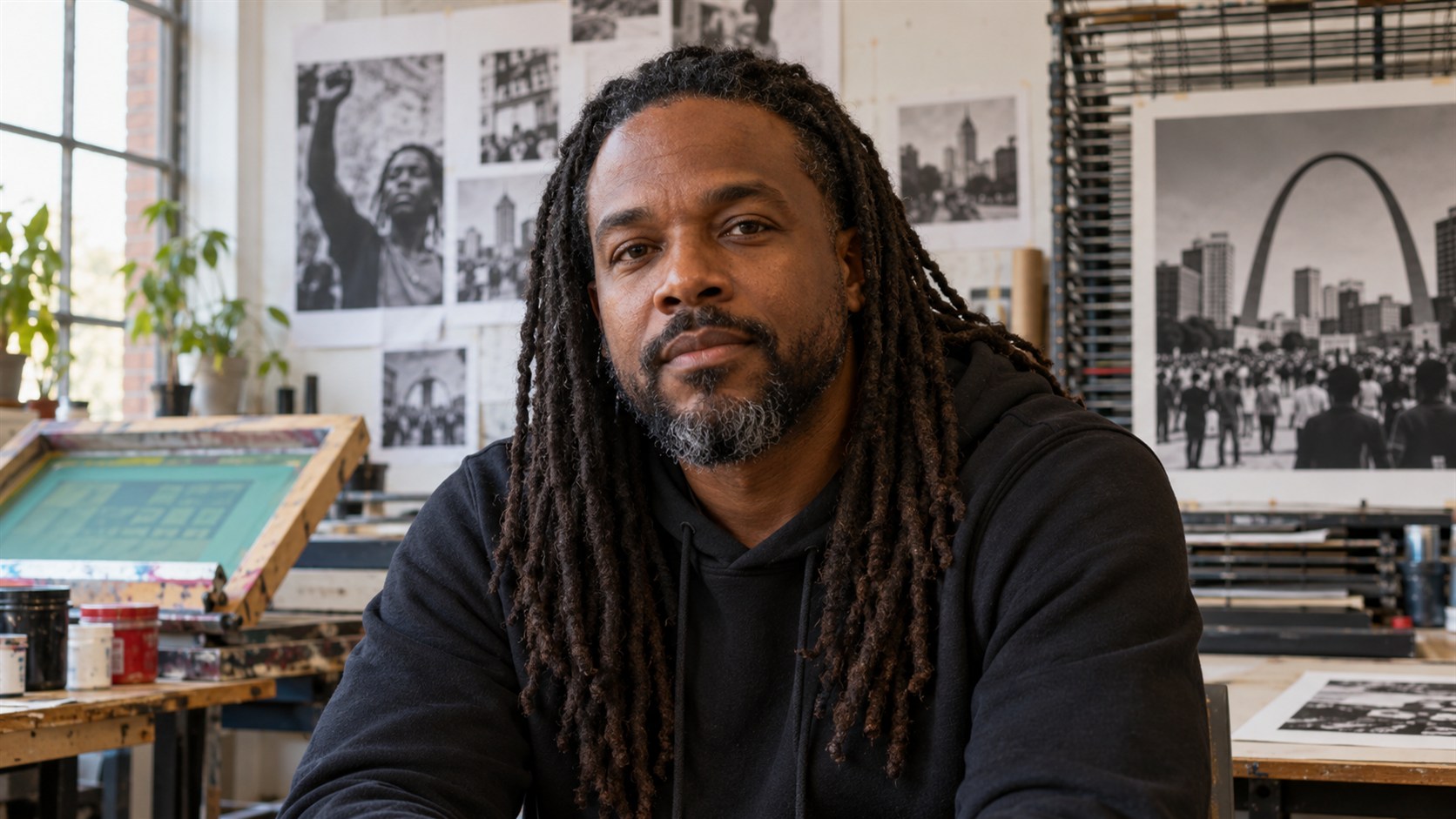
“Courage is contagious.”
Damon Davis delivered “Courage is contagious.” in Courage Is Contagious (2017). The source reflects on artists and protesters in Ferguson who answered fear and state power by showing up for one another in public. Davis treats courage as a social transmission rather than a solitary trait, locating power in what a community learns it can do together. The record keeps Damon Davis beside this reasoning, rather than detaching “Courage is contagious.” from Courage Is Contagious. August 18 marks this slot for Damon Davis; 2017 dates the documented address. That separation preserves a traceable source for the quotation.
Brave action changes the perceived range of choices available to witnesses, allowing one person’s example to enlarge another person’s agency. For Damon Davis, “Courage is contagious.” serves as a lens. Using Courage Is Contagious responsibly requires considering that courage should not be romanticized when risk is distributed unequally, and communities need safety, strategy, and care alongside visible resistance. Readers can test the idea with one small action: Support one principled action already being led by affected people, taking a role that matches their stated needs rather than seeking the center. The original setting still matters because the source reflects on artists and protesters in Ferguson who answered fear and state power by showing up for one another in public. Together, those details move “Courage is contagious.” from decoration into judgment while leaving room for evidence that Damon Davis did not address directly.
Courage should not be romanticized when risk is distributed unequally, and communities need safety, strategy, and care alongside visible resistance. That limit shapes Damon Davis’s meaning because fear can isolate people into private calculations even when a shared problem requires coordinated action and mutual recognition. Around the quotation, health, power, culture, safety, and responsibility alter practical meaning. Damon Davis can illuminate one choice without deciding every case. The stronger question asks where “Courage is contagious.” clarifies duty, where fear can isolate people into private calculations even when a shared problem requires coordinated action and mutual recognition, and whose experience will bear the result.
Fear can isolate people into private calculations even when a shared problem requires coordinated action and mutual recognition. For August 18, one observable response is this: Support one principled action already being led by affected people, taking a role that matches their stated needs rather than seeking the center. This gives Damon Davis a practical scale for review. Ask whether “Courage is contagious.” increased clarity, dignity, connection, access, or agency. If the outcome disappoints, revise the method. Davis treats courage as a social transmission rather than a solitary trait, locating power in what a community learns it can do together. August 18 keeps Damon Davis’s words active through specific action, honest revision, and attention to consequence.
Damon Davis used the line in Courage Is Contagious, associated with 2017. The source reflects on artists and protesters in Ferguson who answered fear and state power by showing up for one another in public.
Davis treats courage as a social transmission rather than a solitary trait, locating power in what a community learns it can do together. August 18 is only this series placement; it is not presented as the date when the words were first delivered.
Brave action changes the perceived range of choices available to witnesses, allowing one person’s example to enlarge another person’s agency.
Courage should not be romanticized when risk is distributed unequally, and communities need safety, strategy, and care alongside visible resistance.
Fear can isolate people into private calculations even when a shared problem requires coordinated action and mutual recognition.
A measured way to act on the idea is this: Support one principled action already being led by affected people, taking a role that matches their stated needs rather than seeking the center.
Explore more "Quotes of The Day"
Continue exploring how writers, thinkers, artists, and advocates have described the choices that shape an everyday life.