

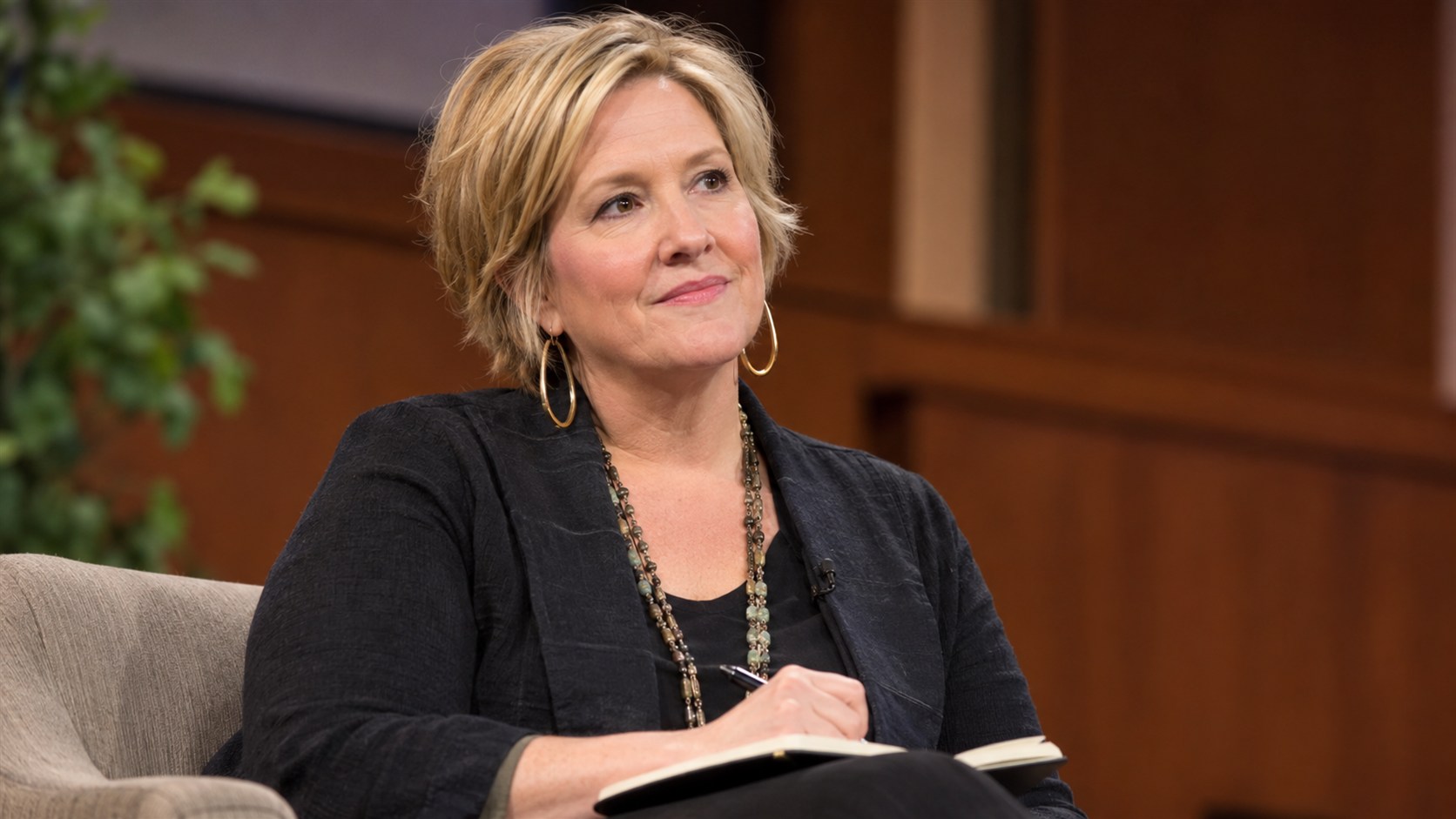
“Vulnerability is our most accurate measurement of courage.”
“Vulnerability is our most accurate measurement of courage.” comes from Brené Brown’s Listening to Shame. There, the source described vulnerability as the willingness to be seen when outcome, approval, or certainty cannot be guaranteed. The surrounding argument matters: Brown moves courage away from invulnerability and toward the responsible acceptance of emotional risk. The calendar label October 2 simply locates the article in this series; 2012 identifies the quotation’s documented setting. Keeping source and series date separate avoids the false impression that the line was tied historically to this day.
Courage is often visible not as fearlessness but as honest participation despite the possibility of rejection, error, or disappointment. The sentence offers a lens rather than a complete program. It becomes concrete in a world where people are urged to appear polished online and competent at work while many consequential conversations require admitting uncertainty or need. One measured response would be to name one relevant uncertainty to a trustworthy person and pair it with a clear request or next step. That step creates evidence a reader can inspect instead of leaving the idea at the level of admiration. It also respects the fact that useful change is often iterative: act, observe, and adjust.
Important nuance begins here: openness needs boundaries, consent, timing, and trustworthy listeners; disclosure is not automatically brave merely because it is personal. A maxim can illuminate one choice and still mislead when applied without context. Resources, authority, disability, care obligations, and risk are not evenly distributed. The question is therefore not only whether “Vulnerability is our most accurate measurement of courage.” feels true, but when it clarifies responsibility, when it oversimplifies, and who will absorb the consequence of a decision made in its name.
People are urged to appear polished online and competent at work while many consequential conversations require admitting uncertainty or need. That is why the quotation retains value now. Use it as an invitation to inquiry: name one relevant uncertainty to a trustworthy person and pair it with a clear request or next step. Notice what the action changes, and listen for information that challenges the first interpretation. Brown moves courage away from invulnerability and toward the responsible acceptance of emotional risk. The most durable reading joins the energy of the line to humility about its reach, producing a practice that can be evaluated rather than a slogan that merely decorates belief. That review keeps present choices open to better evidence and shared judgment.
Brené Brown used the line in Listening to Shame, documented in 2012. The source described vulnerability as the willingness to be seen when outcome, approval, or certainty cannot be guaranteed.
Brown moves courage away from invulnerability and toward the responsible acceptance of emotional risk. October 2 is only this series placement; it is not presented as the date when the words were first delivered.
Courage is often visible not as fearlessness but as honest participation despite the possibility of rejection, error, or disappointment.
openness needs boundaries, consent, timing, and trustworthy listeners; disclosure is not automatically brave merely because it is personal.
People are urged to appear polished online and competent at work while many consequential conversations require admitting uncertainty or need.
A measured way to act on the idea is to name one relevant uncertainty to a trustworthy person and pair it with a clear request or next step.
Explore more "Quotes of The Day"
Continue exploring how writers, thinkers, artists, and advocates have described the choices that shape an everyday life.