

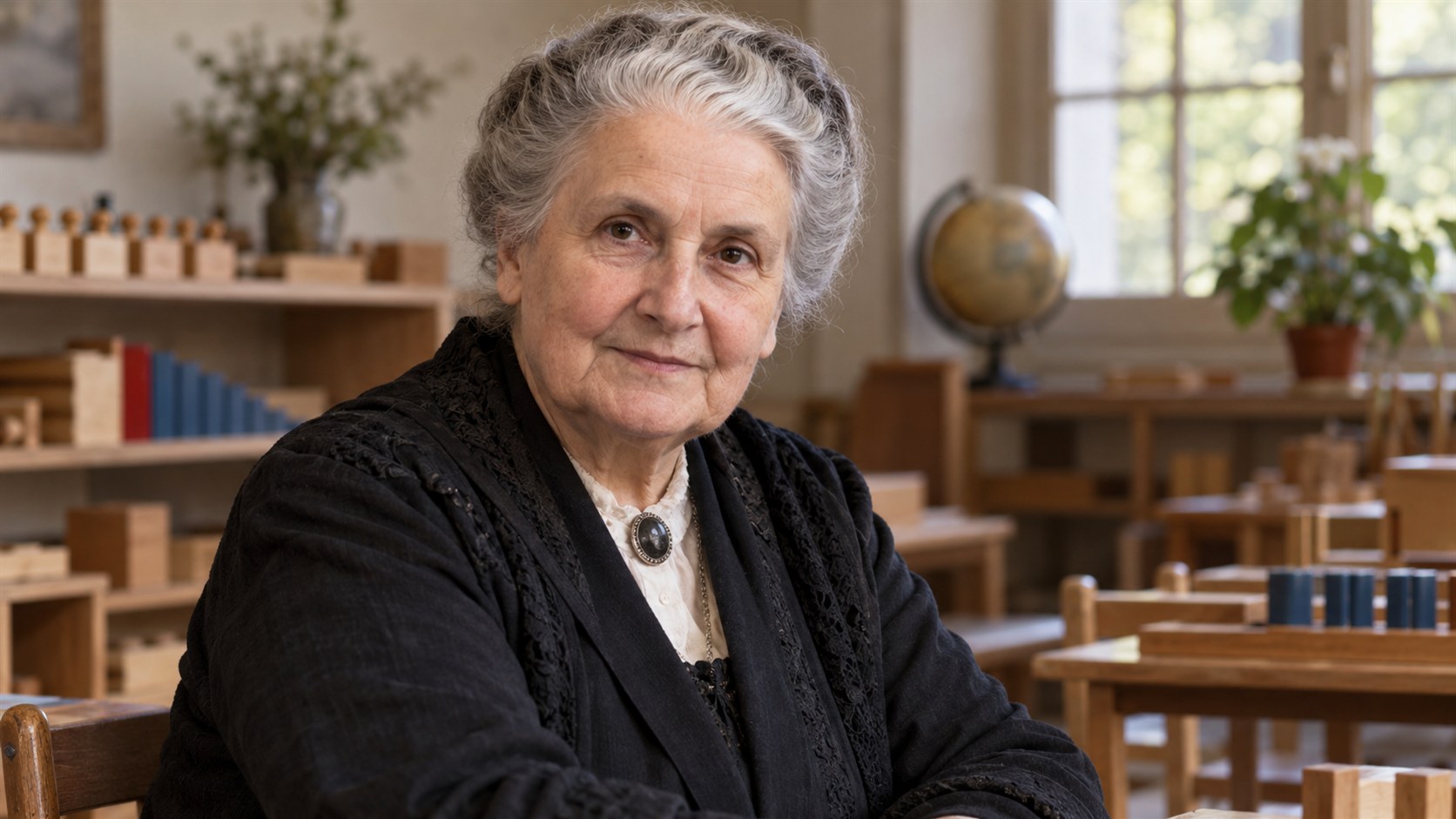
“The child is both a hope and a promise for mankind.”
In 1949, Maria Montessori gave readers the sentence “The child is both a hope and a promise for mankind.” through Education and Peace. The source placed childhood development inside a larger argument that peace depends on respecting human dignity and supporting independent growth from the beginning. Its distinctive contribution is this: Montessori connects long-range social hope to concrete respect for the child’s current agency. The NewsStreets label November 10 marks a place in the annual series and does not assert that the quotation was first spoken, written, or published on that date. That sourcing distinction is small, but it is essential to trustworthy quotation work.
How adults design environments for children helps shape future capacities for concentration, cooperation, responsibility, and freedom. That reading speaks directly to a moment when education debates still reduce young people to scores while access to safe, attentive, well-resourced learning remains unequal. One useful response is to observe one child’s effort before intervening, then adjust the environment so independence is safer and more possible. The scale is intentional: a small, visible experiment can expose assumptions and constraints that a sweeping resolution conceals. It also gives other people a chance to contribute before the first interpretation hardens into habit.
The important qualification is that children are complete people in the present, not merely vessels for adult hopes or instruments for fixing society. Compact language gains force by leaving conditions outside the frame, so responsible interpretation has to restore them. Resources, power, safety, health, culture, and timing can change what action is available. The fairest reading asks who benefits, who carries the risk, and what evidence could require a different conclusion. It also checks the sentence against the larger work instead of borrowing its authority for an unrelated argument. That discipline matters because familiar quotations are often repeated after their original tension, audience, and purpose have disappeared from view.
Education debates still reduce young people to scores while access to safe, attentive, well-resourced learning remains unequal. The quotation still matters because it can reopen a choice that routine has made invisible. One next step is to observe one child’s effort before intervening, then adjust the environment so independence is safer and more possible. Review what happens without demanding a predetermined moral. Montessori connects long-range social hope to concrete respect for the child’s current agency. When the result is held beside the original context and the needs of others, the line becomes a tool for reflection instead of decorative certainty.
Maria Montessori used the line in Education and Peace, documented in 1949. The source placed childhood development inside a larger argument that peace depends on respecting human dignity and supporting independent growth from the beginning.
Montessori connects long-range social hope to concrete respect for the child’s current agency. November 10 is only this series placement; it is not presented as the date when the words originated.
How adults design environments for children helps shape future capacities for concentration, cooperation, responsibility, and freedom.
Children are complete people in the present, not merely vessels for adult hopes or instruments for fixing society.
Education debates still reduce young people to scores while access to safe, attentive, well-resourced learning remains unequal.
A measured way to act on the idea is to observe one child’s effort before intervening, then adjust the environment so independence is safer and more possible.
Explore more "Quotes of The Day"
Continue exploring how writers, thinkers, artists, and advocates have described the choices that shape an everyday life.