

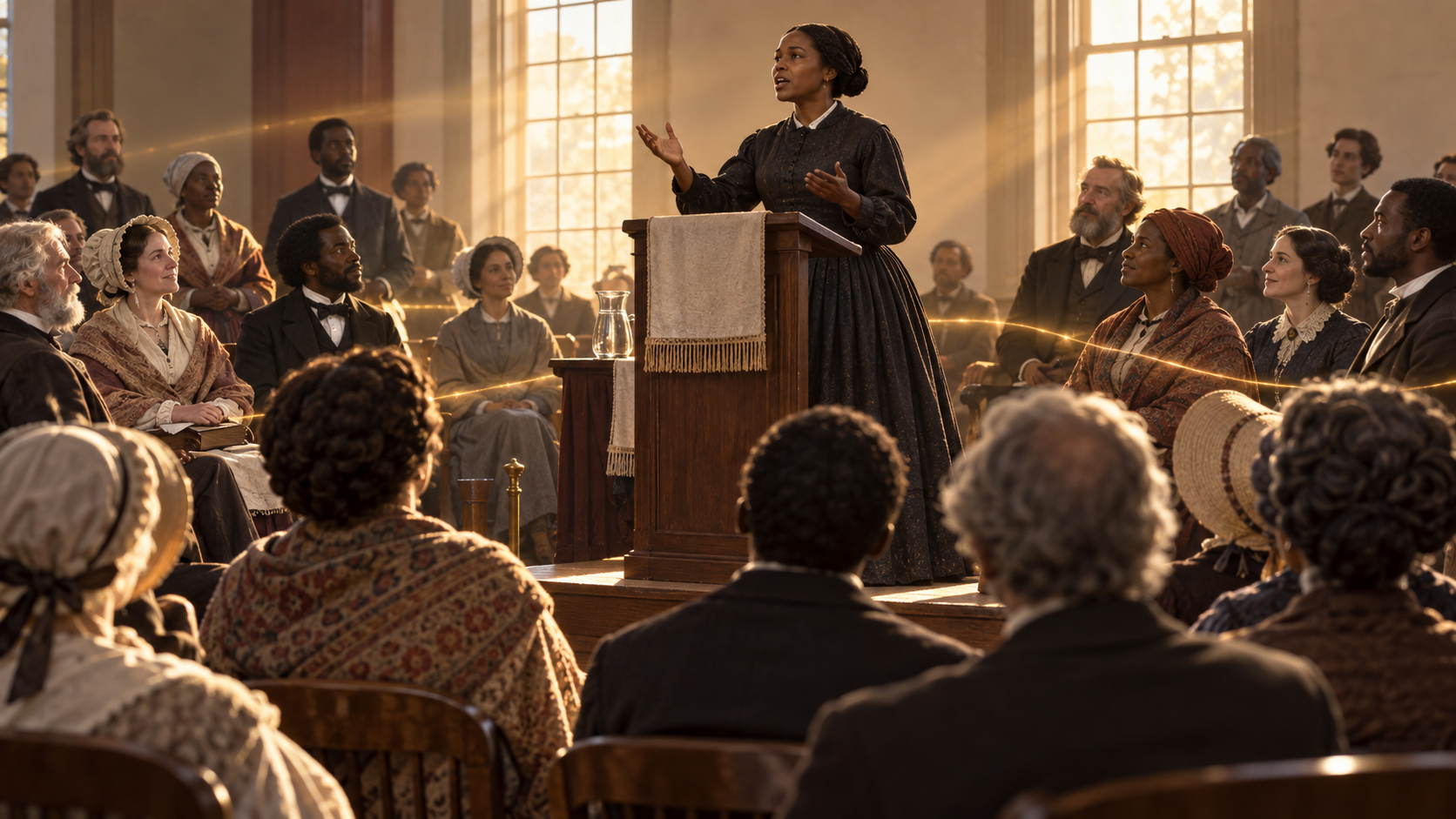
“We are all bound up together in one great bundle of humanity.”
Frances E. W. Harper gave these words in 1866 in National Woman’s Rights Convention address. Harper delivered the line in New York after emancipation, addressing a reform movement divided over race, sex, and suffrage. She insisted that freedom could not be divided into isolated causes or reserved for the most socially protected women. The historical setting matters because the quotation answered a concrete conflict over who could speak, what evidence could circulate, and how the public could judge power. Read in context, it is a claim about institutions and responsibility rather than a decorative slogan. It asks readers to notice the conditions that made the statement necessary and the audience it was trying to move.
The image of a shared bundle makes public harm relational. Reporting on rights, poverty, violence, or exclusion is incomplete when it treats affected groups as separate from the institutions and audiences around them. For news organizations, that lesson turns into a method: identify the claim, find the strongest available record, show how the evidence was obtained, and distinguish direct observation from interpretation. The quotation is valuable because it connects public principle with editorial choices that can be inspected. It also reminds readers that information has civic consequences; what receives attention, what is omitted, and how uncertainty is described all shape the choices people believe are available.
Solidarity should not flatten difference. People experience law and power unevenly, and a universal slogan can hide which communities bear the greatest risk or whose testimony has been excluded. Context therefore protects the line from becoming a shortcut. A quotation cannot settle every dispute, excuse weak sourcing, or remove the need to hear from people directly affected. Responsible use requires proportion: verify the wording, identify the original setting, acknowledge contradiction, and state what the source does not establish. Those habits make historical quotation more useful, because they preserve complexity instead of borrowing a famous name to end an argument. Newsrooms can connect individual cases to systems without erasing individual lives. That means diverse sourcing, precise demographic evidence, historical context, and follow-up reporting after attention moves elsewhere. Digital distribution increases both the reach of careful reporting and the damage of error, making transparent process especially important. Readers should be able to separate a primary record from commentary, follow links where possible, and see corrections when the account changes. The enduring test is practical: does the story help the public understand a consequential reality with greater accuracy, dignity, and agency? Frances E. W. Harper’s words remain alive when they sharpen that work rather than merely decorate it.
Frances E. W. Harper used the line in National Woman’s Rights Convention address in 1866. Harper delivered the line in New York after emancipation, addressing a reform movement divided over race, sex, and suffrage. She insisted that freedom could not be divided into isolated causes or reserved for the most socially protected women. Its setting shows that the words addressed a specific struggle over public knowledge, authority, and participation; they should be read as history as well as principle.
The image of a shared bundle makes public harm relational. Reporting on rights, poverty, violence, or exclusion is incomplete when it treats affected groups as separate from the institutions and audiences around them. Solidarity should not flatten difference. People experience law and power unevenly, and a universal slogan can hide which communities bear the greatest risk or whose testimony has been excluded.
Newsrooms can connect individual cases to systems without erasing individual lives. That means diverse sourcing, precise demographic evidence, historical context, and follow-up reporting after attention moves elsewhere. The modern standard is verifiable work: identify sources, separate fact from inference, explain uncertainty, correct mistakes visibly, and keep consequences for affected people in view.
Explore more "Quotes of The Day"
Discover more notable quotes from influential voices across politics, science, business, technology, sports, and culture. Each quote offers insight into how ideas, beliefs, and decisions shape the world around us.